Blending an ancient and modern perspective on motherhood | Interview with Sarah Whitridge
Published 1:30 am Wednesday, May 6, 2026
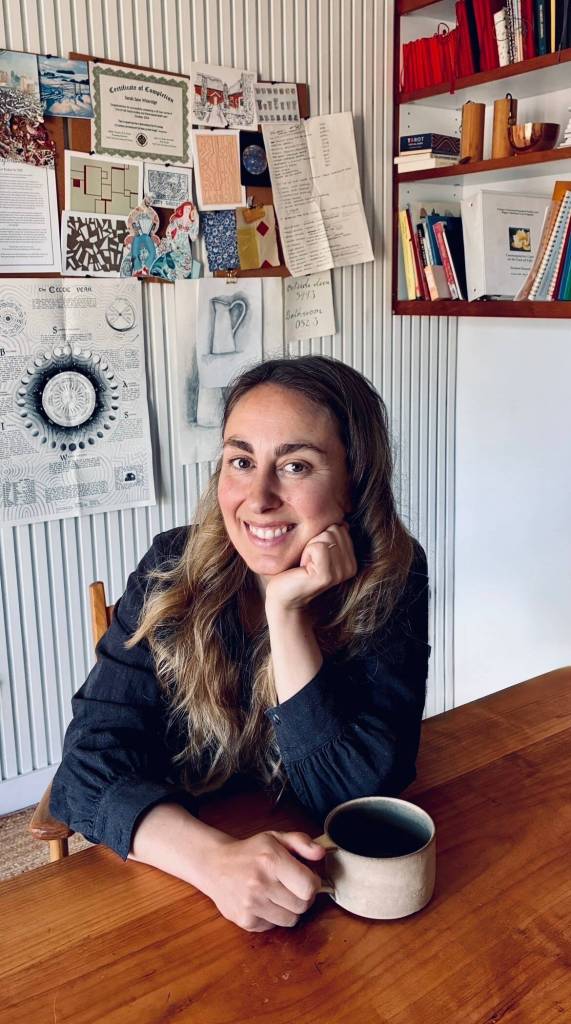
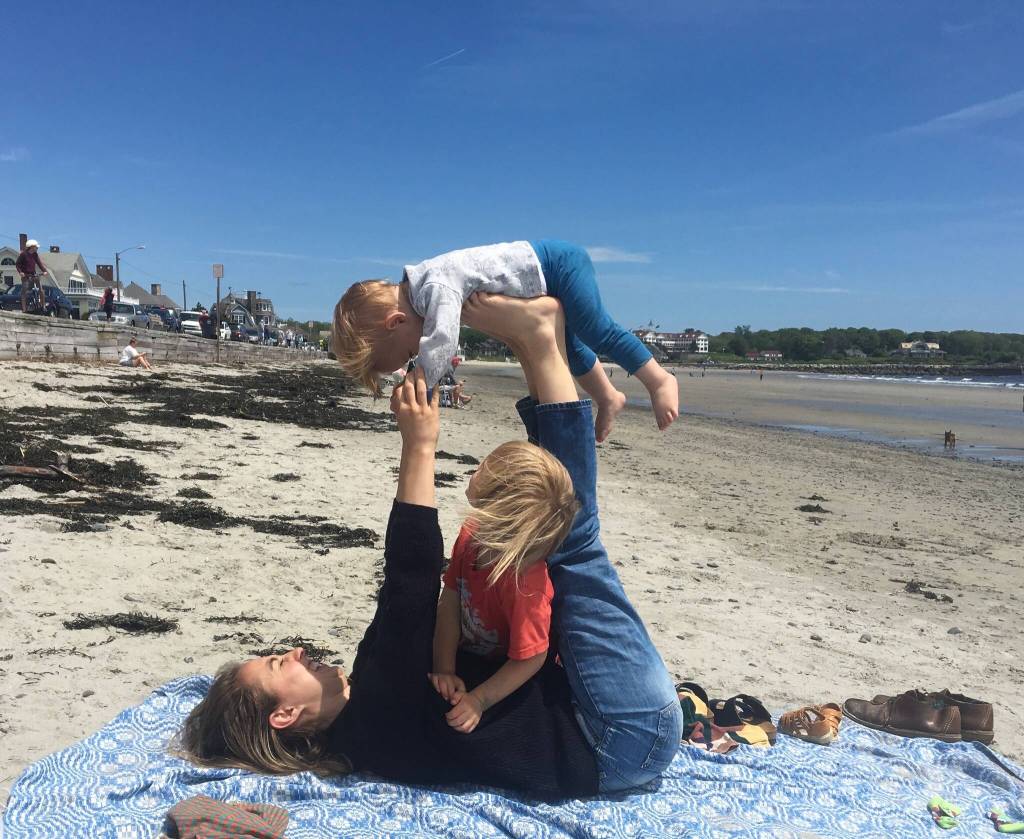
Sarah Jane Whitridge grew up in the United Kingdom, where Mother’s Day is also known as “Mothering Sunday.”
“I find that verb really interesting. It’s more universal and can encompass everyone in the doing of ‘mothering,’” she said.
Whitridge was raised in a tiny rural village in the southwest of England, known for hard cider-making and basket weaving. Her Irish dad, a helicopter pilot, fought in “The Troubles” in Northern Ireland and then in the Falklands War during the first few years of her life, so it was just she and her mother until around age 4.
“My dad came back from Argentina suffering from PTSD. My parents later separated, and my dad died just before my 15th birthday,” she shared. “So my childhood was really complex, as many childhoods are: both beautifully idyllic and loving and nourishing, but sad and volatile as well. My teenage years were full of grief and feeling lost, so I left home after my A-levels and went to live in Italy. A different culture, one steeped in lovely old traditions and incense-infused cathedrals, helped me find a bit of peace.”
Whitridge was born in a village south of Glastonbury, well known for its mythical and spiritual history, and her mother trained with an Ayurvedic health practitioner and nutritionist.
“In 1980s England, the ‘health scene’ was still pretty limited. My mum grew sprouts, fed us soy everything, cut out dairy, meat and gluten, and only cooked a roast chicken for my dad on Sundays!” she said. “Mum was quite progressive for the day in that she was trying to get my family healthy after my brother nearly died of pyloric stenosis. Looking back, I am so grateful for my mum and my grandmother passing on their knowledge about health. They taught me a lot about gardening and herbs, they shared old wives’ tales for tummy aches or earaches, and other tidbits for a strong constitution.”
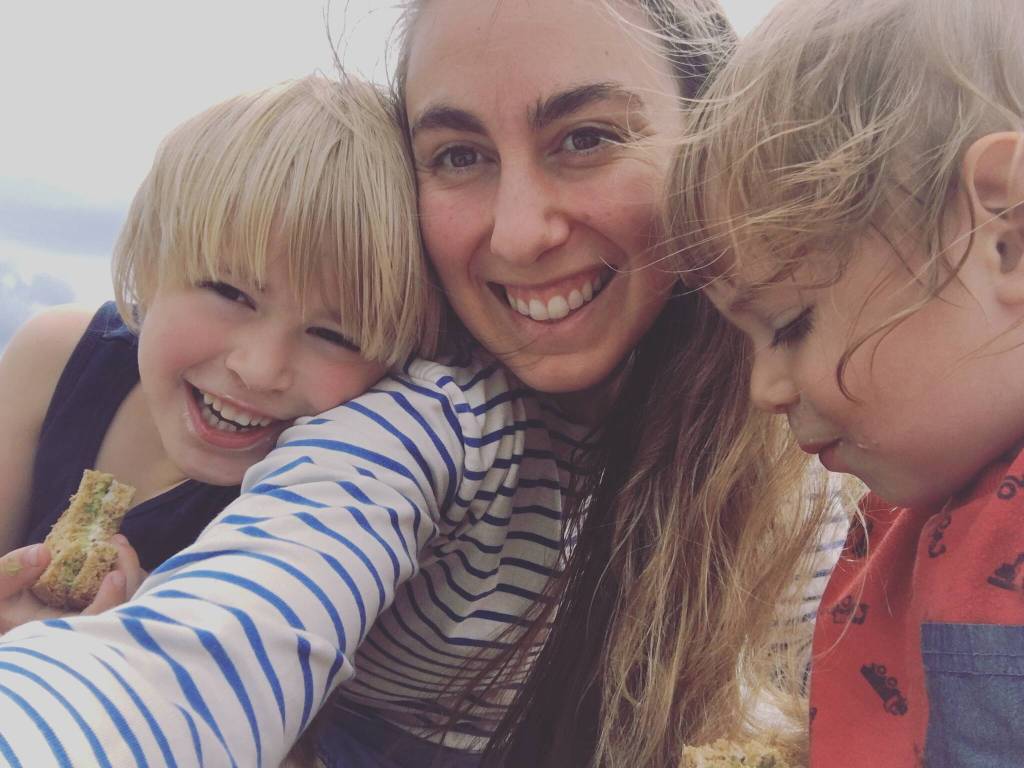
Whitridge is now sharing that wealth of information with her two sons, 13-year-old Asa and 10-year-old Zebedee, in a personal journal.
“It’s part memoir, part cookbook, part medical guide. All the tales are passed down from my grandmother or my mum to me, and now onto my boys and whoever they share it with. I am the last in my maternal line, and this is recognition of my grandmothers and generations of housewives, holding it all together, utterly exhausted,” she said.
Whitridge met her husband, Zach, at a school for lost crafts called West Dean College on the South Coast of England in 2007. He was studying to be a luthier (a skilled craftsperson who builds, repairs and restores stringed instruments), and Whitridge was earning a master’s degree in art restoration. They eloped on the Isles of Scilly off the coast of Cornwall and, after living in the U.K. for a handful of years, moved to Maine, where their boys were born. They’ve been on Orcas for nearly seven years.
“Zach is my best friend. We have massive amounts of creativity and vision. We work really well together and bolster each other’s confidence, especially when we’ve had a parenting fail! We’re both oddballs,” she laughed.
Zach is a sculptor and woodworker, and Whitridge is an astrologer. They are currently restoring a 1920’s fisherman’s cottage on Rose Street in Eastsound, which they hope to live in soon.
The couple educates their children in a mixture of home-schooling and world-schooling, an approach that uses the world as a classroom. The family lived in Greece for three months last year and will reside in Japan next January.
“I knew I was having boys with both of my pregnancies, I could feel it,” Whitridge explained. “As a new mum, I asked myself, what does this mean to be the mum of two white, privileged males? What is my role here? How can I build a container to fortify their characters so they can contribute to a future with kindness and consideration? To me, being a mother of boys means helping them thrive, helping them help others thrive and being good citizens.”
Zebedee and Asa are both talented artists, illustrators and designers. At home, they have a garage converted into a “makers’ station,” full of scraps of every material imaginable for creating.
“The boys have helped me uncover my own latent creativity and love for illustration. Along with that, Asa has been a catalyst for family healing. His name, in Hebrew, means ‘healer,’ and he reminds us how to have fun and center play. Zeb is the ‘King of Cozy,’ he reminds us that slowing down and simple living are really rewarding,” Whitridge said of her children.
Zeb says he most enjoys cooking with his mom, and they’re making a book of family recipes and recipes gathered from travels. Humor is an integral part of the Whitridge family dynamic.
“My parents valued celebration and laughter around hardship. It took the kids a while to get used to my British/Irish sense of humor, now they translate what I’m saying for their friends!” Whitridge laughs.
She is also honest about the challenges of motherhood.
“It’s not for the faint of heart, is it? Being a mum reveals all of the yucky, messy stuff about me that I didn’t even realize was an issue. Looking at that is not easy, but it’s worth it. It’s a hard, beautiful journey because children, by their very presence, encourage us to be better humans,” Whitridge said. “I don’t think I’m alone when I say this is a generation of mothers — whether biological mothers, stepmothers or foster mothers, any type of ‘mothering’ — who are also ‘re-parenting’ ourselves at the same time. That’s a lot of emotional labor! I think the one thing I really value is repair with my children. It keeps us courageous and humble.”
Added Zach: “I admire Sarah’s willingness to admit when she has handled something not brilliantly. She is always good about circling around and repairing. Things are more harmonious in our family because we’ve all learned to do that.”
Whitridge’s recent diagnosis of chronic Lyme disease has been a blessing despite the toll it has taken on the Whitridges.
“It is teaching me how to slow down, and it’s attempting to teach me acceptance! I am prioritizing rest as best I can; on certain days, it’s not an option. And the children have witnessed me taking a nap! Let’s normalize naps! I wish that for every mother: room to cultivate more rest,” she said. “We all know we live in a bonkers, fast-paced world, even on Orcas. I’m making it my mission to slow right down. I’m also learning nervous system regulation. I’ve been able to share some of this with my kids — when they’re willing!”
Whitridge is also grateful to her astrology work, which has influenced her parenting. She studied the moon (which represents the pre-verbal self) in the birth charts of her boys.
“Astrology is just a tool, a pretty ancient one, but it can be very helpful sometimes to make sense of things: of people’s behaviors or world events or wide collective themes. The moon sign can indicate the style in which we instinctively like to be nurtured, what our needs are, and how we want to relate.”
She then started offering these astrology readings to help other mothers.
“If I can be relatable to other people, women, mothers, or caregivers, whoever, I am willing to share my story and my skills to foster that connection,” Whitridge said. “My mom felt very alone in the first few years of new motherhood. I, too, brought up my children in a place that was unfamiliar to me, and it was ungrounding at first. I had to make friends and find my people. It’s so important to feel connected in any way we can authentically find it, particularly as a mom.”