Drifting dock highlights growing microplastic risk
Published 1:30 am Sunday, March 29, 2026



By Asifa Pasin, Nancy Schafer and Bill Symes
What began as a drifting section of dock in our inland waters has become a stark reminder of how quickly plastic pollution can spiral beyond control and how unprepared we remain to respond.
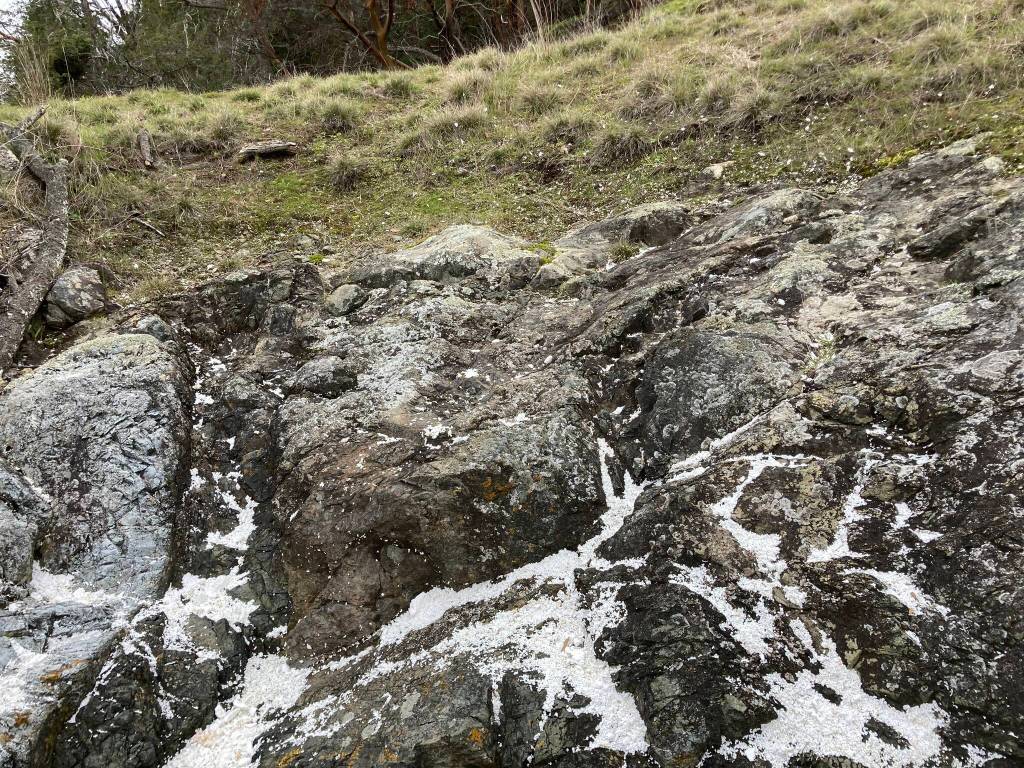
For an undetermined amount of time, a wooden dock section attached to deteriorating styrofoam floats partially wrapped in plastic bags drifted before washing high up into the rocks in the West Sound area, most likely on the last king tides of Jan. 3, 4 or 5. On Feb. 15, Nancy Schafer, a West Sound resident, board member of Orcas Recycling Services/The Exchange and one of the organizers of our Great Island Clean-Up, was out rowing and noticed the problem. By then, the floats were already breaking apart, with one of the large sections and pieces found in the next cove.
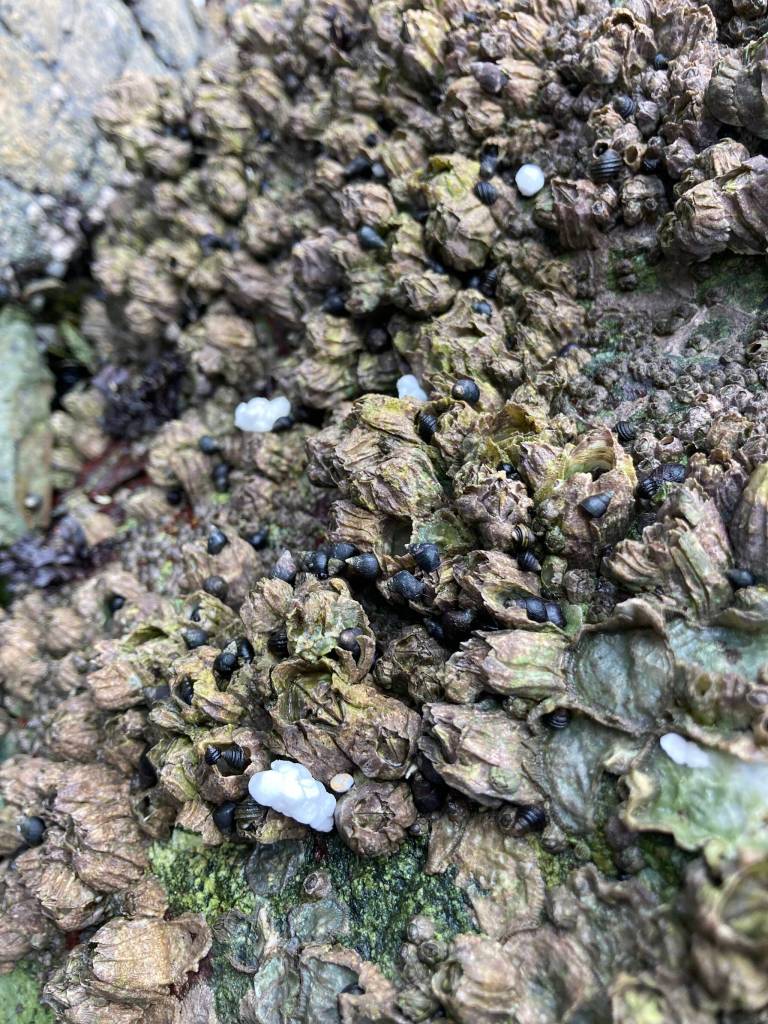
Styrofoam does not biodegrade; it fragments. Wind and waves grind it into smaller and smaller beads that scatter into rocks, beaches and shoreline vegetation. These microplastics are impossible to fully recover.
“With every high tide and even light winds, the lightweight foam was breaking up and spreading farther into the water and onto land, creating an environmental hazard,” Schafer said.
She contacted multiple agencies, including the San Juan County Sheriff’s Office, the San Juan County Emergency Management, the Washington State Department of Natural Resources and the Washington Department of Ecology. The earliest potential response date was more than three weeks away.
Bill Symes, vice president of the Islands’ Oil Spill Association, explained part of the gap. While Styrofoam is petroleum-based, it is not classified as oil. Oil spills trigger coordinated emergency systems. Solid waste events like this do not.
Even so, Symes noted that the local rapid-response side of oil spill cleanup is largely volunteer-based. IOSA has two paid staff members; the rest are volunteers. The organization was formed 40 years ago after an oil beach incident. IOSA serves as a bridge until professional crews can respond.
With plastic pollution, however, the problem is not only the first hours but also the first weeks. By the time formal assistance might arrive, tides and wind would likely have spread thousands more plastic fragments.
So neighbors stepped in.
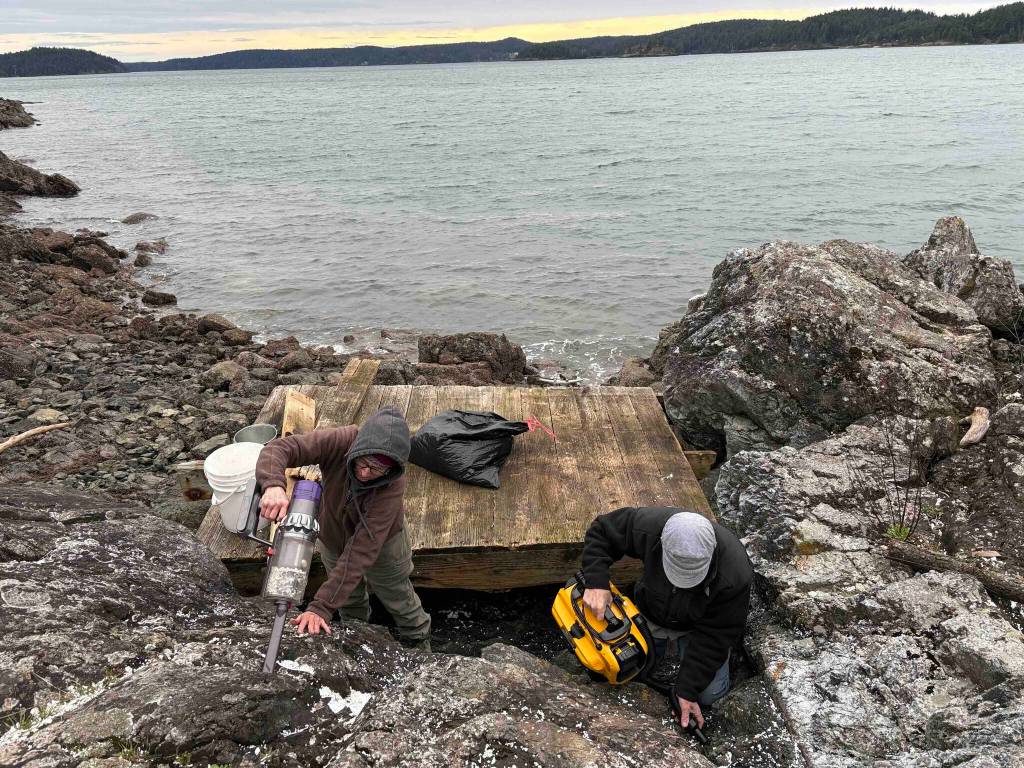
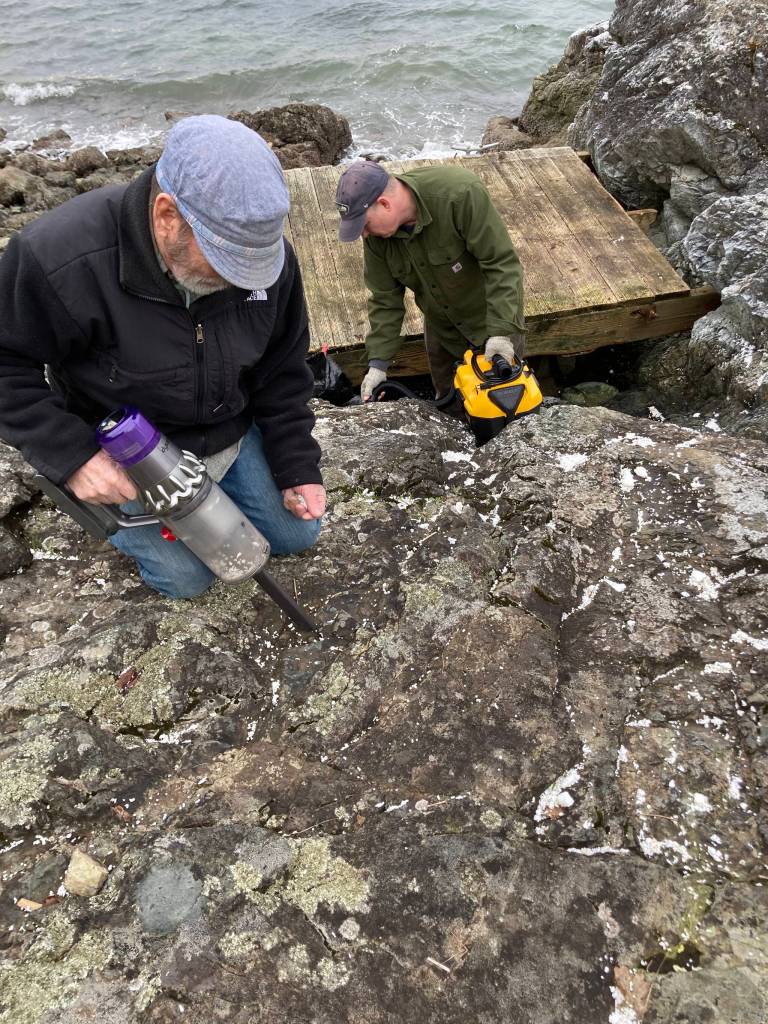
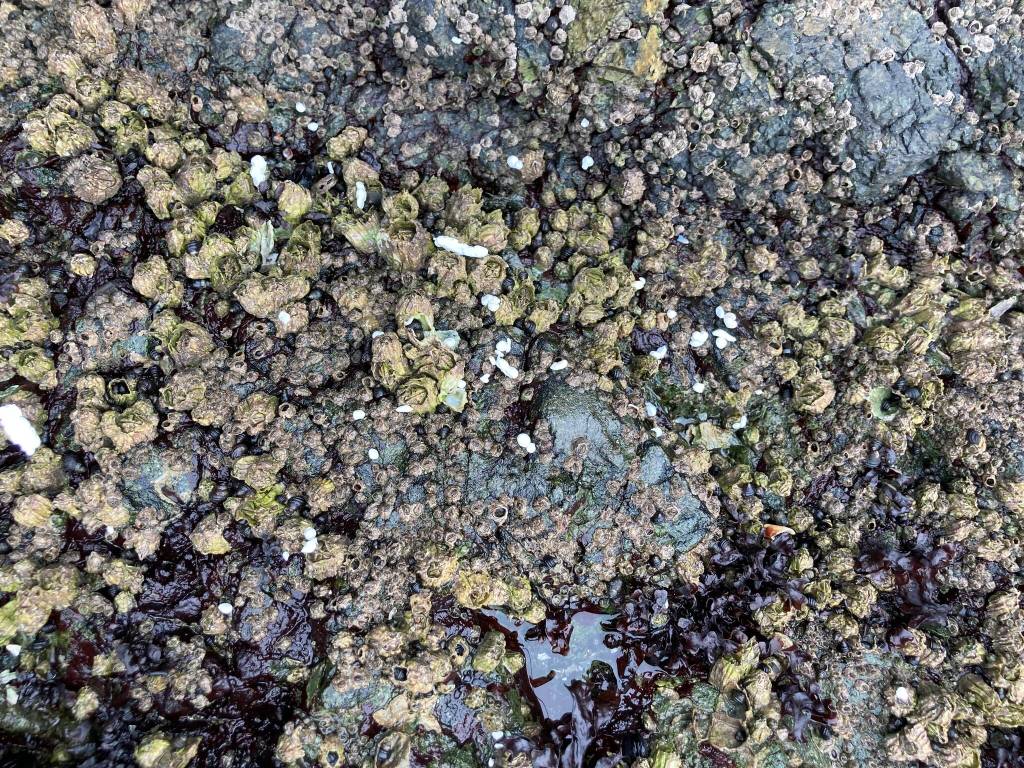
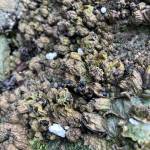
The cleanup happened in two phases. On Feb. 21, Schafer, Steve McKenna and Pete Moe of the Exchange levered the dock enough to bag and remove the two remaining disintegrating floats and collected sizable debris scattered among the rocks. Two battery-powered vacuums were found to be the most effective for handling large volumes of small beads. On Feb. 24, Schafer returned with Robin Hirsch, Roz Montgomery, Symes and Ross Newport, equipped with five vacuums and many batteries, to tackle the tedious job of the rest of the debris field. Some volunteers hand-picked fragments that were embedded in rock crevices, barnacle, clam and mussel beds. Even so, complete recovery is unlikely. Microplastics pose serious risks to marine ecosystems. Birds, forage fish and shellfish ingest the particles, which persist indefinitely and accumulate in the food web. What begins as a single float can become a long-term pollution event.
“Quick response is everything,” Schafer said. “Once this material spreads, it becomes exponentially harder to remove.”
The incident underscores a broader concern: unencased Styrofoam floats remain in use beneath docks and water recreation equipment. When exposed, they are highly vulnerable to damage. Encapsulation regulations exist to prevent fragmentation, yet older or compromised installations remain throughout local waters. Once breached, unencased Styrofoam essentially becomes a microplastic factory.
We do not have a streamlined reporting number or a clear chain of responsibility for a rapid-deployment protocol for this type of floating-debris and solid-waste emergency. Early interception could have prevented much of the damage.
There are clear lessons:
If you see plastic waste in the water or along the shore, please pick it up. Report it if it’s too large or a large area. Act early. Small efforts taken quickly prevent much larger harm. Styrofoam does not disappear. It only becomes smaller and spreads farther.
This will not be the last incident of its kind. But with prevention, responsible dock maintenance, community vigilance, and a clear rapid-response protocol for solid waste events, we can reduce the damage. Our shorelines and marine ecosystems are too precious to treat plastic fragmentation as a minor nuisance. It is not. It is a slow-moving environmental crisis that demands a faster response.