A look at Indian Island and East Sound | Slide show
Published 4:36 pm Thursday, November 1, 2012
Did you know that East Sound has been growing cooler for the last four years? That local herring seem to be making a comeback? Or that the Eastsound waterfront is one of San Juan County’s most important seahorse and squid nurseries?
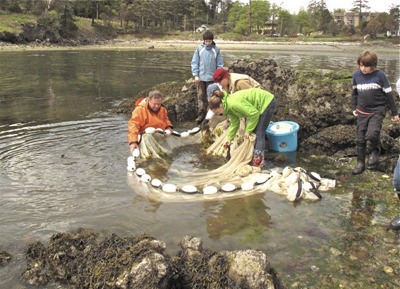
Help celebrate five years of community research and outreach on Indian Island, Eastsound’s “window on the sea,” at a gala event in the Madrona Room at Orcas Center on Thursday, Nov. 15. Food, music, exhibits, and local volunteers’ fourth annual research report to the community begin at 5:30 p.m. Learn about sea slugs and starfish, emerald green native sea horses, seabirds, and seagrasses in our backyard, while enjoying savory snacks from Orcas Landing, a musical medley sung by Sharon Abreu and Mike Hurwicz, and sweets supplied by the Indian Island Marine Health Observatory’s own intrepid crew of volunteer marine biologists. Admission is free.
Every summer, new species are discovered around the island. Some are natives to the Salish Sea that have drifted in with the tides, and may make the island their home, or disappear in another year or two. Three new sea slugs, two new sea anemones, and two new starfish species made their first appearance in 2012. Volunteers discovered several tiny, very strange spaghetti worms in July that are new. The species was unknown until a just few years ago, when one was found near Victoria. It is still unnamed!
There was also a very large flotilla of spawning squid in the bay this year, and all three native Salish Sea species of octopus were seen. Several invasive species have also been identified. Bivalve leafworms, a weird invasive flatworm species that looks like a smudge of plum jam, eats clams and oysters; they were first seen at Indian Island in 2010 and have increased. Volunteers are monitoring its spread.
On the whole, says Kwiáht director and Indian Island Marine Health Observatory advisor Russel Barsh, the bay is in good shape. But one concern is street runoff as the town and tourism continue to grow. “More motor vehicles leaking gas, oil, antifreeze and tire and brake dust onto roads to be washed into storm drains” said Barsh. Kwiáht is working with Eastsound high school students to measure and monitor contaminants.
Another concern is “loving the island to death”– too many boots on the beach, in the eelgrass meadows, and on the island’s fragile meadow and seabird nesting rocks. Local volunteers greet visitors to the island and brief them on “etiquette” so that flowers and tide-pools will survive and thrive for years to come.
Since 2009 local volunteers have assumed much of the responsibility for taking care of Indian Island, working in consultation with the landowner, the federal Bureau of Land Management. In turn, BLM has identified the Indian Island program as a model for the “community partnerships” described in proposals for combining federal lands into a single San Juan Islands national monument or national conservation area.