A ‘green wave’ in East Sound?
Published 1:30 am Friday, July 3, 2026
By Russel Barsh
Director of Kwiaht
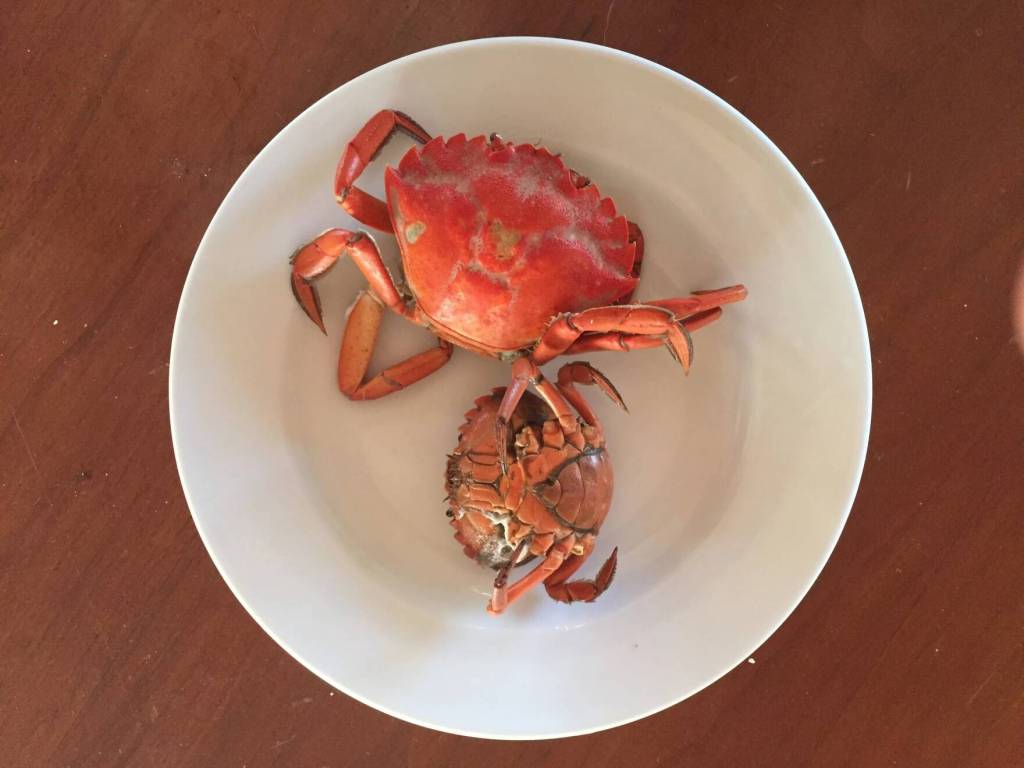
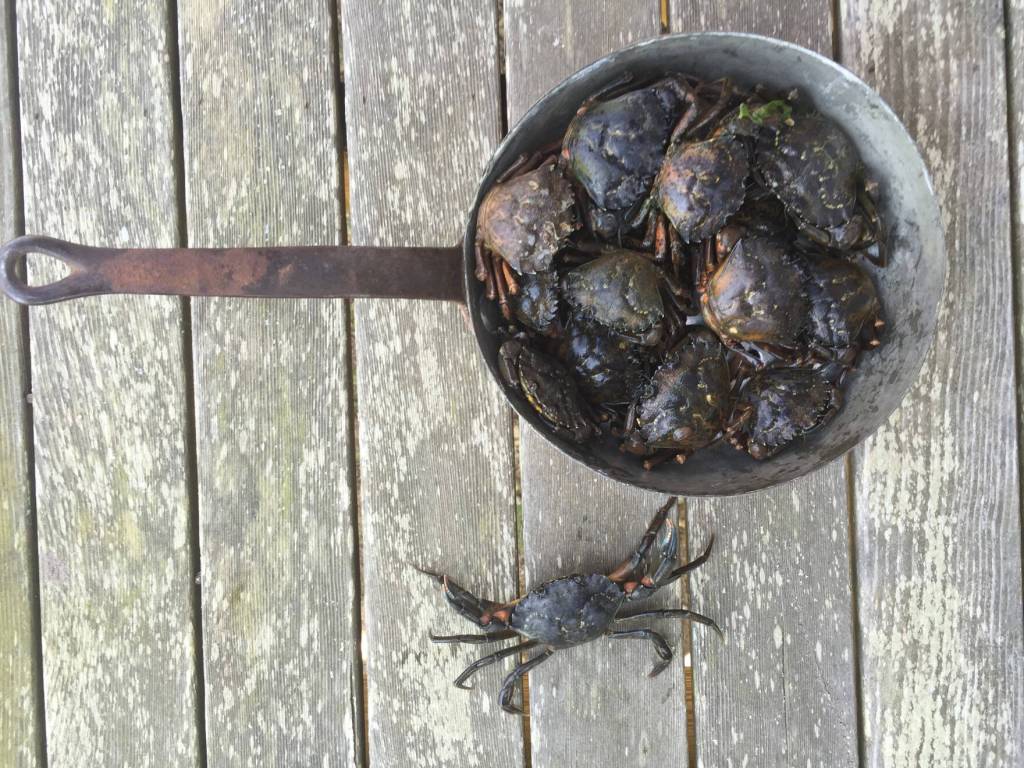
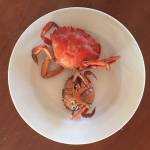
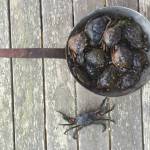
Recent detections of the European green crab, Carcinus maenas, at Crescent Beach and Deer Harbor raise the question: Will a “green wave” of invasive crabs sweep over Orcas eelgrass meadows?
To begin, not all green crabs are green crabs. Islanders frequently confuse the potentially invasive species with a very common green native crab, Hemigrapsus oregonensis (“Yellow Shore Crab”), which has an oblong rather than fan-shaped carapace. Numbers of the native crab have risen steeply around Indian Island in recent years, further confounding them with the non-native species, which remains very rare in the Salish Sea.
First introduced from Europe to New England a century ago, green crabs have established pockets of abundance from Newfoundland to California. Monitoring for green crabs in western Washington began shortly after they were discovered on Vancouver Island in 1998. Most coastal states and provinces permit and encourage recreational harvesting of green crabs as a means of control. Ours is an exception. Washington spends millions of dollars to detect and remove green crabs from shorelines. Why? Chiefly, this is due to fears that an abundance of green crabs would prey on young oysters in commercial shellfish beds, outcompete juvenile Dungeness crabs and decrease salmon populations by degrading eelgrass meadows.
Green crabs will shred and eat eelgrass, but chiefly target smaller crustaceans and other invertebrates sheltering on eelgrass or the sediment in which it grows. Foraging green crabs are capable of creating enough disturbance to uproot vegetation. However, this kind of bioturbation is also caused by native crabs, worms, fishes, wading birds and at least some marine mammals. It is not that green crabs are unusually destructive, so much as that they are destructive in large numbers. When we speak of a species as invasive, we mean that it is very successfully growing rapidly in abundance at the expense of native species.
Newly introduced species become invasive if they aggressively outcompete native species for limited resources and are less vulnerable to local predators. Recent research has pointed to predators as key to the success or failure of green crab expansion. What eats green crab larvae? Presumably, everything that eats crab larvae, since there is no evidence that Salish Sea predators such as other crabs, fishes or marine birds avoid green crabs or find them distasteful. Kwiaht’s research confirms that juvenile salmon and forage fishes eat larval crabs when they emerge in spring, making them factors in preventing green crab expansion.
Two previous invasions on Orcas, Varnish Clam Nuttallia obscurata in Fishing Bay, and the turret snail Batillaria attramentaria in Cayou Lagoon, collapsed after threatening to displace native marine species. These species are both still problems in some, but not all, parts of the Salish Sea, and elsewhere on the West Coast. Local conditions matter, as do locally specific responses.
Green crabs were not responsible for a two-year dip in eelgrass density at Indian Island that Kwiaht reported in 2024-2025; stormy winters and shifting sand were responsible. Kwiaht’s 2026 annual survey, completed earlier this month, found that the meadow had returned to pre-2024 levels. There has been a long term decline of about 20% in Fishing Bay eelgrass density since 2009, but this, too, was likely due to warming waters and pollution rather than green crabs. Monitoring will continue, but for the time being, there is no evidence of green crab impacts on the Fishing Bay ecosystem, nor have green crabs appeared in monthly surveys of juvenile crabs rearing in the intertidal zone at Indian Island.
The Salish Sea is home to hundreds of non-native plants and animals that were introduced unwittingly by shellfish growers, gardeners and farmers. Some are conspicuous, such as the ever-present Himalayan blackberry. Most are not, such as (most) of our earthworms and “pill bugs.” In diverse ecosystems, new arrivals eventually attract the appetites of predators and parasites and are forced to share available resources with native species. In ecological terms, they become members of “guilds,” groups of species that rely on the same resources and play similar ecological roles. An example is the common drone fly, a European species that integrated into the islands’ pollinator networks and added to their diversity and resilience.
European green crab numbers remain low in most parts of the Salish Sea three decades after introduction, but what do we do if they suddenly surge in the San Juan Islands? Green crabs are routinely eaten in their native Europe, comparable in flavor and culinary uses to the Atlantic blue crab, which belongs to the same crab family, the Portunidae. They are being harvested and eaten throughout the East Coast, and they are harvested recreationally in British Columbia. The main concern is learning to distinguish adult green crabs from juvenile Dungeness crabs, which have superficially similar fan-shaped carapaces. The Washington Department of Fish & Wildlife nonetheless trusts recreational fishers to be able to distinguish between different species of salmon and rockfish.
Soft-shelled fried green crabs may be in our future. Just don’t reach for your frying pan quite yet.