Roots run deep: Orcas Food Co-op takes the helm of San Juan Islands Food Hub
Published 1:30 am Friday, March 13, 2026
By Darrell Kirk
Staff reporter
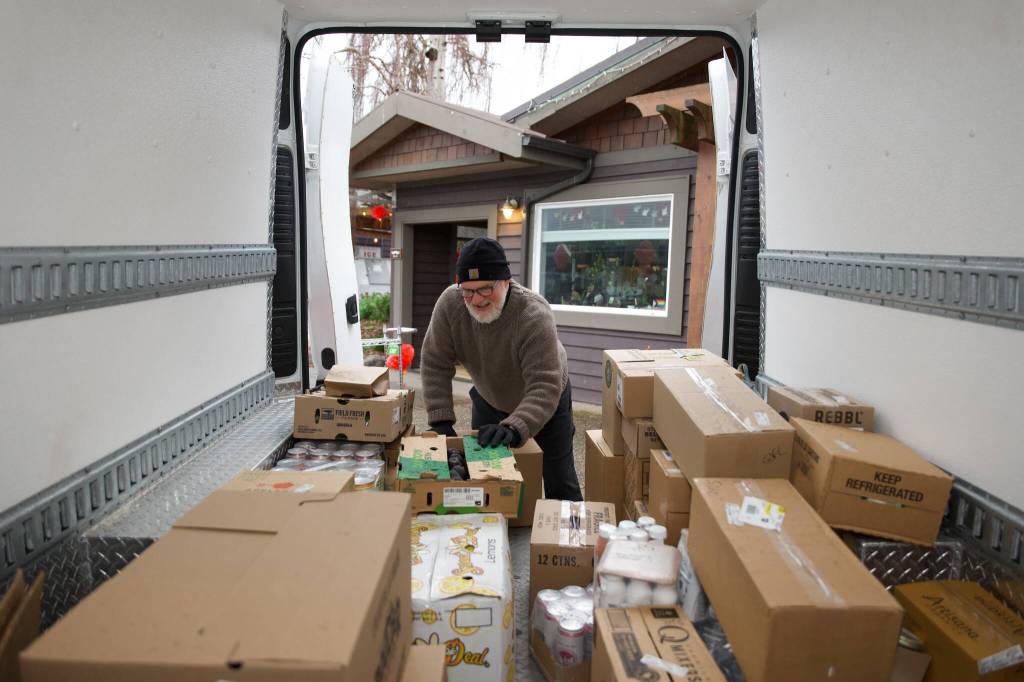
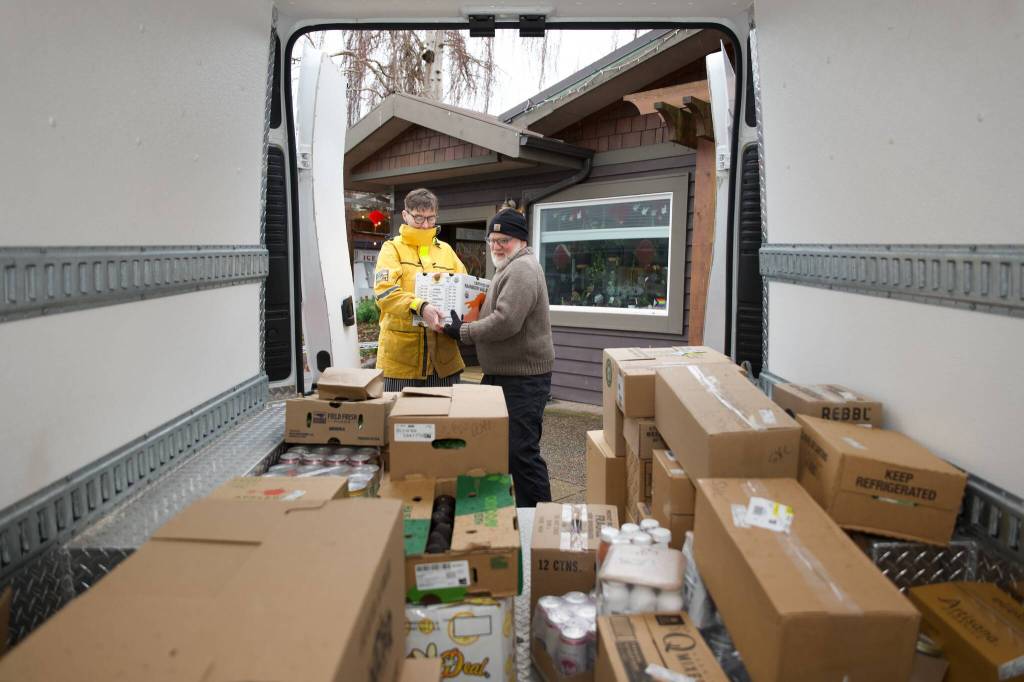
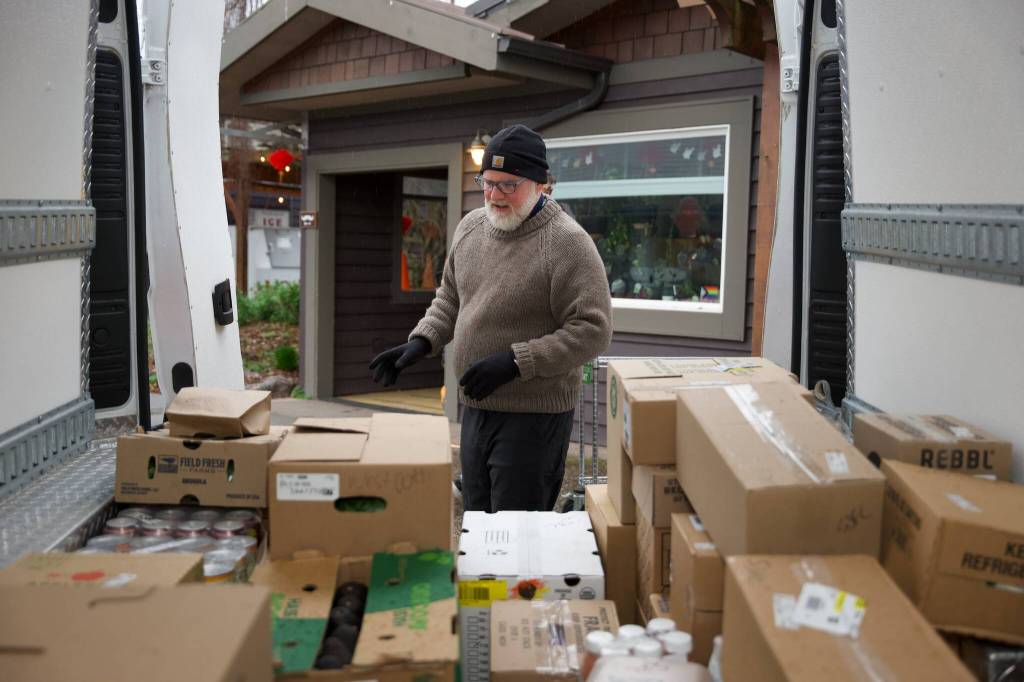
On a Wednesday morning, a refrigerated truck pulls away from the Orcas Food Co-op’s provisions annex, headed for the ferry dock with a load of produce, frozen meals and dairy products destined for restaurants, households and food banks across San Juan, Lopez and Orcas. It is a ritual that has played out hundreds of times. Now, the operation behind that run has changed: The Orcas Food Co-op has formally assumed management and ownership of the San Juan Islands Food Hub.
The move brings together an operation that has quietly become one of the most important links in the islands’ food chain — a network connecting local farms, a co-op, delivery routes and customers across three islands and miles of open water.
The San Juan Islands Food Hub was a dream years in the making. Long before COVID-19, farmers across the archipelago wanted a reliable way to reach customers beyond their own island shores. The San Juan Islands Agricultural Guild ran feasibility studies and investigated software platforms to make interisland commerce viable. The hub was originally conceived as a wholesale operation — a way to connect local growers with restaurants and resorts — but the platform they chose could handle retail customers, too, a decision that would prove critical.
Then the pandemic arrived. The food hub, still half-assembled, was pressed into service.
Sarah Pope, manager of the San Juan Islands Food Hub, recalled the moment that defined the launch: “We had a time when people were afraid they were going to get COVID by going inside the grocery store.”
The hub offered contactless shopping — order online, groceries passed through the car window. It launched in April 2020 and has been running ever since, connecting farms across all three islands with retail customers, restaurants, caterers and food banks. What began as a pandemic stopgap became a permanent piece of the islands’ food infrastructure.
To an outside observer, local food appearing on a restaurant plate or a household table can seem effortless. Behind each order is a choreography of trucks, ferries, refrigeration and human relationships stretched across miles of open water.
Burke Mulvaney handles the provisions delivery route from Orcas to Friday Harbor. Orders from businesses flow to Ariel Salas, the provisions coordinator, who separates incoming shipments, labels everything and has Mulvaney’s dry, refrigerated and frozen loads staged when he arrives. Mulvaney loads his truck, drives to the ferry, crosses to Friday Harbor, makes six or seven deliveries, meets Pope for a handoff, and returns with San Juan Island orders to distribute on Orcas.
“I’ve made that run like 250 times now,” Mulvaney said. “It’s just food coming and going.”
What makes the system work is its human flexibility — the ability to improvise when logistics fail, which they regularly do on an island chain. Pope’s mother volunteers to help pack grocery bags in Friday Harbor, where any given week means assembling between 30 and 60 individual orders, depending on the season. Henry Souza, the co-op’s produce manager, spends hours on the phone with local growers, working through what product can be moved at what price, helping farmers plan around market demand. It is unglamorous, essential work that no algorithm replaces.
One of the food hub’s most direct partnerships is with Mama Bird Farm on San Juan Island. Mulvaney drives to the farm twice a week in summer, loading up to 25 boxes of greens and carrots that go straight to the co-op’s shelves — no outside distribution, no middleman, no delay.
“The fact that I can be on island, go directly to their farm — they give me the invoice and I bring it right to our produce manager,” Mulvaney said. “It gets onto the shelves so quickly and so directly.”
Ferries, fragility and what’s really at stake
No single factor shapes food security in the San Juan Islands more than the Washington State Ferry system. Mulvaney has sat in line with a truck full of refrigerated food, three hours from the next sailing, watching the clock. Pope has sent schoolchildren across on the passenger ferry carrying boxes of lettuce, when arrangements fell apart. The local veterinarian flew produce to an island in his small plane, but a delivery went sideways. These are not worst-case scenarios. They are routine.
The vulnerability extends beyond ferry schedules. When UNFI, one of the island’s major distributors, was hacked in July 2025, orders were backlogged for weeks. It wasn’t a natural disaster — just one distributor’s systems failing — and scarcity rippled across the islands overnight.
“We really see how fragile our food system is here,” said Sara Pelfrey, the co-op’s co-market manager. “And if we want food security, one of our best bets is really investing in our farmers.”
Regina Zwilling, the co-op’s co-market manager, put it plainly.
“People don’t understand how potentially at-risk food security is here. It’s so easy to just come in the store and pick something off the shelf — but the vulnerabilities along the way are multiplied so much here. It’s really good for people to have a better understanding of what it takes to get food on this island. Because it’s a lot,” she said.
The farmers behind the food
The food hub’s integration into the co-op is, at its core, a bet on the survival of small-scale farming in an archipelago where the economics grow harder every year. Farmers face high land costs, scarce labor, unpredictable weather and the expense of moving product across water. Many diversify crops because a single failure could be catastrophic. And even diversification is no guarantee.
Henry Souza, the co-op’s produce manager, knows firsthand what farm loss looks like. Souza, who worked closely with a farm on Orcas through the food hub, watched it go fallow after years of struggling to find and keep workers.
“We’ve seen farms have to call it because they simply could not find young people willing to take on the conditions,” he said. “It tied directly into housing. These were young people full of energy, genuinely trying to give everything they had — but they were living in a trailer, maybe without a reliable shower, just like anyone starting out on this island. That’s hard enough when you’re working a part-time job. It’s a whole other thing when you’re putting in 60 to 80 hours a week worrying about a farm, and nobody can offer you stable housing.”
For Souza, each farm that goes fallow is not just a business loss — it is a reduction in the islands’ capacity to feed themselves.
Abe Gates and his husband Derek Gates have farmed Watmough Bay Farm on Lopez Island for seven years — vegetables, pastured chickens, pastured pigs — in a labor-intensive way that prioritizes quality and animal welfare. Gates describes the result as exceptional food, but one that costs more to produce than conventionally grown products, limiting their reach. The food hub changed that equation.
“It connects us with more customers than we could reach on our own and handles the complex logistics of aggregation and distribution in an island community,” Gates said. “It is not just helpful — it is foundational to the success of farms like ours.”
The sentiment is echoed across the farming community. Growing food on these islands is an act of conviction as much as commerce — a choice made in full knowledge of the obstacles.
“The heroes on this island are the farmers,” Mulvaney said. “The people who stay dedicated to creating food for people, even though it’s hard and it doesn’t pay a lot of money. Without them, we’re in serious trouble.”
Pelfrey sees the stakes as larger than grocery bills. “The more we invest in our local farmers, the more that stabilizes our local economy. It stabilizes housing prices. It stabilizes access to medical care. That lettuce from San Juan Island is helping to stabilize multiple pieces of our island economy.”
Making local food reach everyone
Local food carries a price tag that puts it out of reach for many island residents — a tension the co-op and food hub leadership are acutely aware of and have addressed through programs.
Fresh Bucks, a nationally funded program administered locally by the co-op on Orcas, matches purchases of local produce — spend $20, receive $10 back. The co-op’s “Flower” program gives qualifying low-income members a 10% discount on every visit. The food hub’s checkout round-up donation program has quietly accumulated real impact: This year, $10,000 in small donations was distributed among the food banks on all three islands.
The philosophy behind the programs is that participation, at any scale, matters.
“There are people on the food hub who order one thing a week,” Pope said. “One piece of meat. One dozen eggs. One bag of greens. They’re participating and doing what they can, and that’s just as important to me as the ones who fill a cart with $200 worth of stuff.”
Pelfrey framed local sourcing not as an all-or-nothing commitment but as a practice that can be built gradually. “It doesn’t have to be all or nothing.” The goal is not purity — it is connection. Every dollar spent locally is a dollar that cycles back through the island economy, back to the farmer, back to the community.
The formal merger is about a month old, and the people running it are clear about what they need: participation. Co-op members can order wholesale through the provisions program. The food hub operates like an online farmers market, open to customers on all three islands. The co-op calls its volunteers “hands-on owners” — because showing up to stock shelves, pack bags or sort produce is an investment in a shared resource, not a favor.
For Salas, who grew up on her grandfather’s drought-battered ranch in Oklahoma — years with barely a crop, tornado seasons, a family of 30 on the same land — the work carries a weight that goes beyond job description.
“For me, this is more than a job,” she said. “I grew up farming, and so it’s very full circle for me as a person. There’s not many pivot points when you are a farmer. That is how you make your living.”
That precariousness — the narrow margins, the weather, the ferries, the cost of land and labor — is the reality facing every farm family in the San Juan Islands. The Orcas Food Co-op and the San Juan Islands Food Hub do not solve those pressures, but they are designed to absorb some of them: creating market access across island boundaries, moving product without requiring farmers to move it themselves and building the kind of distribution infrastructure that keeps locally grown food on local tables even when the supply chain from the mainland falters. Whether that is enough to sustain the islands’ farming community over the long term remains an open question. What is clear is that the people doing the work believe the answer lies closer to home.