Orcas Island athletes excel at elite Iron Wood Throwers Camp
Published 1:30 am Tuesday, December 16, 2025

By Darrell Kirk
Staff repoter
Two Orcas Island High School athletes have achieved remarkable recognition at one of the nation’s most elite track and field training camps, earning prestigious awards in back-to-back years at the Iron Wood Thrower Development Camp in Northern Idaho.
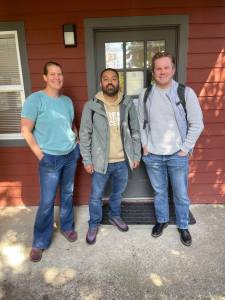
Chase Connell, a senior at Orcas Island High School, and Bethany Carter, who now competes at Arizona State University, both received the camp’s highest honor — an award given to the most motivated and coachable athlete in their event. The recognition is particularly significant given the caliber of competition at the camp, which regularly hosts Olympians, national champions and hundreds of the country’s top high school and collegiate throwers.
“It’s a really big honor for those kids to have been recognized like that, especially in such an elite environment,” said coach Frank Rohm, who has worked at Iron Wood for 22 years and coaches track at Orcas Island High School. “It really confirms my feelings about the kids here—they work hard and they want to get better.”
About Iron Wood Camp
The Iron Wood Thrower Development Camp, founded in 1989 and now in its 37th year, has established itself as the largest specialty track and field camp in the United States, according to the camp’s website. Located in the Coeur d’Alene area of Northern Idaho, the camp attracts approximately 350 athletes annually from across the country and internationally.
The camp’s mission, as stated on its website, is “to provide any and all participants with the opportunity to optimize their athletic potential and improve their physical and mental preparedness for scholastic competition and beyond.” Camp sessions cover all four throwing events: discus, shot put, hammer and javelin.
The facility was built by camp founder Art Templeman, who purchased land north of Coeur d’Alene and constructed a world-class throwing facility. Three American records have been set at the facility, and it hosts one of only three meets on American soil where throwers can win prize money.
“One Olympian who was a medalist in several world championships, the first time he came, he was looking around at this facility and somebody asked him how many places are there like this,” Rohm recalled. “He said he’d never seen one before like this.”
As noted on the camp’s website, nearly 5,700 athletes and coaches have attended Iron Wood since its founding, including 31 Olympians and seven former world record holders. All three men who qualified for the Olympics in discus one year had met each other at Iron Wood when they were in high school, according to Rohm.
Chase Connell’s journey
For Chase Connell, the recognition came during the summer before his senior year. The award ceremony was emotional and meaningful.
“What was even more special was right after the awards had all been called, Art Templeman walked right over to me, gave me a hug, and he said ‘I’m proud of you,’” Connell said. “That whole experience felt really special.”
Connell, who moved to Orcas Island when he was 8 years old, didn’t start throwing until his sophomore year when he saw Bethany Carter and Coach Frank Rohm practicing discus after soccer practice. Despite his late start in the sport, Connell has found remarkable success through dedication and hard work.
When asked about the keys to his achievement, Connell emphasized the importance of self-belief and consistent effort.
“It’s pretty much never too late as long as you’re willing to work hard,” Chase explained. “A lot of these people are the same age as me but have been throwing for six years. I’ve only been throwing for two years, but we’ve put in the same amount of effort because I throw year-round and practice just as much as they do.”
Connell also shared insight into his mental approach to competition. At the state meet, where he set his personal record, he described a pivotal moment: “As I was walking into the ring to take my first throw, my legs just felt like jelly. I stopped right there, stood still, and took a breath. I thought, ‘Why am I feeling this way? I don’t need to.’ I took a deep breath, my legs felt better and stronger, I stepped in, and I threw my PR.”
The role of hard work
Throughout the interview, Connell consistently returned to the theme of dedication and perseverance. He offered advice for young athletes just starting out: “The most important thing is you have to believe in yourself. When it comes to the hard work or doing things you’re trying, you’re only gonna do that if you believe in yourself, right? And when you get to competition you’re only gonna perform well if you believe that you can.”
He continued: “If you’re a young kid and you have big dreams, you have to believe that you can do it and you have to believe you can get there. That’s gonna actually help you work harder because you’re gonna believe that it’s actually possible and there’s actually a point to what you’re doing.”
Coach Frank Rohm’s perspective
Coach Rohm, who has coached at big high schools and at the college level, including Boise State, was initially uncertain about coaching in a small, rural setting. His expectations proved to be completely wrong.
“When I came here, my expectations were not very high,” Rohm admitted. “I thought, small environment, these kids aren’t gonna really probably take it seriously. Nothing could be further from the truth. They’re just tough. They’re tough and they work hard. And they’re very comfortable with being pushed.”
Rohm credits several factors for the island athletes’ success, including a strong soccer program that teaches kids the value of hard work at a young age, and the resilience developed from dealing with ferry schedules and travel challenges.
“I have a kind of a theory about how kids here deal with adversity really well because they spent their lives dealing with ferries and having to wait around and delays,” Rohm said. “They take things really well in stride. I think that makes them stronger and more resilient.”
He also emphasized the critical role of community and family support. “The most effective coaching job is definitely done at home,” he noted. “The amount of support here is very high, much higher than I expected.”
Connell is now preparing for his senior season and exploring opportunities to throw at the college level, with Utah Valley University among his top choices. The connections he made at Iron Wood continue to benefit him, as he works remotely with a coach he met at the camp who provides feedback on his technique.
For both Connell and Carter, the Iron Wood experience represents more than just athletic achievement — it’s validation of the hard work, dedication and resilience that define the spirit of Orcas Island athletes.