San Juan Preservation Trust in top two percent nationwide
Published 2:21 pm Tuesday, November 29, 2011
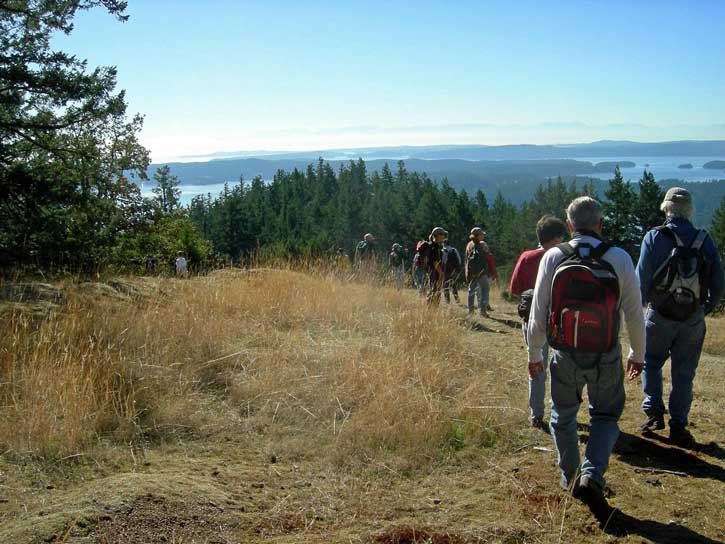
Despite a recession, land preservation seems to be holding strong – at least in our neck of the woods.
The National Land Trust Census, a report released this month by the Land Trust Alliance, shows that the amount of voluntarily protected land increased 27 percent between 2005 and 2010. Locally, the San Juan Preservation Trust worked with private land owners to permanently protect 3,681 acres in the San Juan Islands, a 36 percent increase since 2005. This places the Preservation Trust in the top two percent of more 1,700 land trusts currently operating in the United States.
Orcas Islander Anne Hay is one of the many locals who made that ranking possible. She donated 16 acres near Camp Orkila to the trust as a conservation easement in the late 1990s.
“It seemed the perfect spot to preserve. It’s a beautiful piece of land,” Hay said of the acreage. “I’ve had the property since 1958. It’s just a small piece, but it’s waterfront, and to the north there are other conservation easements. … There is also the state preserve, Pt. Dowdy, north of the property.”
About the preservation trust
Founded in 1979, the San Juan Preservation Trust is a private, non-profit and membership-based land trust dedicated to helping people and communities conserve land in the San Juan Islands. The trust has permanently protected more than 260 properties, 34 miles of shoreline and 14,000 acres on 20 islands, including land now managed as public parks, nature preserves, wildlife habitat, and working farms and forests.
Unlike the land bank, which purchases land primarily for public use and is funded from a 1 percent real estate excise tax, the preservation trust serves landowners who wish to protect their land through voluntary private action.
Landowners can either gift property to the trust or sign a conservation easement, which allows them to conserve property while still keeping it in their possession. Landowners place restrictions on how the land is used, both now and in the future. They then donate (or sell) that easement to a conservation organization, which agrees to enforce the restrictions forever.
“Know your property well and talk to trust members who would be able to explain what you can and cannot have in your contract,” Hay advised. “Everyone has a choice and some people may want it completely wild.”
The trust relies on private donations of money, land and conservation easements. Increasingly, the trust is providing public access to these lands.
“With the help of landowners, and with the generous philanthropic support provided by our members, we are investing in open spaces, classic island vistas, clean water and the future of local food production,” said Executive Director Tim Seifert. “We are also investing in places for exploration of the natural world, for our own families and for future generations of humans and other species.”
During the past five years, the federally funded Land and Water Conservation Fund saw a 38 percent funding cut. By contrast, the National Census finds that operating budgets for land trusts are up 36 percent, and endowment funds nearly tripled during that time. Volunteer involvement in land trusts grew 70 percent nationally. Locally, this growth was reflected in the trust’s volunteer corps, which did everything from mailing parties to land restoration projects.
“Clearly, people want to protect the land they care about, and they don’t want to depend upon government agencies to do it for them,” Seifert said. “While we have partnered successfully with public agencies like our county land bank on large, well-known projects – Watmough Bight on Lopez Island, Sundstrom Farm on San Juan Island and Turtleback Mountain Preserve on Orcas Island are great examples – our private, market-based approach to protecting special places from development is increasingly important.”
Online resources
To see the survey results, visit http://goo.gl/ZjiRW or http://goo.gl/4FkjC.