Noxious weed alert: thistle
Published 1:50 pm Tuesday, August 19, 2014
by Kate Yturri, Judy Winer and Gwen Stamm
WSU Master Gardeners
Thistles are recognizable weeds in the San Juan Islands, and there are several varieties that are native to the U.S., one of which is located in the county: Indian thistle.
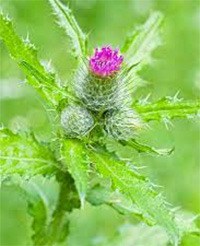
This native plant, also known short-style or clustered thistle (Cirsium brevistylum), can be confused with bull thistle (C. vulgare). Both are up to six or more feet tall but the native, short-style thistle lacks spiny wings on the upper stems. It can be distinguished from bull thistle by its hairy stem, and less deeply cut leaves that are arranged symmetrically.
Indian thistle’s stem is usually single and coated with hairs and webby fibers giving it a softer appearance. If you try to pull out a mature Indian thistle, its stem and leaves are soft, whereas bull thistle is quite painful. It is more shade tolerant than bull thistle.
Bull and Canada are noxious. Bull thistle reduces the growth of tree seedlings in replanted clear cuts. Bull and Canada thistle reduce crop yield and displace native plants. They prefer sunny, open spaces and can tolerate many soil conditions. Overgrazed pastures are susceptible to bull thistle since cattle tend to avoid it. Both are widespread and are designated Class ‘C’ noxious weeds. Their removal is encouraged but not required in the county.
Bull thistle, like Canada thistle, is a broadleaf, herbaceous plant. It is a biennial, which in its first year is a rosette of deeply lobed and prickly leaves. After winter, it bolts up to six feet and can become multi-stemmed. Leaves are alternate on branching and spiny-winged stems. The flowers are deep pink to purple and large. The bases of the flowers are covered with spines, which distinguish them from the smaller spine-less Canada thistle flowers. Whereas the biennial bull thistle spreads only by seed, Canada thistle (C. arvense), is an aggressive perennial weed that spreads by seed, root and rhizome. It can reach five feet in height, though female stems can be eight feet. Its alternate leaves, often hairy underneath, are typically elongated and variously toothed with spines on the margins and at the tips. The stems are erect and branching with small, purple-pink or rarely white flowers in clusters at the top.
Control of these thistles are not the same, but prevention is important. Since bull thistle reproduces by seed, removal of plants before flowering may prevent new infestations. Young plants can be dug with a shovel when in the rosette or seedling stage. The removal of two to three inches of the root usually kills the plant. Plants with tight flower buds can be mowed or cut just below the soil. Repeating this a month later should kill most of the plants. Flowering heads should be collected and destroyed or disposed of in plastic bags. Close cutting before flowering or at least twice a season will reduce the population. Rototilling or hoeing will also effectively eliminate plants.
Goats and sheep both have been used for grazing management of bull thistle. Even horses will help by picking out the nectar-rich flowers and eating them before they go to seed.
Control of Canada thistle is more difficult than control of bull. Manual removal is not recommended, as breaking up roots usually produces new plants. Strategies to starve this biomass are most likely to be successful. Mowing the thistles at their tight bud stage can also be effective. Repeating this procedure every 21 days will eventually starve the plant, though it must be done for up to three years. Inorganic mulches such as plastic and weed barrier fabrics may also be effective.
For info, call 376-3499.