Banning the bag: Local grocers get on board with banning plastic bags at checkout stands
Published 10:11 am Tuesday, February 7, 2012
by CALI BAGBY and COLLEEN SMITH ARMSTRONG
Staff report
Twenty plastic bags, towels, surgical gloves, sweat pants, plastic, duct tape, and a golf ball were found in a gray whale that washed up on Arroyo Beach in West Seattle in 2010.
Whales and sea turtles often feed on plastic bags mistaking them for squid, and birds often confuse plastic pellets for fish eggs. A study of 38 green turtles found that 61 percent had ingested some form of marine debris such as plastic bags, cloth, and rope or string, according to the United States Environmental Protection Agency.
“Nothing should die because it’s ingesting consumable products,” said Stephanie Buffum, director of Friends of the San Juans, who is pushing for the elimination of plastic bags at store checkouts in Washington state. “We could be doing better in terms of designing a better bag and modifying our behavior. It’s a pretty simple task.”
House Bill 1877 and Senate Bill 5780, both bills to ban plastic bags and promote reusable bags, were introduced last year and failed to pass. Similar bills House Bill 2404 and Senate Bill 5780 were reintroduced again this year by Rep. Joe Fitzgibbon and Rep. Marko Liias.
Opponents of the bills say they would limit consumer choice and represent an unnecessary government overreach.
Although the statewide ban did not pass this year, Buffum said it’s not bad news.
“We had an amazing presence this year in the legislature. We had a great hearing, worked closely with the Chairs of the House and Senate Environment Committees, got support for the bill from the Speaker of the House and the majority leader, and some amazing press, including an editorial from the Seattle Times,” Buffum said. “We started a great conversation, and it’s only going to get better.”
Local business have expressed their support of the bill, including Jennell and Brian Kvistad of Blossom Grocery on Lopez Island, Steve and Terri Mason of the Shaw General Store on Shaw Island and Verne Howard of Kings Market and Friday Harbor Market Place on San Juan Island.
In a press release signed by the above businesses, they wrote “as grocery and retail store owners, we don’t need to provide plastic bags to customers at check out. Many people bring their own reusable bags and others may opt for paper sacks. This keeps plastic out of the environment and saves businesses on overhead costs, which are passed on to the consumer anyway. We know that running responsible businesses means that we have to be good stewards of the environment.”
Jason Linnes, manager of Island Market on Orcas, says his store has never used plastic checkout bags.
“We’re not a fan and we never have been a fan,” Linnes said. “We only use plastic to put over meat and in the produce department.”
Linnes says he supports a state-wide ban of plastic at checkout stands.
Orcas Homegrown Market and Gourmet Delicatessen only uses recycled plastic bags in the produce department. In addition, the store accepts clean, folded paper bags to reuse. Orcas Village Store also only offers plastic for produce.
“Pretty soon I will be using just paper in the produce section – as soon as the plastic rolls run out,” said co-owner Ron Rebman, who is in favor of the proposed ban.
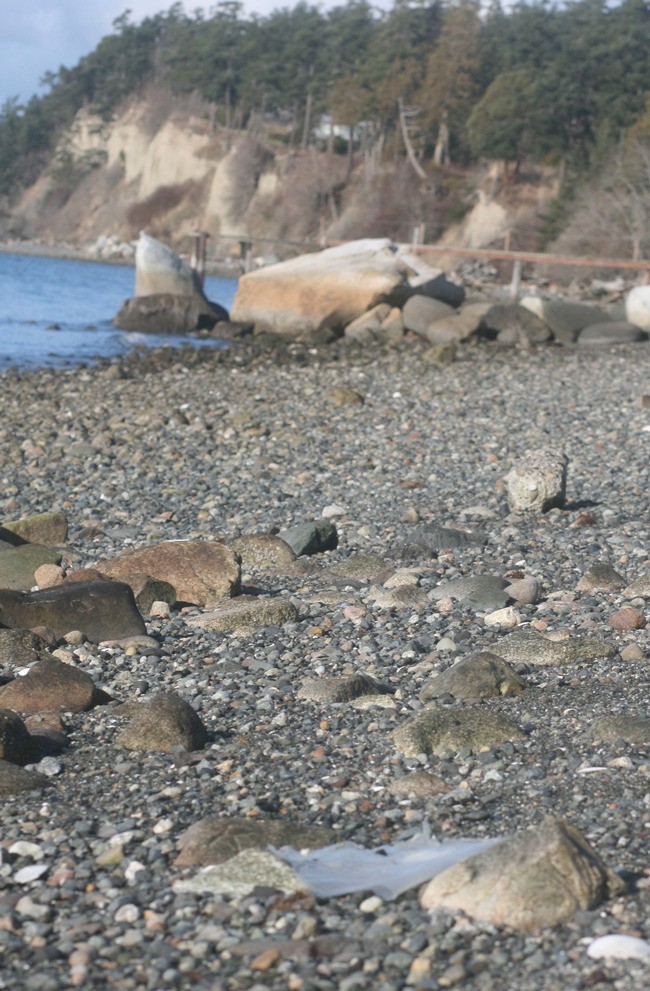
In a letter to Rep. Kristine Lytton, the San Juan County Council expressed their support of the bill, citing the unnecessary pollution of plastic on the islands as their main concern. The council wrote that more than 10,000 pieces of micro-plastic were picked up in just one day on Orcas Island and that University of Washington-Tacoma have found plastic in every water sample they have taken from Puget Sound. Buffum said the bags also break into small pieces full of deadly chemicals like PCB.
“This is horrible, especially since Southern Resident Orcas and Chinook Salmon have some of the highest concentration of PCBs in their bodies compared to other populations along the West Coast,” wrote Buffum in a letter about the issue.
Buffum said that if the statewide bill fails then they will push to ban bags at the local level. Passage of either bill would make Washington the first state to ban plastic grocery bags. As of Jan. 11, Edmonds, Mukilteo, Seattle and Bellingham have prohibited plastic grocery bags.
“We’re living on the edge of Salish Sea and Puget Sound and we can reduce plastic pollution and save wildlife,” Buffum said.