Going their own way | Salt Spring Island’s legacy of welcome inspires cross-border flotilla
Published 1:30 am Saturday, August 16, 2025
By Darrell Kirk
Sounder contributor
The upcoming Hands Across the Water Flotilla from Orcas Island to Salt Spring celebrates more than 160 years of the island’s tradition of welcoming diverse immigrants
As the Hands Across the Water Flotilla prepares to depart from Orcas Island bound for Salt Spring Island, British Columbia, Canada this September, the journey represents far more than a scenic cross-border voyage. It celebrates a profound tradition of welcome and freedom that has defined Salt Spring Island for over 160 years — a legacy rooted in the island’s remarkable history as a haven for immigrants seeking liberty and new beginnings.
Salt Spring Island’s reputation as a place where people “go their own way” didn’t emerge by accident. It was forged in the crucible of the 1850s and 1860s, when waves of diverse immigrants — African Americans fleeing slavery, Japanese families seeking opportunity, Hawaiian settlers and others — found refuge on its shores. Their courage to chart new courses in an unfamiliar land created the independent spirit that characterizes the island to this day.
The foundation of freedom
The island’s tradition began with its original inhabitants, the Hul’qumi’num- and SENĆOŦEN-speaking peoples who have called this land home since time immemorial. These First Nations include the Penálaxeth’ (Penelakut), Quw’utsun (Cowichan), Lyackson, Stz’uminus (Chemainus), SȾÁUTW (Tsawout), W̱JOȽEȽP (Tsartlip), BOḰEĆEN (Pauquachin), W̱SIḴEM (Tseycum), MÁLEXEȽ (Malahat) and Halalt peoples. The complex reality of new immigrants settling on traditional Indigenous territories created tensions that cannot be overlooked in understanding the island’s full history.
However, it was the great wave of immigration in the 1850s and 1860s that fundamentally shaped Salt Spring’s character as a place of refuge. Perhaps no group better exemplifies this spirit than the African American pioneers who arrived as part of a larger exodus from California, where oppressive laws threatened their freedom.
The story of families like the Starks and Estes illuminates how Salt Spring became a beacon of hope. As documented in the remarkable memoir of Marie Stark-Wallace, whose family was among the first Black settlers on the island in 1860, these immigrants were “essentially refugees striving for freedom.” Their journey from slavery in Missouri, through the California goldfields, and finally to the fir-covered hills of British Columbia, represents one of the most significant yet underrecognized chapters in Canadian immigration history.
The origins of independence
Author Evelyn C. White, a contemporary observer of Salt Spring’s Black community, noted how the origins of these early settlers continue to influence the island’s character. “That sense of freedom and desire to chart your own course was what I experienced among the contemporary black residents of Salt Spring and the general population,” she said. “I think people who know anything about Salt Spring and the Southern Gulf Islands know that the people there have a reputation for going their own way.”
This independent spirit was born from necessity. The African American families who arrived in 1860 had already demonstrated extraordinary courage in their journey to freedom. Howard Estes, patriarch of one pioneering family, had literally bought his family’s freedom from slavery in Missouri, only to be driven out by the Ku Klux Klan. After settling in California, oppressive state laws forced them to look elsewhere for true freedom.
Stark-Wallace recalled how “they heard of the fir-covered hills of B.C. and decided to head north.” The decision to emigrate was not taken lightly — as she documented, “The emancipation of the slaves in the U.S. was a burning political question. The Negro [sic] people were dissatisfied with the laws of the country. They met in San Francisco to discuss how best they could improve their hard lot.”
A strategic welcome
The immigration of these diverse groups to Salt Spring Island had implications far beyond individual families seeking freedom. Historical evidence suggests that this influx may have played a crucial role in preventing American expansion into British Columbia, potentially altering the course of Canadian confederation.
During the 1850s, American gold miners were eyeing British Columbia’s rich territories. Had these lands not already been settled by the large influx of African Americans and other immigrant groups, American expansionist ambitions might have succeeded. As one historical account notes, “As a result of the favorable report by the committee, 600 colored [sic] people came to B.C., some came up on two pioneer steamships, the Brother Jonathan and Pacific.”
Gov. James Douglas, whose own mixed heritage made him sympathetic to the plight of oppressed peoples, actively welcomed these settlers. The multicultural foundation they established helped secure British Columbia’s future as part of Canada rather than the United States.
Diverse voices, shared values
The African American pioneers were joined by families from Japan, Hawaii and other Pacific regions, creating one of the most diverse communities in 19th-century British Columbia. The Stark family’s account mentions Hawaiian settlers: “They were colored [sic] Hawaiians, perhaps the first of their country people to come to the island. They were the first family to take the claim now known as the Mansel farm.”
Each group brought their own traditions, skills and perspectives, but they shared common values of hard work, independence and mutual support. As Stark-Wallace documented, “But one happy thought in this wilderness, it was their own and it stood for freedom. And that all absorbing thought was all the stimulus needed for the colored [sic] settlers in those days.”
The challenges these families faced were immense. Living in isolated cabins, far from medical care and often from neighbors, they had to be completely self-sufficient. Yet they persevered, establishing farms, schools and churches that became the foundation of Salt Spring’s lasting communities.
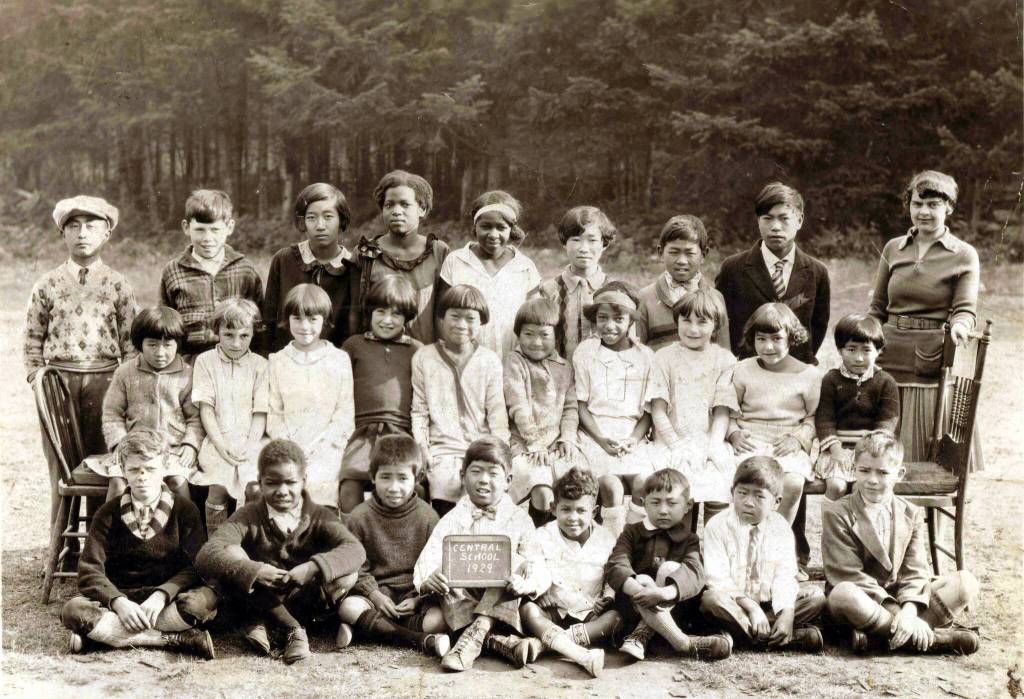
When African American settler John Craven Jones arrived on Salt Spring Island at age 25, there was no school on the island, so he taught children wherever space was available, in sheds or family homes, until the community built a log schoolhouse by 1861. Understanding the dangers posed by cougars that roamed the island, Jones walked back and forth across Salt Spring to teach at two locations so children wouldn’t have to make the perilous journey to a single central location where they risked cougar attacks. Most remarkably, Jones taught without receiving any pay for 10 years, from his arrival until the Salt Spring Island School District was created in 1869, surviving instead on the generosity of grateful families who provided him with clothing, garden produce, eggs, meat and poultry, recognizing his dedication to educating their children when he was one of only 16 public school teachers in the entire province.
The continuing legacy
White observed that the refugee origins of Salt Spring’s early Black settlers created lasting change: “She said that during her time on Salt Spring, she felt the origins of the black settlers — who were essentially refugees striving for freedom — has helped make the island what it is today.”
This tradition of welcome didn’t end with the 19th century. Throughout its history, Salt Spring Island has continued to attract people seeking alternative ways of life, artists, environmentalists and others who, in White’s words, prefer to “go their own way.” The island’s reputation for tolerance, creativity and independence draws from the same wellspring of freedom that brought those first diverse immigrants to its shores.
Hands across the water
September’s Hands Across the Water Flotilla embodies this continuing spirit of connection and welcome. As boats from Orcas Island make their way to Salt Spring’s harbors, they follow routes pioneered by those early immigrant families who risked everything for freedom.
The flotilla represents more than tourism or recreation — it’s a living celebration of the cross-border friendships and shared values that have always characterized this region. Like the diverse immigrants of the 1850s and 1860s, today’s participants are choosing to “chart their own course,” building connections that transcend national boundaries.
Salt Spring Island’s history reminds us that diversity has always been a source of strength, not division. The African American, Japanese, Hawaiian and other immigrant families who settled there didn’t just survive — they thrived, creating a unique culture that celebrates both independence and community.
As the flotilla arrives at Salt Spring Island, participants will be welcomed by a community whose very identity was forged by immigration, courage and the determination to build something new. In the words of Stark-Wallace, reflecting on her family’s journey from slavery to freedom: “Now I can see the hand of God guiding me through all of my troubles, guiding me to a higher life.”
It is not lost that Salt Spring Island’s original inhabitants, the Hul’qumi’num- and SENĆOŦEN-speaking peoples who have called this land home since time immemorial, were displaced by the waves of settlement that followed. The Hands Across the Water Flotilla provides an opportunity to acknowledge these historical wounds, address the complex legacy of colonization and work toward greater understanding and healing between all communities who now call these islands home.
The flotilla thus becomes more than a single event — it’s a continuation of Salt Spring Island’s 160-year tradition of welcoming those who seek freedom, community and the chance to go their own way. In celebrating this tradition, we honor not just the island’s past but its continuing role as a beacon of hope and welcome in an uncertain world.
The legacy of those early immigrants lives on in every welcome extended to newcomers, every cross-border friendship formed and every flotilla that crosses these waters in the spirit of connection and mutual understanding.