Battle for the forest: Invasive squirrels threaten Orcas Island’s ecosystem
Published 1:30 am Wednesday, July 23, 2025



By Darrell Kirk
Sounder Contributor
Cynthia Frausto never expected her teenage visit to Orcas Island would lead to a career chasing squirrels through the Pacific Northwest forests. Growing up in Covina, California, she first discovered the island when her cousins brought her over right after high school, insisting she “had to see it.”
Years later, after transferring to UCLA as an anthropology major, Frausto’s path took an unexpected turn when she met Amanda Robin, a Ph.D. student studying Western gray squirrels and California ground squirrels. “I fell in love with fieldwork,” Frausto recalls. “I fell in love with the species we were working with too.” This passion eventually led her to pursue her own Ph.D. research focusing on squirrel behavior and ecology.
That love affair with squirrels led her to notice something troubling: Eastern fox squirrels didn’t belong in Los Angeles — or anywhere on the West Coast. These invasive species, originally from the East Coast, had been introduced throughout the early 1900s when people wanted to bring “nature close to the people” in urban parks.
Now, those same invasive fox squirrels have reached Orcas Island, arriving sometime in the early 2000s, possibly brought over on the ferry as pets or for hunting. What concerns Frausto most is how they’re threatening the native Douglas squirrels — the island’s ecological gardeners.
“Douglas squirrels are basically the pollinators of the forest,” she explains. These native squirrels spread seeds and, crucially, transport fungal spores through their droppings, creating the underground networks that allow trees to communicate and share nutrients. “On Orcas, the squirrels are the only ones that spread fungal spores this way.”
The invasive fox squirrels have significant advantages: They’re larger, reproduce twice as fast and are bolder in urban areas. While Douglas squirrels rely on tree connectivity and hoard their winter food in one location, fox squirrels scatter their nuts across thousands of locations, making them more adaptable explorers.
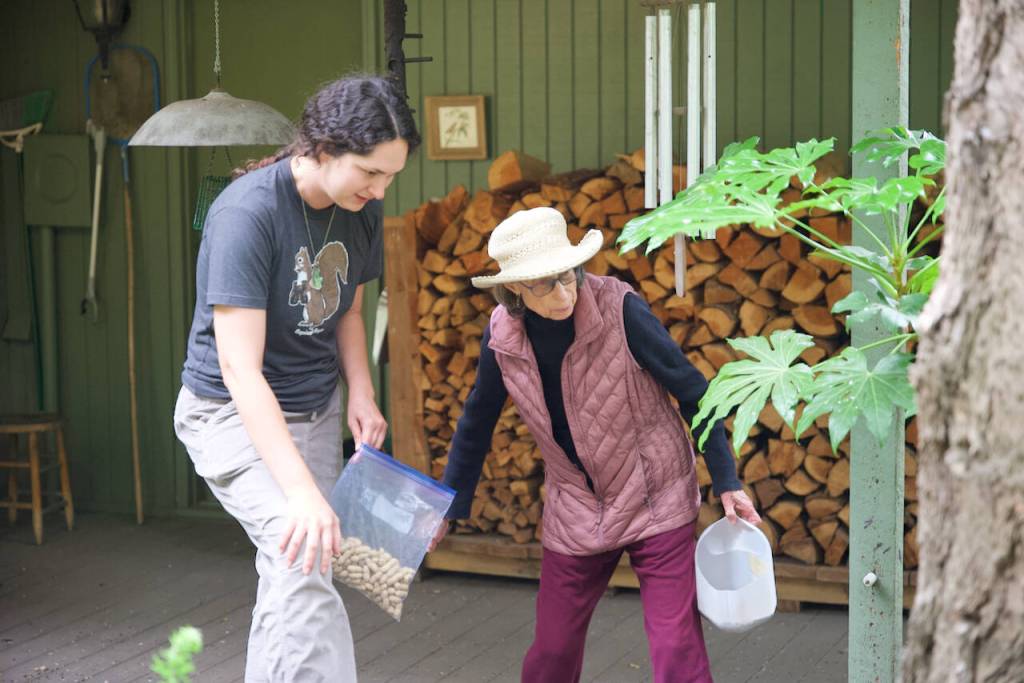
Frausto’s research found an unexpected ally in Jean Henigson, who responded to her community survey about squirrel sightings. Henigson immediately recognized both species in her yard and invited Frausto to set up cameras on her property. “She loves the squirrels here,” Frausto notes. Henigson had spotted the difference between the species long before the research began, correcting neighbors who mistook the smaller Douglas squirrels for babies or chipmunks. In a delightful coincidence, Henigson had also attended UCLA in the 1960s, giving the two women an instant connection.
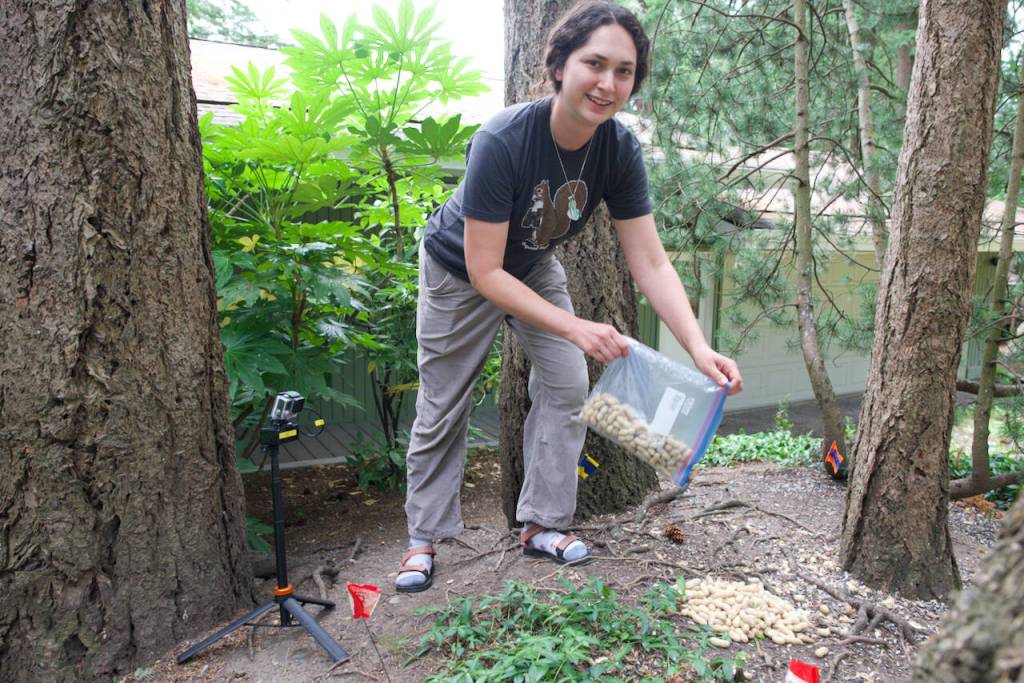
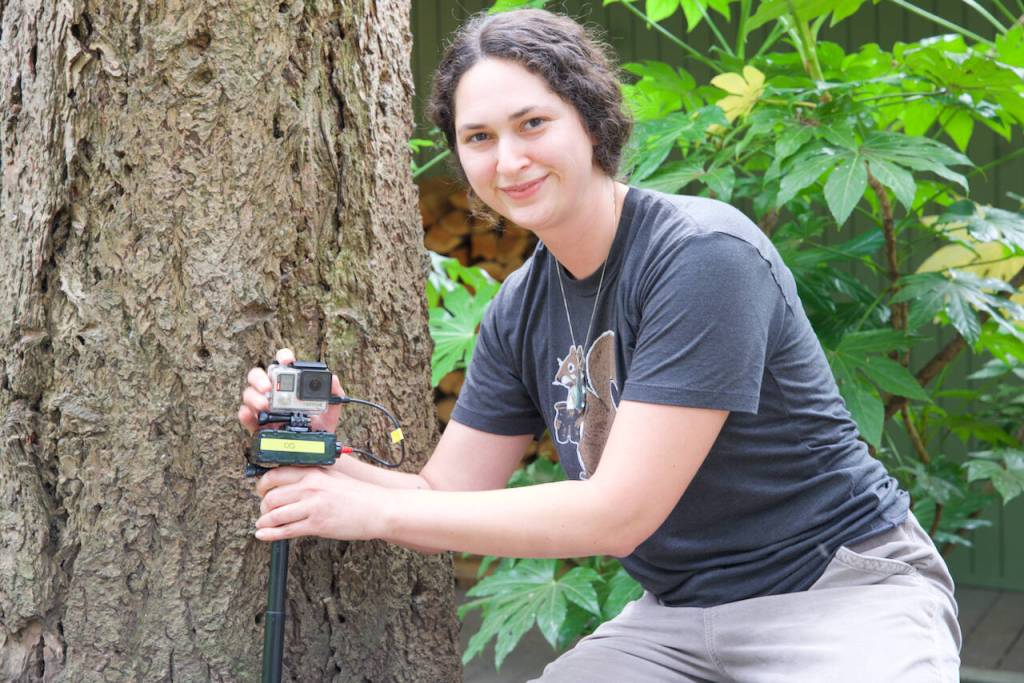
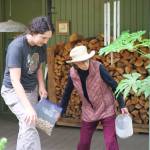
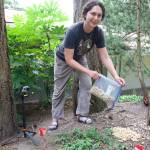
Now, armed with video cameras and strategically placed “squirrel parties” — piles of nuts that attract both species — Frausto documents their interactions to determine who wins these battles for survival. Her research, supported by her cousin’s family on the island, could determine whether Orcas Island’s native pollinators can survive this modern invasion.
For more information about Frausto’s research, visit her website: squirrelgazer.com/orcas-island-squirrels.