Exploring the magic of Indian Island
Published 1:53 pm Tuesday, March 3, 2015
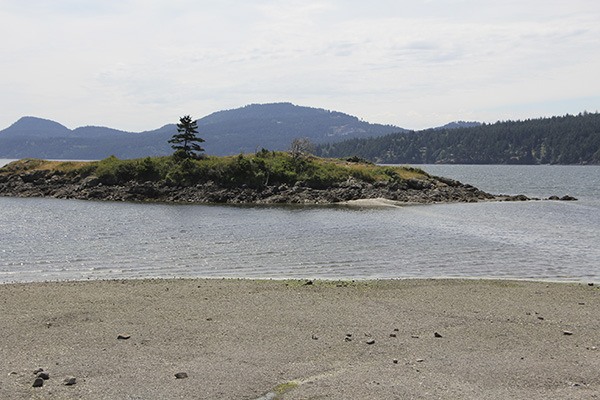
Cloaked in sea water and fog for the majority of the year, Indian Island is an intriguing place. Its enigmatic presence is part of the reason it gets a spotlight at the annual Tides of March. The small island is also an important area to study marine science.
“It seemed like fun to have an annual beginning-of-season event to share our excitement about some of the new issues in marine ecology we are pursuing at Indian Island, such as climate change and ocean acidification,” said Russel Barsh, director of Kwiaht, the Lopez-based science laboratory that sponsors the event.

The fourth annual Tides of March, an educational event for Orcas families and children, is at Odd Fellows Hall from 1:30 to 3:30 p.m. on Sunday, March 15. Admission is free.
Music meets marine science
This year’s event features a musical performance by Orcas Island Elementary School fifth graders, inspired by stormwater issues and mentored by musicians Sharon Abreu and Michael Hurwitz. It is part of an experimental project combining science with performing arts involving Barsh and the Orcas Island Community Foundation.
“What a treat it has been working with this enthusiastic, creative, bright class and their wonderful teacher Nancy Knapp,” says Sharon Abreu in a recent press release. “They give us hope for the future.”
Abreu and Hurwitz have been involved in Kwiaht’s events since 2010 and started working with the Tides of March events in 2012. They hope that teaching young people about the environment will help them carry out an appreciation of the natural world throughout their lives.
“When kids know they are inheriting polluted water and fish, they really care about that,” said Abreu. “It’s empowering for them to have a say in what they will inherit from adults. Instilling in them a sense of stewardship makes it more likely they will care for their world. In addition to really caring, kids are very creative and they come up with great ideas.”
The students’ performance on Sunday will be three original skits that they wrote and a song written by one of the students, Alecia Talbot.
Barsh agrees with Abreu that educating children about the environment they live in is the best way to make an impact.
“This is where we and our children stand to gain or lose the most from our decisions,” he said. “Indian Island is especially so, since it is locally important for recreation, schools and tourist dollars. The support we have had from local businesses and volunteers attests to that.”
In addition to music, there will also be a slideshow summarizing current research on pollution sources and rain garden design in East Sound, briefings by volunteers on the 2015 research and educational program at Indian Island and tips for getting involved. You can also meet the two young illustrators of Betty Jean Rodenberger’s poetry book “The Oystercatcher Family of Indian Island.”
Kwiaht projects
Environmental chemistry is a new focus of Kwiaht’s work at Indian Island and in the schools. At the upcoming event you can find out what radishes and onions have to do with copper pollution, and why Orcas students will be collecting bees and pollen this spring. Kwiaht recently purchased a biochemistry micro-lab for Orcas Middle School that will be available one day per week for student projects. Studies planned for this year include pesticides, algal toxins, surfactants used in automotive products and endocrine disrupting compounds in local salmon.
“Although we have seen some recent reduction of pesticide levels in Eastsound clams,” wrote Barsh in a press release, “we need to take a more systematic approach to identifying toxic threats and addressing them through consumer choice, and building more, better designed and maintained rain gardens along streets and parking areas.”
Starfish decline?
Indian Island made headlines this year with the heavy decline of starfish experiencing a wasting syndrome that is wiping out the species all along the coastline from Mexico to Alaska. The good news, according to Barsh, is that “hundreds of juvenile sea stars have replaced the lost ones, but it remains to be seen how well they survive the heat of another summer.”
He believes that at least two diseases are affecting Salish Sea stars and both of them are caused by warmer waters. In the Pacific Northwest, sea temperatures rose more than air temperatures. Part of Kwiaht’s research will continue to focus on climate change issues. Barsh hopes that the important science issues raised at the annual Tides of March event will continue to inspire islanders to get involved with Mother Nature’s many wonders.
“What’s cool is how we attract different people with different topics, and how we’ve been able to get youth more involved,” he said.
For more info about Kwiaht, visit www.kwiaht.org.