Turtleback Mountain: Orcas Island weighs deer hunting on its most beloved preserves
Published 1:30 am Tuesday, March 24, 2026

By Darrell Kirk
Staff reporter
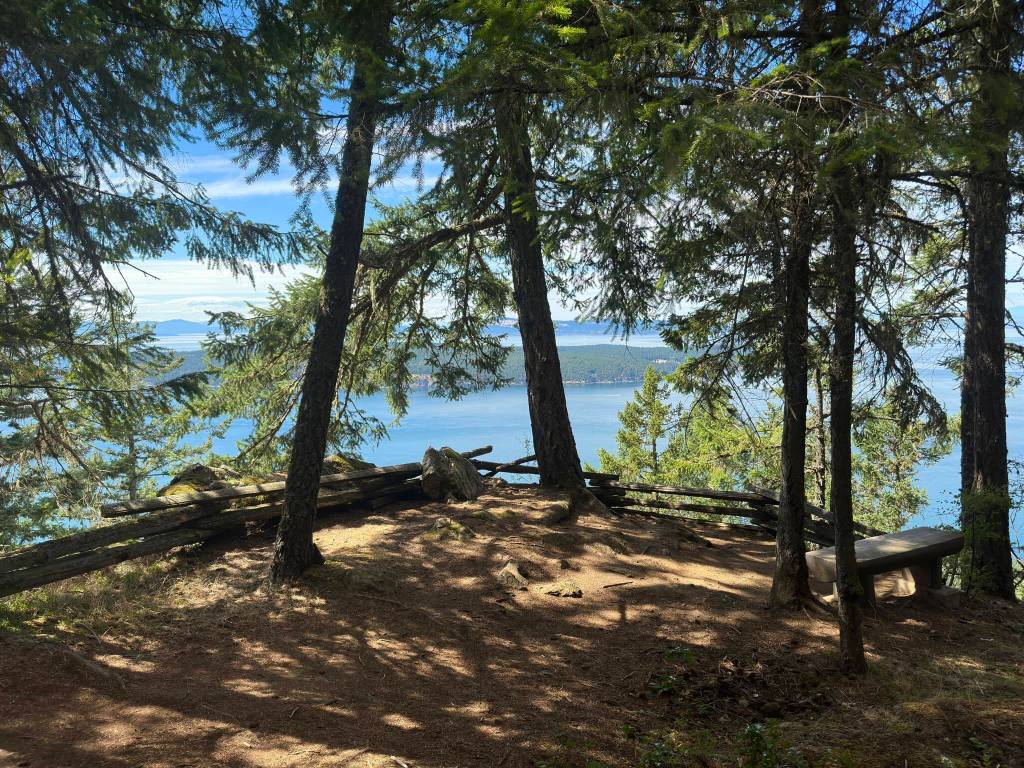
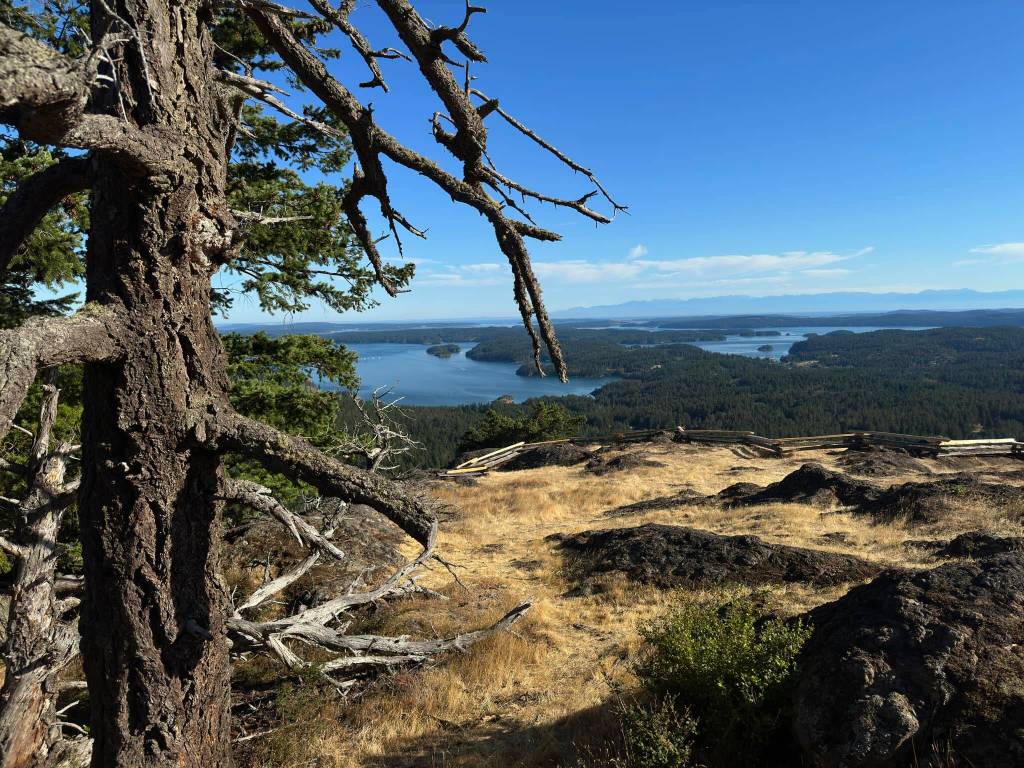
The trails of Turtleback Mountain Preserve wind through old-growth fir, past quiet wetlands and open rocky balds, offering some of the most serene hiking on Orcas Island. For many residents, it is a sanctuary. Now, a proposal by the San Juan County Conservation Land Bank to open select areas of Turtleback Mountain and the newer North Shore Preserve to manage deer hunting is testing what kind of public land this community wants, and what the land itself needs.
For botanist Madrona Murphy, who was born and raised on Lopez Island, the proposal can’t come soon enough. Her years surveying camas, chocolate lily, checker mallow and other native species paint a stark picture of deer pressure. “The biggest predictor of the size of both the camas flowers and the camas bulbs was the presence or absence of deer,” she said. “The deer weren’t killing the plants, but they were browsing them enough to keep them significantly smaller — they weren’t able to produce as much food to feed the bulbs and make the bulbs larger, produce more flowers and more seeds.”
Deer strip the understory shrubs that birds depend on for nesting and the insect-rich habitat that feeds their young. When flower heads disappear, pollinators lose forage. The damage extends to rare species.
“Deer were one of the major threats to the Island Marble butterfly on San Juan and Lopez — they’d go through and eat the flowers off the mustards where the butterfly lays its eggs, and while they weren’t targeting the caterpillars, they ate an awful lot of them,” Murphy said. “We actually proposed fencing deer out of the mustard patches to try to protect them.”
“It’s not just about nature,” she added. “It’s also about our ability to live in this environment, to have wild foods as well as gardens that are healthy because they’ve got insectivorous birds and pollinating insects.”
Murphy is emphatic: “I’m really excited that there might be some hunting opportunities on Orcas. The Land Bank is being very forward-thinking here — it’s a good part of their management and a way to feed the community as well.”
Samantha Martin, an ecologist who lives on Orcas Island and has worked as a biologist in the islands for 20 years, became a hunter herself because of what she witnessed in the field.
“My main inspiration was seeing the impact that the overpopulation of deer has on native vegetation — specifically wildflowers and pollinator habitat,” she said. “It becomes almost impossible to do restoration here in some areas without fencing. You can’t fence everything.”
Martin also noted a counterintuitive benefit of a reduced population: healthier deer.
“One way to tell a healthy deer population is if the [d]oes have two offspring. In the islands, they often only have one because the resources are so limited,” she said.
Grey Tyson, a seven-year North Shore resident, has seen it firsthand. “Finally, wildflowers — all of these plants popping up because there haven’t been so many deer,” she said. “They live a good life here, and their lives will be taken naturally by a much more horrendous sickness if we don’t control the population now.”
That sickness has a name: adenovirus hemorrhagic disease, or AHD, which swept through the islands’ deer population in 2021. Tyson recalled the summer viscerally — dead deer everywhere, three or four in her own lawn, the smell pervasive across the neighborhood. But the scientists were cautious. Murphy called the outbreak “very poorly monitored,” noting the state accepted reports of dead deer without collecting meaningful samples. “There is no accurate estimate of the population of deer in the island,” she said, “so you can’t say that 90% died because we don’t know how many there were to begin with.” Martin agreed, adding that heavy deer herbivory on native species continues to this day — suggesting the population has largely rebounded regardless of how many were lost.
Peter Guillozet, the Orcas Preserve Steward who oversees both Turtleback and North Shore, described a carefully structured proposal.
“We’re talking about setting up one area on Turtleback to begin with that is off-trail — on the north-eastern side, not near homes and not near trails,” he said.
When asked why the Land Bank doesn’t use parcels not open to the public — avoiding the mix of hunters and hikers entirely — Guillozet explained: “The reason a lot of those preserves are not open is that there’s no road access. The road access tends to be through private roads, and we’re not going to send people up private roads that we don’t own.”
The proposal includes strict safety measures: all state and county firearm rules apply; safety vests provided to trail users at the trailhead; signage placed at all entry points; a reservation system limiting access to one hunt party of two per day; a minimum 100-foot buffer from all trails and neighboring properties; and hunting restricted to daylight hours only. No motor vehicles are permitted on the preserve, so hunters must carry deer out — though a non-motorized cart could be permitted on the trail theoretically.
Not everyone is reassured. For Jeff Otis, a retired county planner living adjacent to the Turtleback boundary, the proposal stirs memories that never faded.
“In 1999, somebody was hunting on what is now the Turtleback property and shot a bullet through my house,” Otis said.
It entered through the slope below the forested back of his property, passed through his office and lodged in a beam — its trajectory having carried it toward the kitchen where Otis could have been standing.
“It sounded like a bomb going off,” he recalled. “I was in the house at the time.”
Otis also pointed out a fatal hunting incident on Lopez Island in November 2023, when a hunter was killed by another hunter’s shotgun on Bureau of Land Management land — the shooter could not see the victim through the trees. The official ruling was that it was a tragic accident.
“The Land Bank is saying that if there’s hunting on Turtleback, it would be with firearms that don’t shoot very far, including shotguns,” Otis said. “Well, this man was killed with a shotgun.”
The Land Bank’s proposal prohibits tree stands entirely — significant given that according to NRA’s American Hunter magazine, tree stand falls injure 5,000 to 6,400 hunters annually, far surpassing gunshot wounds. And the broader safety picture cuts both ways: According to a 2019 study in Human–Wildlife Interactions, deer-vehicle collisions kill an estimated 440 Americans each year — more than all other wildlife-related deaths combined.
Otis also questioned the philosophical shift, reading directly from the Land Bank’s own website: the preserve is described as “a refuge for wildlife and haven for those who wander through a mosaic of forests, wetlands and open meadows.”
“To me, that feels like a breach of the public trust,” he said. “Just the knowledge that hunting would even be allowed on Turtleback would destroy that for me.”
Liam Nutt, a 30-year Orcas resident, noted that San Juan County already limits modern firearm deer hunting to shotguns.
“A slug is a lot safer than a 30-ought-six,” he said. “Hunters are going to get into spots where there’s no trails — probably areas people haven’t been in 50 years. A lot of us like to put meat in the freezer to save some money for our families and friends.”
Woven through the debate is a question of cultural heritage. Turtleback Mountain sits within the ancestral territory of Coast Salish peoples, and the Land Bank has proposed a dedicated two-week window for tribal hunting access.
Murphy placed it in historical terms: “The balance in the islands between deer and people and plants really was from Coast Salish traditional hunting. Orcas has a particularly high density of deer — it seems to me an excellent opportunity for responsible management, local food, and a way for the Orcas community to actually help manage those land bank properties.”
Martin called the tribal provision significant: “I just think that’s a really important gesture and effort to make towards co-stewardship.”