When they call, we answer: The “Dirty 30” join Orcas Island Fire & Rescue
Published 1:30 am Wednesday, May 20, 2026
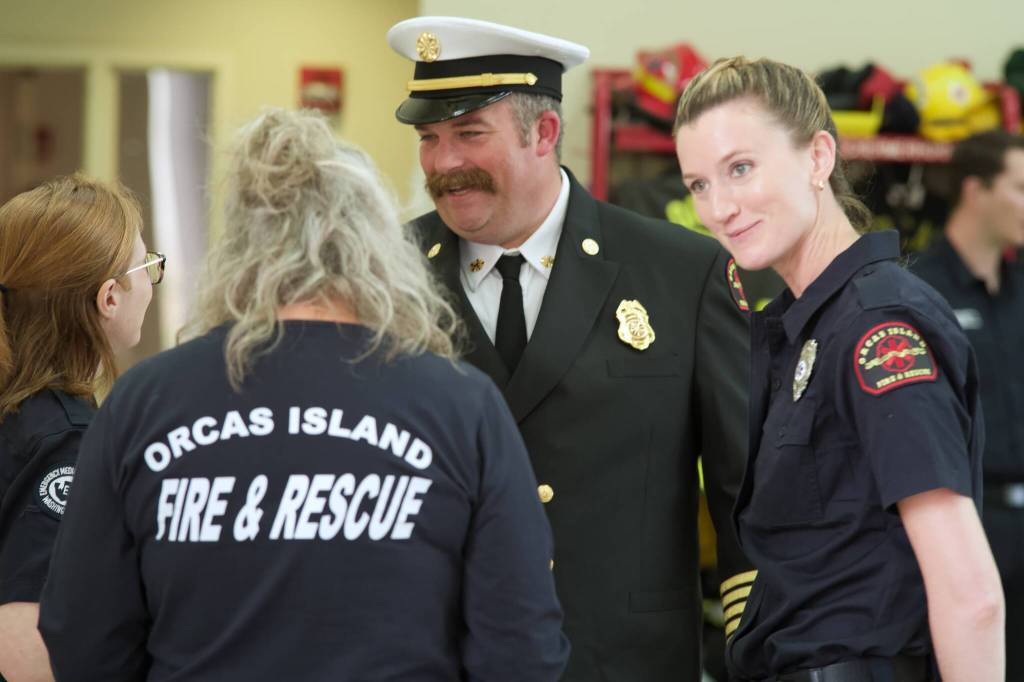
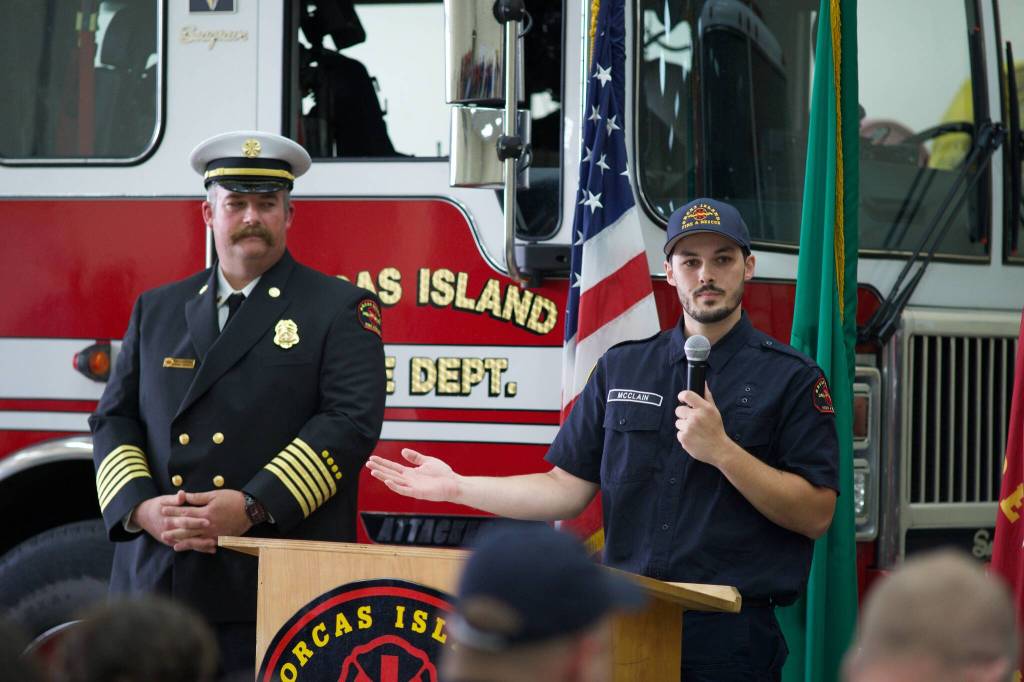
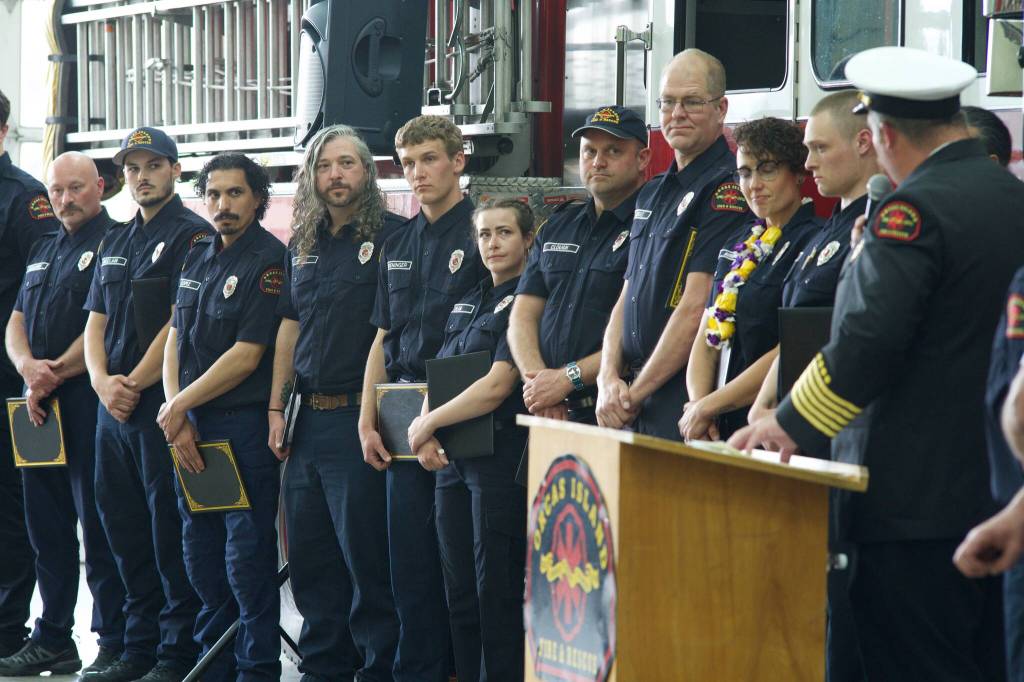
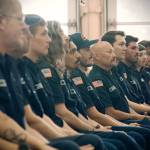
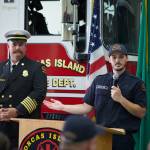
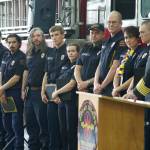
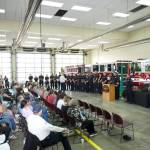
“Tonight, you stand here not just having completed an academy, but having earned your place in the fire service. You now carry a badge that represents something far greater than yourself. It represents trust, it represents responsibility, and it represents a promise to this community, a promise that when they call, you will answer.” — Fire Chief Chad Kimple
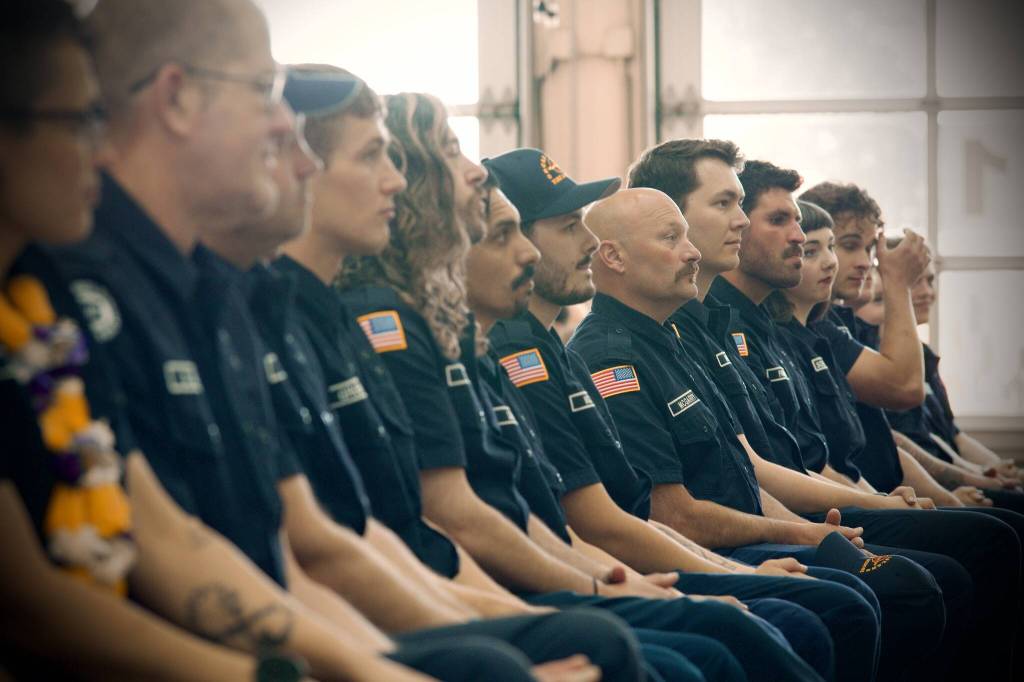
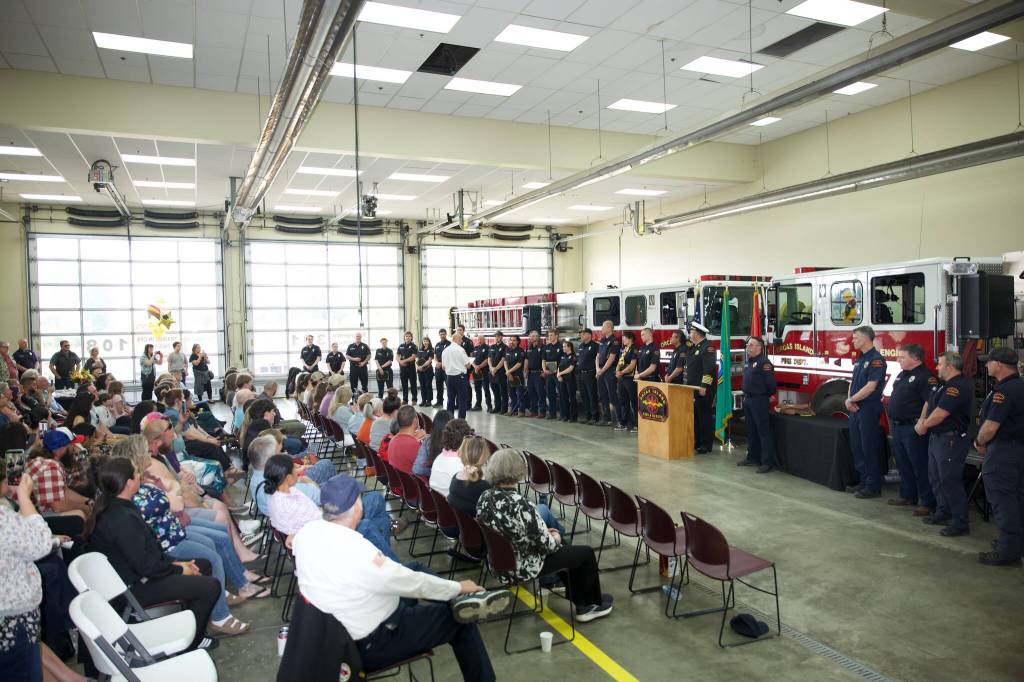
Orcas Island Fire & Rescue graduated its largest recruit academy class in department history on May 19 at the Orcas Island Fire Station, where more than 100 people gathered to witness new firefighters ready to answer the call for their island community.
The “Dirty 30” earned that name over 18 consecutive weekends, through rain, cold, live fire training and state certification exams that stretched to 14 and 15 hours in a single day. Each graduate now holds an IFSAC international firefighter certification for life — a credential that allows them to serve in fire departments anywhere in the United States, Canada and beyond.
“When we first came together, we were all at completely different levels in our lives,” said class president Chris McClain. “Different backgrounds, different strengths, and completely different ideas of what we were getting into. But one thing became clear very quickly — none of us were making it through alone. And that’s where our motto came to light: Many Hands, One Mission.”
The class represented every corner of Orcas Island geographically — a first for the department — with recruits ranging in age from 16 to 61. Firefighter and instructor Ben Luna called it unprecedented.
“All of the stations on Orcas Island were represented through this group,” he said. “That had never happened before.”
The class, which surpassed the previous record set by the 2013 academy, drew praise from an instructor who credited new department leadership.
“It’s not a roll of the dice, it doesn’t just happen,” he said. “It’s new leadership like Chief Chad Kimple, and [Division Training] Chief Sam Fowler. The community sees the new direction and they lined up. And it’s a rare and beautiful thing. I have a hard time getting through the line [of new firefighters] shaking hands without my eyes watering up.”
Among the class’s most remarkable stories was that of Ian Welch and his 10th-grade daughter Neila, 16 — the second and third generation of firefighters in their family.
“It’s been a long road, been very difficult, rainy and cold and tiring,” Ian said, “and I’m just super proud of my daughter, and I’m proud of myself.”
Firefighter and instructor Buddy Wright called Neila the standout recruit.
“She’s a very small person, and there were tasks that were very difficult for her due to no lack of skill but due to simple physics,” Wright said. “I offered to Neila once — I said, you know, it’s okay, you can skip it. And her response was, ‘No, I want to do it.’ She had one of the best attendance records of any recruit in the whole academy. She never missed a day.”
Neila reflected simply on what the months alongside her father had built.
“We grew stronger together, and we understood that we can power through hard things together,” she said. “We learned how to communicate and work better as a team, dad and daughter, throughout this whole academy.”
The instructors found themselves changed by the experience as well. Wright, a 20-year firefighter, described learning a new hose deployment technique called Minuteman alongside the recruits.
“My first thought was, gee, I’ve been deploying hose for 20 years, why do I need to do something differently?” he admitted. “But I kept an open mind and learned it with them, and now I love it. Two days ago, we went back and taught all of the current firefighters the same deployments.”
Luna recalled being caught off guard by the recruits’ sense of accountability to one another. “After a month or so in the program, if anybody had a moment where they would need to be gone, they started reaching out and telling us exactly when they would be here and not be here,” he said. “They recognized that it actually had an effect on the rest of the recruits — when they were not there as a team, they became very apologetic about it.”
For families in the audience, the day carried its own weight. Paul Groeninger watched his son receive his certificate and marveled at what the program had sparked.
“He found this team that’s not a sports team, but it’s a team of dedicated people that he’s really excited to keep building,” he said.
Dimitri Stankevich, the department’s finance director and a 15-year volunteer, looked at the new class as a torch being passed.
“I’m almost 60 years old, and I’ll retire at some point,” he said, “but this is the future of Orcas Island Fire and Rescue, for sure.”
Graduate and firefighter Oscar Schragel-Rietz reflected on the grueling state certification testing that capped the academy. “I got here at 6 a.m.,” he said. “I didn’t leave until sometime between 8 and 9. So it was like a 14, 15 hour day for most of us.”
Graduate and firefighter, Jacob Wright, son of instructor Buddy, already knows where he’s headed — toward a resident firefighter program at the Moscow, Idaho, Fire Department, combined with a degree in emergency services.
“Doing this, I’ve grown to really love this,” he said. “I don’t have that passion, that drive, that love of any other degree as much as I do for the fire service.”
Guest instructor and Lopez Island Fire responder Michael Sendrowicz reflected on the transformation he witnessed over the four months.
“There’s a sudden change after live fire [training],” he observed. “They are different people when they walk out from the burning building than when they went in. But the best change is the one that took hours and days and weeks and months — looking out and seeing all those individuals transform into a we.”