Life and death in the dunes, with foxes
Published 1:30 am Saturday, November 22, 2025
by Russel Barsh
Director of Kwiaht
Every summer, visitors flock to the south shores of San Juan Island to photograph foxes, take selfies at the Cattle Point lighthouse and wander South Beach. Few are aware that the scenic landscape is a rare and fragile sand dune ecosystem with wildflowers and butterflies that they are unlikely to see anywhere else in western Washington. Or that the photogenic foxes, brought to the island a century ago by fur farms, play a complex and as-yet poorly understood role in both changing and maintaining the landscape.
The dunes were historically stabilized by a unique plant community characterized by deep tap roots stitched together by rhizomes, forming a well-anchored perennial vegetative mat. The most conspicuous partner in this community is Seashore Lupine, which blooms blue in late April to May. This native wildflower is restricted to coastal dunes; apart from Cattle Point and a part of northwest Whidbey Island, it is mainly found on the sandy shores of Pacific County. The Seashore Lupines of Cattle Point have their own butterfly, the Silvery Blue, which matches their colors and flies when they flower.
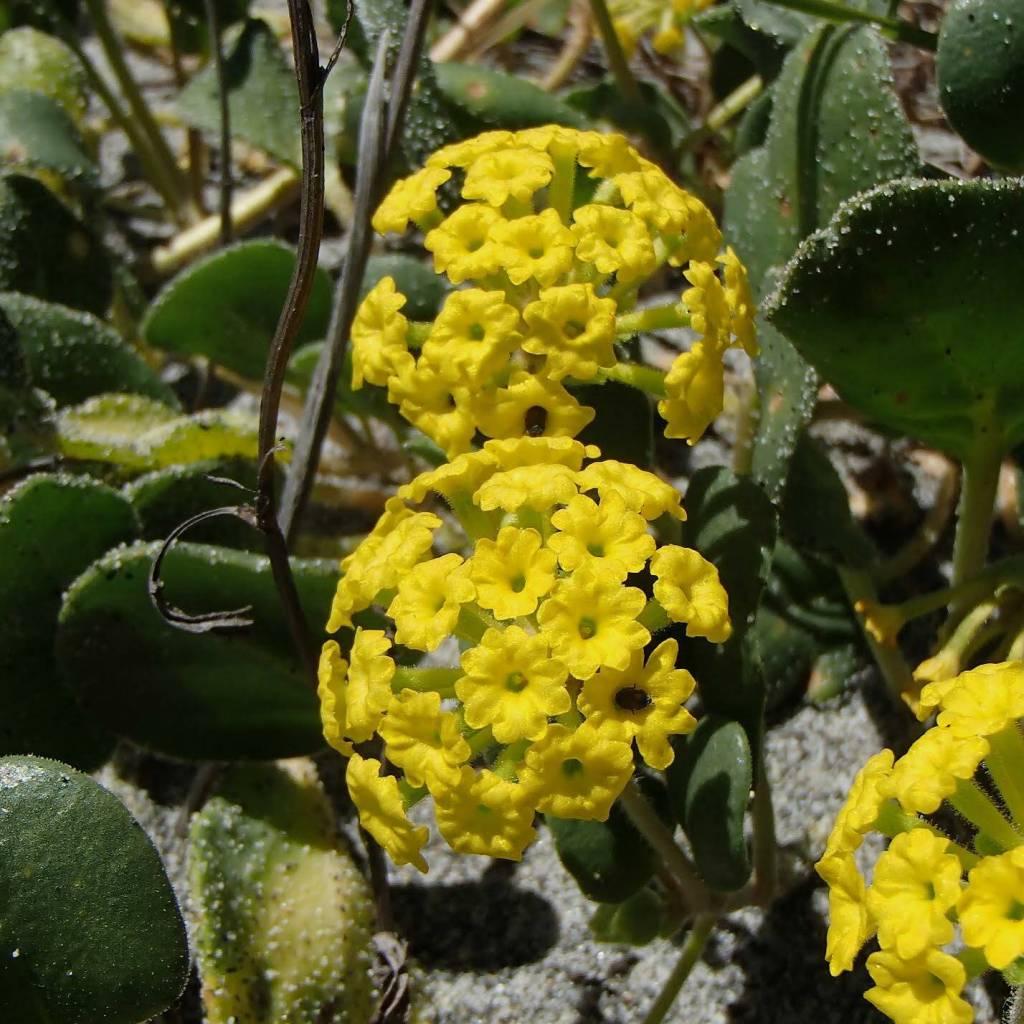
Farther west of the lighthouse are patches of Yellow Sand Verbena, another dune-loving native wildflower, which can also be seen at Fisherman Bay Spit on Lopez but rarely elsewhere in the San Juan Islands. Its bright canary-yellow blooms persist from May to August. Like the lupines, Sand Verbena hosts an insect with specialized tastes: the Sand Verbena Moth, which is very rare throughout its Northwest coastal range. Unlike lupines, which attract bumblebees, Sand Verbena appears to be pollinated by small beetles that can often be seen deep inside its trumpet-shaped flowers. Sand Verbena is also frequented by ants, which in turn are hunted by our emerald-green Tiger Beetles, another species largely restricted to sandy dunes.
Between patches of Seashore Lupines and Sand Verbena, Scouring Rush (“horsetails”) do the work of dune stabilization. Closely related to ferns, their stalks contain tiny, sharp silica flakes that discourage deer and other browsers. Wherever this trio of stabilizing native plants has been disrupted by trails or other human activity, for example, west of South Beach, dunes have simply blown away or “deflated,” taking a unique ecosystem with them. It is unclear how the introduction of domestic rabbits and fur-farm foxes has impacted the dunes that remain. Rabbit warrens remove stabilizing vegetation, but fox predation and epidemic disease has periodically capped the rabbit population. Foxes also burrow into the dunes.
As clever, adaptable generalist predators, foxes may have an adverse impact on the native birds, reptiles and small mammals of the dunes. Local homeowners and Kwiaht researchers have begun to study the seasonally changing diet of the fox population by sampling and analyzing fecal matter. Initial results indicate that San Juan Island foxes eat anything they can find, including bird nestlings, grubs, crabs and fish from beaches, as well as a lot of voles and deer mice, pet food left outside, scraps gleaned from compost piles and food offered to them by indulgent humans. The foxes are too small to take the place of the native island wolves that were exterminated 150 years ago; rather, they occupy a niche similar to native raccoons, ravens and crows.
Research is also needed on the potential for exchanges of disease vectors between foxes, raccoons, dogs and humans. Residents and visitors walk the dunes with their dogs, which are often allowed to run free and interact with rabbits and foxes, and emboldened by human feeding, foxes increasingly visit neighboring homes in search of food, risking conflicts with dogs and other pets. Risks include fleas and ticks, Canine Distemper, Parvovirus, Leptospirosis, tapeworms and roundworms.
Other forces are also influencing dune ecology, including increasing numbers of visitors; stormier winters that accelerate erosion; newly arrived weeds; the spread of recently introduced insects such as the European Praying Mantis and non-native ladybird beetles; and the growth of native deer and invasive rat populations. How these factors interact has not been studied.
Kwiaht is raising funds to help address these knowledge gaps through the San Juan Island Community Foundation’s Fall SJI Cares Catalog this holiday season. Funding will go toward costs of ongoing lab analyses of foxes’ diet, genetic ID and tracking, and screening for parasites and infectious diseases.
At the same time, Kwiaht has been working with public land managers and neighboring homeowners to reduce weeds and enhance native wildflowers at Cattle Point. Kwiaht’s research team, led by zoologist Kenzie Holland and botanist Madrona Murphy, welcomes “community scientists” interested in helping better understand, restore and protect the dune ecosystem of south San Juan Island.