Thor Hanson and ‘The Triumph of Seeds’
Published 8:00 am Thursday, May 14, 2015
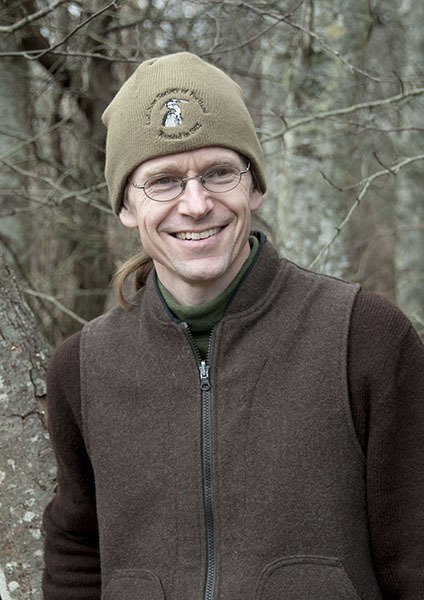
Arising star in the literary firmament of the San Juan Islands, author Thor Hanson will be on Orcas speaking about his most recent book. Orcas gardeners and farmers and others interested in seed biology and history, will be intrigued by what he has to tell us.
Hanson just published his third book, “The Triumph of Seeds,” to wide critical acclaim – including rave reviews in the “New York Times Book Review” and the “Wall Street Journal.” His Orcas Currents presentation on this topic, cosponsored by Coates Vineyards and Orcas Island Public Library, begins at 5:30 p.m. on Thursday, May 14 at Episcopal Parish Hall to be followed an hour later by a book signing at Darvill’s Bookstore. Admission is free. An independent conservation biologist who lives and works on San Juan Island, Hanson is a Guggenheim Fellow, a Switzer Environmental Fellow and the recipient of the 2013 John Burroughs Medal. He is author of “Feathers: The Evolution of a Natural Miracle” (Basic Books, 2011) and “The Impenetrable Forest” (1500 Books, 2008), which have been enthusiastically received.

Born and raised in Bellingham, Hanson spent many summers on Orcas. He earned a doctorate in natural resources in a joint program at the University of Idaho and the Centro Agronomico Tropical de Investigacion y Ensenanza in Costa Rica. His research at the interface between human and natural systems has taken him around the globe – to places like Alaska, Central America, Tanzania and Uganda, where he served in the Peace Corps.
Amy Stewart, author of “The Drunken Botanist,” calls “The Triumph of Seeds” a compelling and highly entertaining journey, populated by scientists and historians, criminals and explorers, aviators and futurists.” According to the “New York Times Book Review,” “the genius of Hanson’s fascinating, inspiring and entertaining book stems from the fact that it is not about how all kinds of things grow from seeds; it is about the seeds themselves.”
Q&A with the author
The Islands’ Sounder caught up with Hanson to ask him a few questions about his newest endeavor and the practice of writing.
Sounder: In your book “Feathers” you infused humor with your scientific findings. Is humor a tool you use in “Seeds?” Why or why not?
TH: Yes – I think humor is a vital part of life, and a vital part of storytelling!
Sounder: One of the reviewers say that you use criminals to illustrate certain parts of the book. Can you elaborate?
TH: At the height of the Cold War, a Bulgarian dissident was murdered on London’s Waterloo Bridge by a poisoned pellet fired from an umbrella-shaped gun. Investigators eventually determined that virtually the only poison potent enough to kill at such a small dosage was ricin, extracted from the seeds of the castor-oil plant. The story is not just a dramatic example of spy-craft – it also shows the lengths to which plants will go to equip their seeds with incredible defenses. But the chemicals in seeds provide us with a lot more than poisons. They also give us many of the stimulants, spices and pharmaceuticals that people use every day – from caffeine to pepper to Coumadin.
Sounder: Your research has taken you across the world. What is the strangest or most memorable experience you have had?
TH: It’s impossible to single out one experience, but I’m extremely fond of tropical rainforests, and particularly Uganda’s Bwindi Impenetrable Forest, where I spent two years working on a mountain gorilla project.
Sounder: What inspired you to write about seeds?
TH: I devoted a good portion of my doctoral research to studying the seed dispersal and genetics of huge rainforest trees in Central America. It was fascinating, but by the end of it, after all the papers were written and published, I realized that something was missing. I still didn’t understand how seeds worked. How did they evolve? How can they lie dormant for years in the soil? What triggers germination? Why are they so successful in nature, and why are we so utterly dependent upon them? To answer those questions, I knew I had to write a book.