Totem pole journey, film screening preview
Published 4:42 pm Wednesday, March 18, 2015
by Emily Greenberg
Journal Reporter
If the pen is mightier than the sword, can’t it be true for all forms of art?
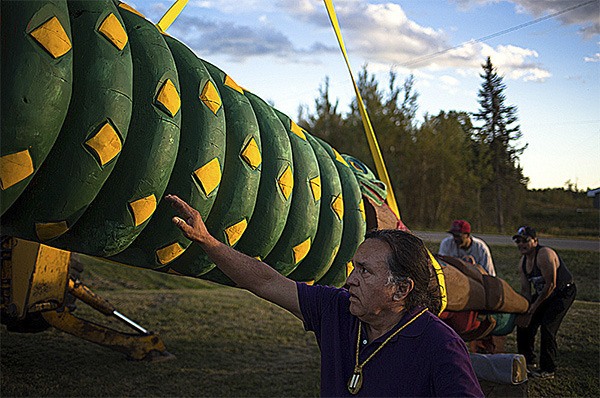
Perhaps that is why the Lummi Nation, opponents of the proposed coal terminal at Cherry Point, north of Bellingham, carried a traditional totem pole from the far reaches of the Wyoming coal fields to its final resting place in British Columbia in 2014, and made a film about it.
The journey connected tribes, towns, cities and rural communities along the coal-train path to Xwe’chienXen, the name for the ancient Lummi village site and burial ground located at the proposed Cherry Point coal port. The journey concluded in B.C., where the totem was placed as a symbol of support for the Canadian First Nations’ opposition to the transport of tar sands oil by pipeline across their territories.
“Their fight is against the Keystone Pipeline, we’re fighting the coal terminal,” said filmmaker and Lummi tribal member Freddy Lane. “I’m a storyteller, and the story is about protecting the earth and what we have.”
“Our Sacred Obligation” a documentary by Lane, chronicles the 22-day-long totem pole journey, and will screen for free at the San Juan Island Library, March 21, 7 p.m., as part of Ken Crawbuck’s series “Tragedy of the Commons.”
In August 2014, Friends of the San Juans hosted Lummi tribal members at English Camp when they stopped on the island as part of the totem pole journey.
The proposed Gateway Pacific Terminal at Cherry Point, if approved, would be capable of exporting 48 tons of coal per year to Asian markets. According to Friends’ Katie Fleming, the terminal could increase shipping traffic in the Salish Sea by nearly 500 ships per year. While protecting the water, land and sea is at the forefront of Lummi opposition, the fact that the proposed site is an ancient cultural artifact, and a sacred place, is a huge factor in the fight.
Lane is on his fourth edit of “Our Sacred Obligation,” which premiered for the first time in February at the Bellingham Human Rights Film Festival.
Lummi tribal members, including Lane, and Friends of the San Juans and the Washington state chapter of the Sierra Club will be at the event to answer questions and offer information on how people can get involved in the fight against the Gateway Pacific Terminal.
“Sometimes our communities are so divided,” Lane said. “But we really see them come together to stand up against this coal terminal.”