Sculpins rule Indian Island tidepools
Published 1:30 am Saturday, May 16, 2026
By Russel Barsh
Kwiaht director
Dozens of fish species can be found around Indian Island on a summer day, ranging from flounders and surfperch to the remarkable green and gold bay pipefish, a seahorse relative. Most are there seasonally, taking advantage of warm shallows and abundant small, crunchy crustacean prey to lay eggs, and leave their progeny to grow large enough to venture out into deeper waters. Indian Island sculpins, however, are mainly here to stay.
Sculpins are not only year-round residents of Fishing Bay, but they also make up roughly two-thirds of the total biomass of fish that can be found there in summer, when visiting fish are most varied and abundant.
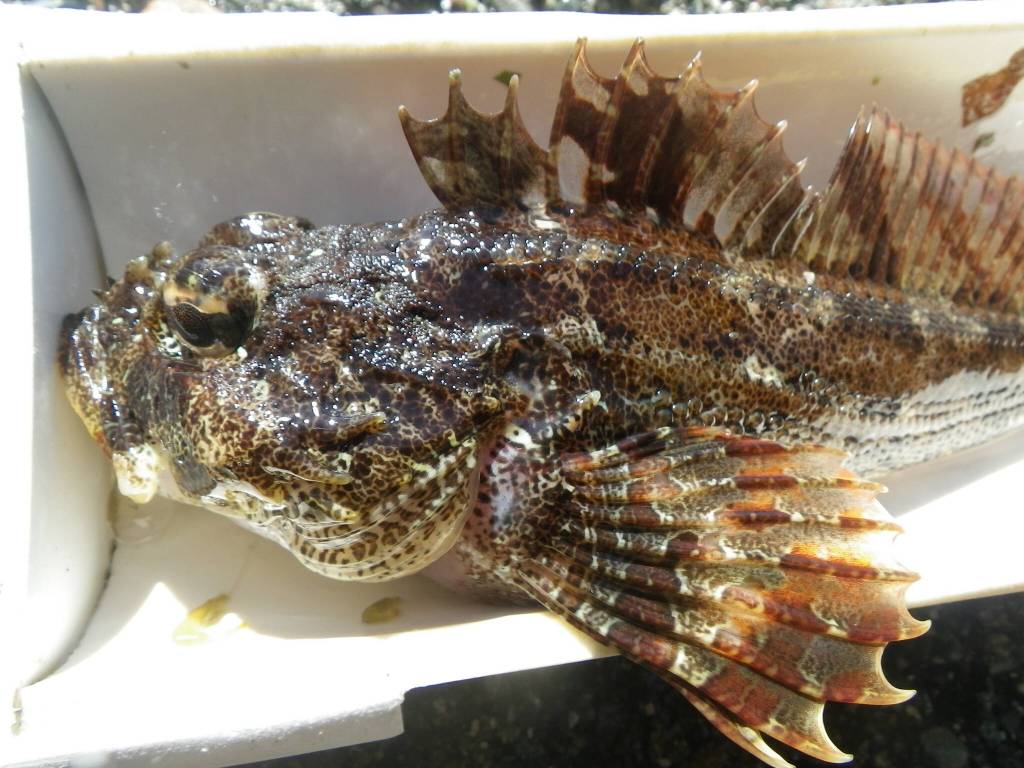
The great majority of sculpins at Indian Island are the small tidepool sculpin, Oligocottus maculosus, at most 4 inches in length, and the somewhat larger staghorn sculpin, Leptocottus armatus, which may grow to 10 inches at Indian Island and 18 inches elsewhere in the Salish Sea. Many other sculpin species are occasional visitors, such as the Buffalo sculpin, Rosylip sculpin and young great sculpins and Cabezon, which can exceed 2 feet and 12-15 pounds as adults. A total of 55 species of sculpins are known in our area, making them the most diverse family of fishes in Puget Sound and the Salish Sea.
Most sculpin species have conspicuously large armored heads and hard, sharp spines that make it difficult for a predator to swallow them. Although they have relatively small eyes, capable of detecting moving shadows that could be predators or prey, sculpins are mainly guided by a keen sense of “smell” — tasting the presence of other fishes and crustaceans in surrounding waters. It has also been found that sculpins recognize the “taste” of their home territories and can navigate home, like salmon, if they are displaced by a storm tide or careless human.
Sculpins are mainly toad-like “sit and wait” predators, which is to say that they spend a lot of their time resting on the seafloor, camouflaged by their mottled skin coloring, waiting for tasty snacks to crawl or swim within range of their wide mouths. Prey are swallowed whole and held inside the sculpin’s stomach by a strong sphincter muscle. Their bellies are soft and elastic. It is not uncommon to find a sculpin with a bulging belly and the tail fin or antennae of its most recent meal dangling out of its mouth. A sculpin can swallow prey that nearly matches its size, like a human swallowing a whole king salmon in one swift gulp!
Many sculpin species have adapted to shallow intertidal and estuarine conditions by tolerating rapid changes in salinity, and like gunnels, surviving for hours out of water by absorbing oxygen from the air as long as their gills remain moist.
Indian Island sculpins follow the tides in and out of Fishing Bay in search of prey — mainly small crustaceans. Females lay their eggs on the bay bottom in early spring. Each female sculpin extrudes thousands of eggs that stick to sand and gravel and hatch in about 10 days, producing brief swarms of countless tiny larval sculpins with large, mouthy heads like their parents. Unlike the plainfin midshipmen and bay pipefish that congregate and spawn in Fishing Bay in summer, sculpins do not guard their eggs or hatchlings, which are simply swept out of the bay and dispersed willy-nilly by the tides.
You can help preserve Indian Island and the Fishing Bay marine ecosystem by contributing to this month’s GiveOrcas fundraising campaign (May 12-21). Kwiaht researchers and volunteers monitor wildlife, protect sensitive nests and species, and meet and greet thousands of summer visitors with locally relevant ecosystem information and guidance on low-impact enjoyment of Eastsound’s unique marine preserve.