By Darrell Kirk
Sounder contributor
When Washington State Ferries’ interisland service failed during the San Juan County Fair weekend, a local water taxi operator stepped up to fill the transportation void, carrying 71 passengers and highlighting both community resilience and ongoing ferry system vulnerabilities.
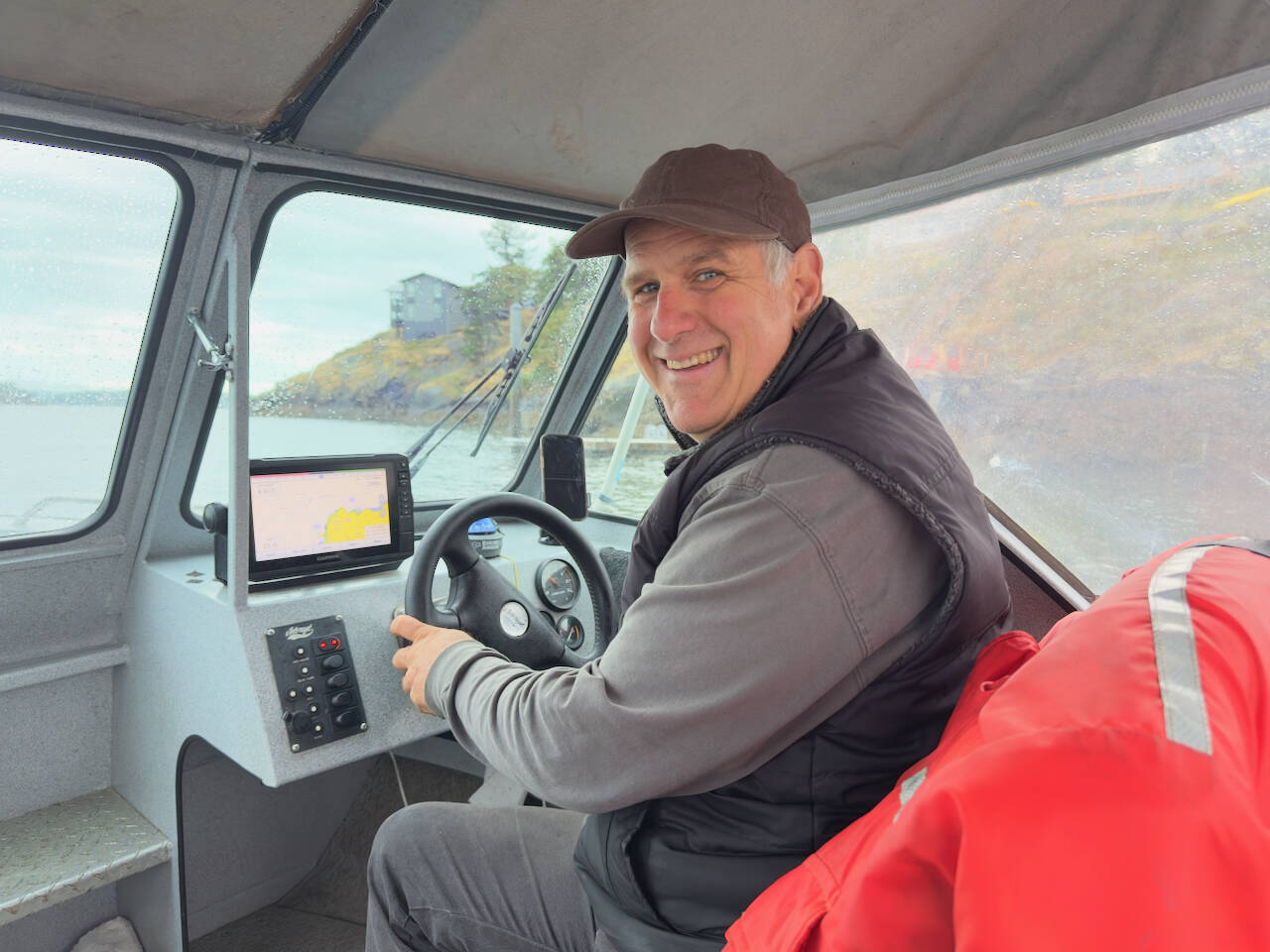
USCG-certified captain, Tom Bridge, who operates a six-passenger water taxi service, found himself providing crucial transportation as ferry cancellations stranded fair-goers across the islands in mid-August.
“I transported 71 people in total for the day,” Bridge said. “Most of the passengers were traveling from the ferry-served islands to Friday Harbor.”
The weekend’s ferry disruptions had immediate economic and social impacts on the fair and County. San Juan County Council member Justin Paulsen experienced the chaos firsthand, arriving home at 1:30 a.m. Sunday morning after a delayed ferry. “I got home Sunday morning at 1:30 a.m. from the fair,” Paulsen said. “Because of that, I didn’t get up in the morning and go back to the fair on Sunday.”
Fair-goers stranded by ferry failures
The ferry problems began early Saturday morning with interisland cancellations. “There was an early Saturday morning inter-island cancellation, and people who showed up for that boat were not able to come to the fair,” Paulsen explained. “The notice that went out Saturday afternoon saying that the 9:50 pm boat would be canceled caused people to leave the fair early.”
Bridge’s water taxi service became a lifeline for diverse travelers with urgent needs. Among his passengers was Jan Sandburg, “the first student ever to graduate from Shaw Island School,” and someone involved with San Juan Islands Conservation District who needed to transport animals through 4-H. “She was in charge of the 4-H program and was worried about how she was going to get the animals back,” Bridge noted.
Sandburg, who has become a regular customer of Bridge’s water taxi service due to frequent ferry disruptions, expressed her gratitude for the alternative transportation option. “Tom’s water taxi service has saved me many times,” Sandburg said. “The Washington State Ferries are our life blood, and Tom is our life support.”
The water taxi also served families in distress. “I took two children on separate trips from the same family who were sick and needed to get home from the fair,” Bridge said. “People need to travel for all kinds of reasons. I am completely non-judgmental on the need and just provide the service needed.”
Visitors find alternative transportation
Julian and Teresa Catford, visitors from Port Townsend, found themselves grateful for the water taxi service when ferry problems disrupted their plans. “I’m visiting from Port Townsend, and the ferry was cancelled, so we’re trying Plan B with our friends,” Julian explained while aboard the water taxi.
Teresa praised the community-oriented solution: “We live in Port Townsend and we’re visiting Orcas. We’re grateful to be on this water taxi. I just love that local people are solving problems and making it work.”
The couple was traveling to the San Juan County Fair before continuing to San Juan Island. “We’re visiting friends and going to San Juan Island to check out the fair and enjoy ourselves,” Teresa said. When asked about meeting Tom and boarding the water taxi, she responded: “It was awesome—really super awesome. We’re grateful for the beautiful boat and wonderful travel experience.”
Center Island residents rely on private water taxis
Robert Sime and his son Reed, who have a cabin on Center Island, represent another category of travelers dependent on private water taxi services. They took the Island Express water taxi from Center Island to Friday Harbor for the fair. “We don’t have regular ferry service,” Sime explained. “It’s either the Paraclete or the Island Express that usually services us.”
Sime takes private water taxi services “roughly three to four times a month” and praised their reliability. “They are amazing—very flexible on timing and very reliable. You can basically pick your time, and they usually accommodate that.”
Volunteer saved by water taxi service
Carla Stanley, an Orcas Island resident, was among those who relied on Bridge’s water taxi to fulfill her volunteer commitment at the fair. Stanley was scheduled to volunteer for the creative arts exhibit when ferry service failed.
“I was planning to be a walk-on passenger at the Orcas landing, but when the time came for the ferry to arrive and pick me up, it was nowhere to be seen,” Stanley said. “I was sitting in the waiting facility for walk-on passengers when Tom Bridge, just by chance, poked his head in and said, ‘Hey Carla, you need a ride?’ I said, ‘Yes, Tom, I need a ride.’”
Stanley praised Bridge’s proactive approach to helping stranded passengers. “He takes it upon himself to check the facilities to see if anybody needs a ride. He’s absolutely excellent about that,” she said.
The impact of the water taxi service extended beyond individual convenience to community obligations. “They were expecting me, and that was a day I had agreed to volunteer,” Stanley explained. “I had to call and say, ‘I can’t get there—the ferry’s not running.’ I’m sure they would have managed, but it was better that I was there.”
Stanley emphasized the importance of having an islander-operated water taxi service. “I think the water taxi needs to be operated by an islander. That local knowledge and understanding of how things work up here is extremely helpful,” she said. “He has a keen sense of serving the island residents.”
Transportation beyond tourism
Bridge’s service extends far beyond fair-goers and tourists. He estimates that “probably close to 15 percent of all the travelers I take are non-profit travelers” because nonprofits “canvass the whole county and the whole community—all islands, not just the island where they’re located. They draw their staff and volunteers from several of the islands. They have a unique transportation need that’s different from other businesses.”
The medical transportation need is particularly striking. “I have kept track of this number—I’ve provided 27 medical-related trips in just two and a half years,” Bridge said. These include situations where “it’s not serious enough that you need a helicopter, but it’s serious enough that you need to go to the emergency room and you’re on an island that doesn’t have a hospital.”
Economic impact on fair and community
The ferry disruptions had cascading economic effects.
“Every cancellation we experienced this weekend, and even the notices that went out, had an economic impact on our fair and on our county,” Paulsen said. “We’ve had many years of disappointing experiences, and I think we were all very hopeful after last year that perhaps we had turned a corner. Clearly, we haven’t.”
The fair had planned special cultural programming, but transportation problems diminished its impact.
“They set up Sunday events with an emphasis and focus on our Latino community. They had music and performances that really highlighted that part of our community and our island culture. For many of the folks who wanted to attend that event, they weren’t able to because they couldn’t travel from their home islands,” Paulsen said.
Looking forward: Need for backup systems
Paulsen believes the weekend’s events demonstrate the need for alternative planning. “I think the results of fair week indicate that we need to continue working on efforts like the mosquito fleet bill, so that counties like ours have options for pursuing alternate transportation paths.”
Bridge sees his service as complementary rather than competitive with state ferries. “I see it as a completely supplementary arrangement,” he said. “I can easily envision San Juan County having either a public-private partnership or some kind of subsidy for water taxi service that operates in addition to Washington State Ferries.”
For the fair weekend specifically, Bridge operated from 7:30 a.m. to 8:30 p.m. with only a two-hour break, transporting everyone from fair workers to a complete band with their equipment. “I could have easily taken at least another hundred people,” he said. “The demand was that strong.”
The weekend highlighted both the fragility of the current ferry system and the community’s capacity to respond with creative solutions when public transportation fails.