By Cassie Diamond
WA State Journal
When the Fred Meyer in Tacoma’s South End neighborhood closed in September 2025, local resident Steven Bock said he considered leaving the area.
“Our store was a primary food source of our district for almost 50 years, half a century,” Bock said. “My neighborhood is now without its last source of food within a one to two mile radius from that previous store.”
The neighborhood is considered a food desert, according to the U.S. Department of Agriculture’s Food Access Research Atlas.
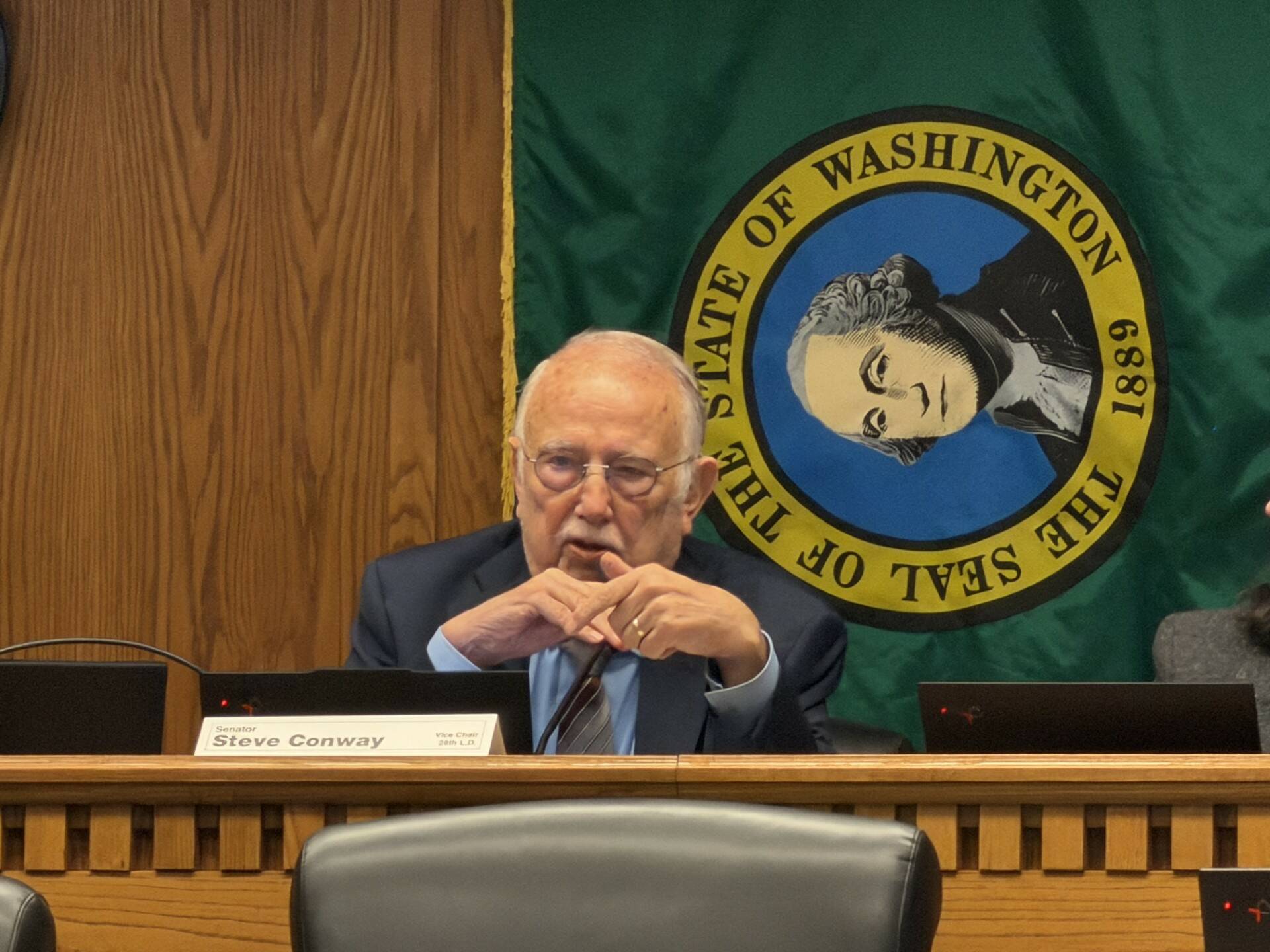
This is what motivated Sen. Steve Conway, D-South Tacoma, to spearhead Senate Bill 6147, which would require grocery stores located in areas designated as food deserts to provide at least six months’ notice before closing.
The Senate Labor and Commerce Committee held a public hearing for the bill on Jan. 27.
Under Washington’s Worker Adjustment and Retraining Notification Act, grocery stores must provide at least 60 days, or two months, notice before closing.
Conway argued this isn’t enough.
“It seems to me that the short notice gave us no opportunity to figure out if there was a way to keep this major store open,” he said. “And so this started me thinking. I said, ‘Can a corporation located outside our state and my community make a decision without giving fair notice?’”
The measure would require grocery stores to work in good faith with certain agencies, such as the local city council and the Office of the Attorney General, to find alternatives that would allow for the continued availability of grocery products and services at the closure location.
The bill comes after a string of Kroger store closures across Western Washington in the fall of 2025, following a failed merger with Albertsons. Kroger cited rising theft and a challenging regulatory environment as the main reasons behind its decision.
Joe Bushnell, the deputy mayor of Tacoma, spoke in support of the policy, pointing to the negative effect the Fred Meyer closure had on senior citizens, people with disabilities and those who lack transportation.
“This advanced notice of a closure will provide local communities with additional time to develop options to protect family members that rely on reasonable access to those critical grocery products and services,” he said.
However, Katie Beeson of the Washington Food Industry Association said the bill is unnecessary and burdensome for grocery owners.
Beeson explained that if a store decides to close, it means “they’ve already explored every feasible route to stay open.”
“Choosing to close a store location, especially one in an underserved community,” she said, “is not a decision that a store owner or operator takes lightly.”
According to Beeson, the proposed policy would only increase administrative time and legal risk, especially for independent businesses, and would be unlikely to change the outcome of a closure.
Brandon Houskeeper of the Northwest Grocery Retail Association added that market-responsive solutions such as tax incentives, grants, workforce support and targeted economic development would do more to keep stores open.
But Conway pushed back.
“Asking [grocery stores] to have a six-month notice of a closure just seems reasonable to me,” he said. “It is not burdensome. It allows the community to respond to the closure, to work on the issues of the closure. It may be good for the business as well.”
The Washington State Journal is a nonprofit news website operated by the WNPA Foundation. To learn more, go to wastatejournal.org.