Results of a student project suggest that recent efforts to reduce the level of storm water pollution in Eastsound have been at least partly successful.
In 2009, island students in Kwiaht’s summer apprenticeship program found that clams from the beach at Eastsound were significantly more contaminated with pyrethroid pesticides than clams from the south end of East Sound, farther from town. On average, clams closest to town contained 41 parts per billion of pyrethroid pesticides. Some clams had accumulated twice as much pesticide as that in their meat: enough to be unsafe to eat.
“Even at low levels, pyrethroid pesticides are considered a threat to human health when present in seafood,” says Emma Heikkinen, one of the student researchers.
Other students participating in this year’s study included Anneke Fleming, Cassidy Buehler, Mackey Cardinell, Michael Edward, Aleyda Erickson, Jack Gates, Chloe Hamilton, Michael Harlow, Ryan Heath, Emma Minnis, Keenan O’Brien, Kilee Rogers and Hailee Stevens.
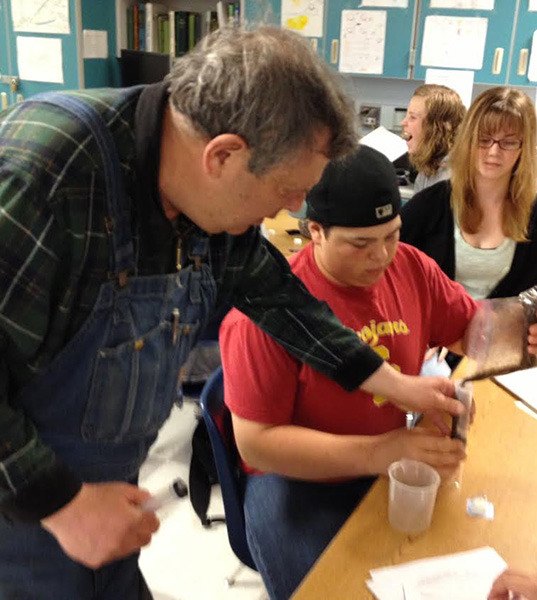
This year, students in Laura Tidwell’s Marine Science class measured pyrethroids in 20 steamer clams dug from the Eastsound waterfront last summer, matched in age with the clams tested five years ago. Supervised by Kwiaht ecologist Russel Barsh, they used the same method to measure pyrethroid concentrations in the muscle tissue of the clams’ feet. This time the average load was only 18 parts per billion, roughly half as much. The result is statistically significant at the 1 percent level. “Dropping levels of pesticides means healthier and more abundant marine life, something that all islanders can appreciate and enjoy” says Anneke Fleming.
“Big efforts to improve our waters have recently been taken in this community, such as rain gardens and constructed wetlands,” says student researcher Michael Edward. “The community has also been made aware of the harmful effects of pesticides.”
Barsh stresses the need to replicate the findings however. “I already have another batch of clams in our freezer.”
Unfortunately, harvesting shellfish in East Sound remains closed due also to high levels of biotoxins, toxic compounds produced by some algal blooms that accumulate in filter feeders such as clams and mussels. East Sound is especially susceptible to summer blooms of harmful plankton such as Dinophysis, which causes DSP (diarrhetic shellfish poisoning).
Very small concentrations of pyrethroids and hundreds of other toxic compounds can be measured reliably using antibodies (immunoassays). The most widespread method is called ELISA, and it is used in most medical laboratories, for example for analyses of blood and urine … Students used the simplest ELISA format, with antibodies bonded to magnetic particles, to analyze the pyrethroids in Eastsound clams.
Pyrethroids are similar to pyrethrins, naturally occurring pesticides found in some chrysanthemums that kill insects by shutting down their nervous systems. Pyrethroids are modified chemically to make them stronger and persist longer in the environment. One of the most persistent pyrethroids, Bifenthrin, is frequently used in sprays for carpenter ants. Because they are fast acting, pyrethroids are especially popular in “knock-down” sprays for wasps and other flying insects. Most household and garden pesticides (as opposed to agricultural pesticides) contain pyrethroids, so they are more likely to be found in runoff from urban areas.
Thanks to the generosity of individual donors and the Orcas Island Community Foundation, Kwiaht has acquired a new laboratory instrument that can use antibodies to measure far more compounds with greater speed and accuracy, and it will conduct at least two new environmental health studies during the 2014-2015 school year.
For further info contact Russel Barsh, kwiaht@gmail.com.