by Eric Peter
San Juan County Sheriff
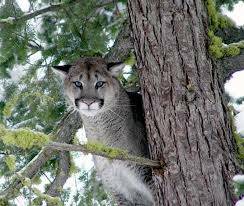
The San Juan County Sheriff’s Office received two reports of a mountain lion sighting on San Juan Island on Aug. 4.
The first call came in at 11:02 a.m. after a woman was on a run and saw a cougar on a stump on the high side of White Point Road. The caller had not notified WDFW yet.
The second call came in around 7 p.m with the caller reporting that his wife was on a walk at the Roche Harbor Quarry when her dogs started barking. She noted a mountain lion about 30 yards away on the upper trail and her dogs chased it away.
The SJCSO has notified a contact with WDFW, who is notifying its problem animal officers about these sightings. If anyone else has a mountain lion sighting, please notify the SJCSO dispatch center and the Washington Department of Fish and Wildlife Police.
To help keep our community members safe in case you come across a mountain lion, here is some guidance.
Do:
Stop, stand tall, and face the lion: Do not run. Running can trigger a predatory response.
Make yourself look large and threatening: Open your jacket, raise your arms, and speak firmly and loudly.
Back away slowly: Give the lion an escape route. Do not turn your back.
If you have children, pick them up: Hold them securely without turning away or bending over.
If you are with pets, keep them close and on a leash.
If the lion acts aggressively, fight back: Use anything available as a weapon (rocks, sticks, your backpack, etc.).
Protect your head and neck: If attacked, try to stay on your feet and fight back aggressively.
Report the sighting to the WDFW: This helps them monitor and manage wildlife populations.
Don’t:
Don’t run: Running can trigger a predatory response.
Don’t turn your back: Maintain eye contact and back away slowly.
Don’t crouch or bend over: This makes you appear smaller and more vulnerable.
Don’t approach the lion: Give it space and an escape route.
Don’t corner or trap the lion: This can escalate the situation.
Don’t offer the lion food or try to feed it: This can habituate the lion to humans and make it more likely to approach in the future.
WDFW has a dashboard on its website for reporting these sightings: https://wdfw.wa.gov/get-involved/report-observations
Mountain lions, also known as cougars, are the largest members of the cat family in Washington. Adult males average approximately 140 pounds, but in rare cases may weigh 180 pounds and measure 7-8 feet long from nose to tip of tail. According to WDFW, cougars occur throughout Washington where suitable cover and prey are found. Cougars use steep canyons, rock outcroppings and boulders, or vegetation to remain hidden while hunting. Adult male cougars roam widely, covering a home range of 50 to 150 square miles.
WDFW does not regularly monitor or count individual numbers of cougars in Washington. It currently estimates that approximately 2,400 independent-aged cougars live in the state.