by Darrell Kirk
Sounder contributor
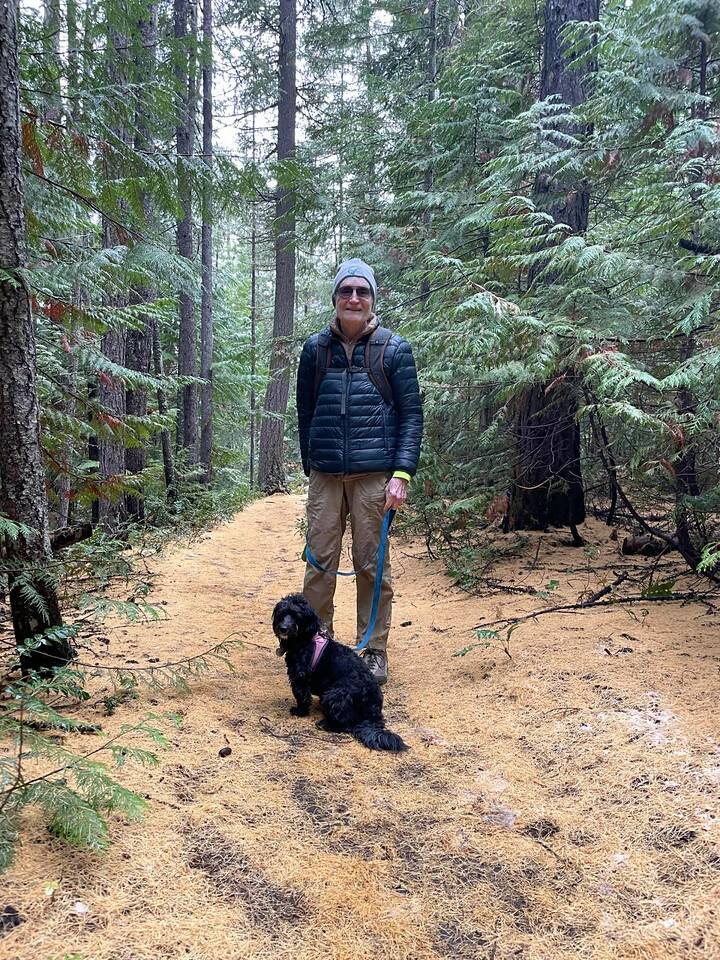
In 2022, Orcas resident Bruce Benton secured grant funding totaling $800,000 for electric vehicle infrastructure and transportation initiatives for the island.
The grant encompasses $400,000 from Washington State Commerce for the EV Charger Project and $400,000 from the Washington State Department of Transportation for the Green CarShare program, sponsored by Island Rides, which received $200,000 in 2024 and $200,000 last week.
The charger project oversees the installation of charging stations throughout the island, in a comprehensive effort to address both economic and environmental challenges facing residents.
“The cost of transportation is high, making it difficult for people at lower income levels to live on the islands,” Benton explained.
When he moved from Maryland five years ago, Benton identified critical transportation issues affecting the community. These residents provide essential services in grocery stores, schools and banks, making their ability to afford island living crucial to the economy.
With vehicle emissions accounting for roughly 80% of greenhouse gas emissions in San Juan County, and gasoline costs running 25% higher than those on the mainland, many lower-income residents struggle with transportation expenses that can exceed the cost of electric vehicles by $3,000 annually.
The Port of Orcas sponsors the entire EV Charger Project, covering the installation of approximately 40 Level 2 charging stations and the fast-charging station at the airport. Benton works closely with Chip Long, executive director of the Port of Orcas, and he partnered with local businesses, nonprofits and public facilities, including hotels, the school and the Orcas Center, to host charging stations.
When Benton applied for the grant, he noted that the fast-charging station at the airport could be used for short-haul, battery-powered electric airplanes that are expected to come online in 2027. It was also considered in the grant for an EV shuttle system as part of the Island Rides program, of which Benton serves as a board member and board treasurer.
The environmental implications extend beyond reducing greenhouse gas emissions. Benton’s research revealed that vehicle emissions significantly contribute to ocean acidification, which threatens the marine ecosystems critical to the region. Vehicle emissions enter the atmosphere and settle in the ocean, increasing ocean acidity, which prevents clams, oysters and other shellfish from forming their shells. Western Washington is the largest exporter of shellfish in the United States, meaning there is potentially enormous economic cost to the impact of vehicle emissions on the ocean environment.
The initiative represents a comprehensive approach to sustainable transportation, addressing economic inequality while protecting the marine environment and public health that defines island life. For Benton, the program demonstrates how strategic environmental investments can tackle multiple community challenges — from making transportation affordable for essential workers to preserving the shellfish industry. Perhaps the most significant benefit of the program is its impact on the health of children.
“There’s quite a bit of data out there showing that over the years, there’s been increases in cancer and asthma rates in children, and a lot of it is attributed to the exposure to the chemicals in vehicle emissions,” Benton said.