The Juvenile Court Services has grown and adapted to meet ever-changing laws and to meet the evolving needs of the community and its youth.
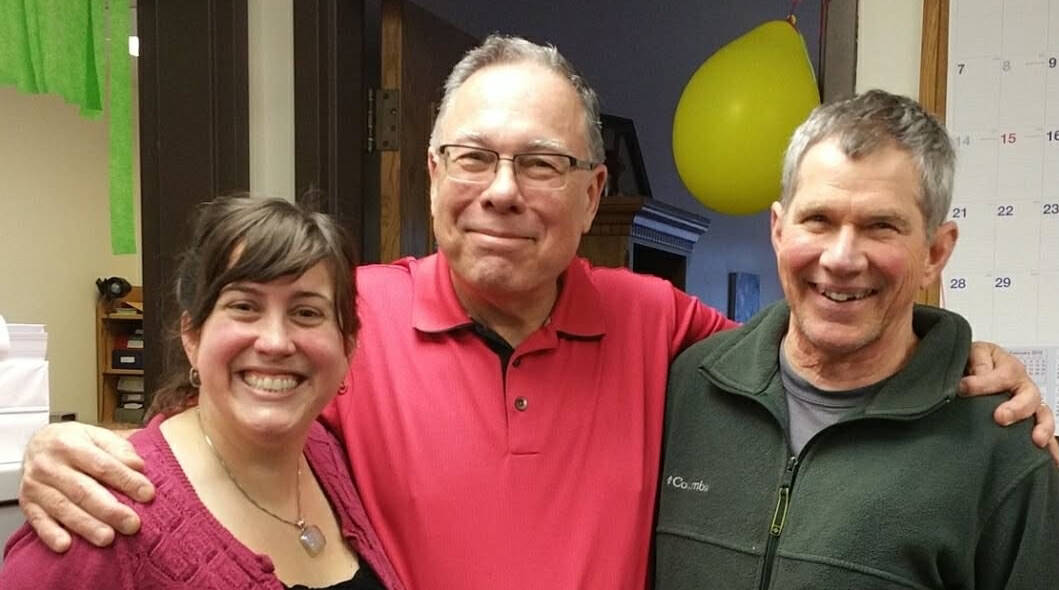
However, the need is increasing while resources are being reduced. Two former Juvenile Service administrators, Dave Zeretzke and Tom Kearney, as well as the current administrator, Linnea Anderson, reflected on their time working with island youth, how the department has evolved and what is needed going forward.
“The population then was smaller,” said Zeretzke, who became a Juvenile Services administrator in 1980. The San Juans were still like the wild west, and the new, more stringent state demands did not match the island culture.
At that time, the town of Friday Harbor had two of its own police officers. “They did not have the training one might expect,” Zeretzke said, adding that they were armed, and there was more than one close call with civilians. Still, both County and Town police knew and worked with the community’s children.
“The kids knew the cops and the cops knew the kids,” Zeretzke explained. Fortunately, that remains true today, but 40 years ago, the concept of policing kids felt overbearing and excessive. As a result, when Zeretske stepped into the role of administrator, he walked right into tensions between local and state officials.
The first thing he did was meet with people like Emily Geyman, a former Friday Harbor High School counselor, Clyde Sunstrom and his wife, Ruth, who served as foster parents at the time, and others who were knowledgeable about the state of the community’s youth.
“The way I felt the community could benefit from the Juvenile Court system was to meet the people, talk to the people,” Zeretzke explained.
Friday Harbor was still a fishing community, and according to Zeretzke, the biggest issues with the community’s young folks were drinking and other typical teenage behaviors. Senior skip day was very much an honored tradition. There were, of course, some neglect and abuse situations, but primarily, kids were just being kids. Regardless of the situation, his small staff cared deeply about the youth and worked diligently for their safety and benefit.
“It’s been many years, but I still know some of the kids and know how they’re doing,” Zeretzke said.
After 11 years, in 1991, Zeretzke stepped down, and Kearney took over as administrator for the next 24 years.
Similar to Zeretzke, Kearney found he needed to look at the issues with two minds: the local impacts and the state impacts.
In the early ‘90s, a state legislator posed a question to the Washington Association of Juvenile Court Administrators, the group of juvenile administrators throughout the state, during a meeting: How did they know what they were doing was effective? That question got a small group of the administrators thinking: How do they know? To come up with an answer, they began working on a risk assessment, identified problem areas and strengthened those weak links.
A private versus public risk assessment was done to see what approaches work better for each child. Training on conducting interviews based on talking to someone in a motivating way was held. Studying the cycle of change, how a child has moved from “I don’t have a problem” to “I may have a problem,” helped contribute to the data as well, knowing what works and what does not work.
Functional Family, according to Kearney, typically works well. This model improves family communication in situations involving 11-to 18-year-olds, and is centered on acceptance and respect in order to establish lasting behavioral changes.
“[The studies] brought in science on how to improve the service we deliver, and I am really proud to be a part of that,” Kearney said, adding that he misses his cohorts. “You form a strong bond trying to problem solve together.”
Like Zeretzke, he still hears from some of the young people with whom he worked.
“The number of young folks that come back with a thank you,” Kearney mused to the Sounder. One even said, “‘Everything that makes me successful I learned from that guy” (meaning Kearney), which, Kearney explained, includes communication skills, how he deals with the good and the bad. He now has the tools to process.
In 2016, Kearney retired, and Anderson became administrator. “We are really lucky to have someone like Linnea now,” Kearney said.
Anderson, like Zeretzke and Kearney before her, served as president of the WAJCA. She completed her term a few months ago. The WAJCA, according to Anderson, has championed innovation in youth justice and child welfare across Washington for over 50 years. The group represents all 33 juvenile court jurisdictions in Washington, “promotes trauma-informed practices, equitable outcomes, and policies that uplift youth, families, and communities. As a collaborative and learning organization, WAJCA partners with legislators, system stakeholders, community agencies, and individuals with lived experience to drive continuous improvement,” Anderson explained. “WAJCA and our local Juvenile Court Department have a long legacy of turning challenges into opportunities for youth and families. It’s been my greatest honor to carry that legacy forward, leading the Superior Court Services Department and serving the people of San Juan County. It’s also been a privilege to represent the impactful work of juvenile courts across Washington State.”
When asked what has changed over her tenure, Anderson noted that youth justice is a constantly evolving field. “As Maya Angelou said, ‘Do the best you can until you know better. Then, when you know better, do better.’ This spirit guides Juvenile Court Administrators as we deepen our understanding of brain development, trauma, and effective responses to youth behavior. Our tools and responsibilities have grown (while resources shrink) with a strong shift toward community-based solutions.”
Currently, according to Anderson, approximately 90% of youth impacted by Washington’s criminal legal system are supported locally through juvenile court programs; an even higher percentage in the jurisdiction over the past five years. Reliance on secure detention and increased focus on early intervention, therapeutic and trauma-informed services have been reduced. Juvenile Court staff now meet higher standards for credentialing in assessments and therapeutic approaches. Probation counselors balance law enforcement and social service roles, ensuring both are in harmony for effective support. “Over the last ten years, our department has evolved too,” Anderson said. “We reorganized and are operating as the Superior Court Services Department, integrating the juvenile division and other court services under our umbrella to improve efficiency, control cost and improve court user experience.”
In the 2025-2027 Washington State Operating Budget, nearly all funding for youth early intervention programs, formerly known as “Becca programs,” was eliminated, Anderson said. Anderson personally worked to keep such funding, testifying and writing letters. “The 71% reduction comes at a time when local governments are already facing significant financial shortfalls. The impact has been profound across our state: fewer youth and families now have access to pre- and post-file supports and case management, despite rising needs,” Anderson said. Last year alone, she continued, juvenile courts across Washington served over 8,000 youth and families. With a presence in every county, juvenile courts are uniquely positioned to provide early, community-based support that prevents escalation and reduces the need for more intensive and costly interventions. Early intervention isn’t just the right thing to do; it’s a smart investment in public safety, community well-being and long-term savings. Prevention is more effective than rehabilitation, both socially and financially.
“San Juan County is no exception. Our success in reducing criminal caseloads and secure detention rates is directly tied to our commitment to therapeutic, early intervention services. These outcomes are the result of strong partnerships with schools, law enforcement, prosecutors, defense, community agencies, funders, behavioral health providers, parents, and youth. Together, we’re building a safer, healthier community,” Anderson said. “To preserve this progress, the Superior Court Judges Association in collaboration with WAJCA, submitted a decision package to the Washington State Legislature to restore juvenile court early intervention funding. The WA State Board for Judicial Administration has endorsed it as its top legislative priority. Without restoration, the policy mandate is at risk and locally, we face the possibility of reversing a decade of meaningful gains, with likely increased youth criminalization and diminished community outcomes.”
Locally, the greatest need is simple: support and belonging. As living costs rise and the social safety net shrinks, Anderson’s department is seeing more problem behaviors in the community born from desperation. Youth and families facing unmet needs, places to belong, access basic resources, affordable housing and engage meaningfully with their community.
“For example, we saw an increase in youth referrals for shoplifting food. We learned these young people were hungry and not connected to child welfare or other services,” Anderson said, “In response, Rotary partnered with us to create food depots in our offices, no questions asked. Since then, food-related thefts have leveled off. It’s a small but powerful reminder that meeting basic needs can prevent deeper system involvement and foster dignity and connection.”
For those wanting to help, there are plenty of opportunities. “Consider becoming a mentor or volunteer child advocate. Your time and compassion can make a real difference in the lives of our neighbors,” Anderson said. “As economic pressures grow, so do struggles in our community. We don’t need to excuse harmful behavior, but we can respond with patience and kindness, recognizing that many are facing unseen challenges.”
Islanders can also support youth and families by contributing to programs like Rotary’s 36 Weekends, local food banks, resource centers or any of the many service groups doing vital work. Every act of support helps build a stronger, more connected community, Anderson said.
Kearney, reflecting on his time as administrator, told the Sounder he loved his job, in part because: “How you help a person become a better, more productive human being, to be a part of that is a real blessing.”