Household pesticides found in local bats and other wildlife
Published 1:30 am Tuesday, November 4, 2025
by Russel Barsh
Director of Kwiaht
Residues of home and garden pesticides sold and used on Orcas Island have been found in local wildlife, with some of the highest concentrations in bats and hummingbirds.
Kwiaht’s Pesticide Footprint study, launched earlier this year with support from the Orcas Island Community Foundation, was designed to determine how much of the Orcas Island terrestrial ecosystem is being contaminated by the continued use of over-the-counter home and garden pesticide products.
As a first step, middle school students identified 13 pesticide products in current use on the island, of which 11 contain pyrethroids. Pyrethroids are synthetic variations of pyrethrin, a naturally occurring pesticide compound produced by chrysanthemums to ward off chewing insects. About 40 different pyrethroid chemical species are manufactured for home and agricultural use in the United States. Pyrethroids tend to be relatively less toxic to humans and other mammals than other families of pesticides, but they have raised concerns over their impact on non-target insects such as bees and butterflies.
Fifty specimens of local wildlife, representing 20 different species of birds, mammals, reptiles and amphibians, were collected from road-kills, cat-kills, window strikes and garden traps mainly from the Eastsound area. Since contaminants such as pyrethroids tend to be filtered and concentrated in the livers of vertebrate animals, each specimen was carefully dissected. Contaminants were extracted from animals’ livers into methanol, and concentrations of pyrethroids were measured at Kwiaht’s Lopez laboratory using ELISA immunoassays, the same method that a hospital laboratory would use to test human blood or urine for toxic substances.
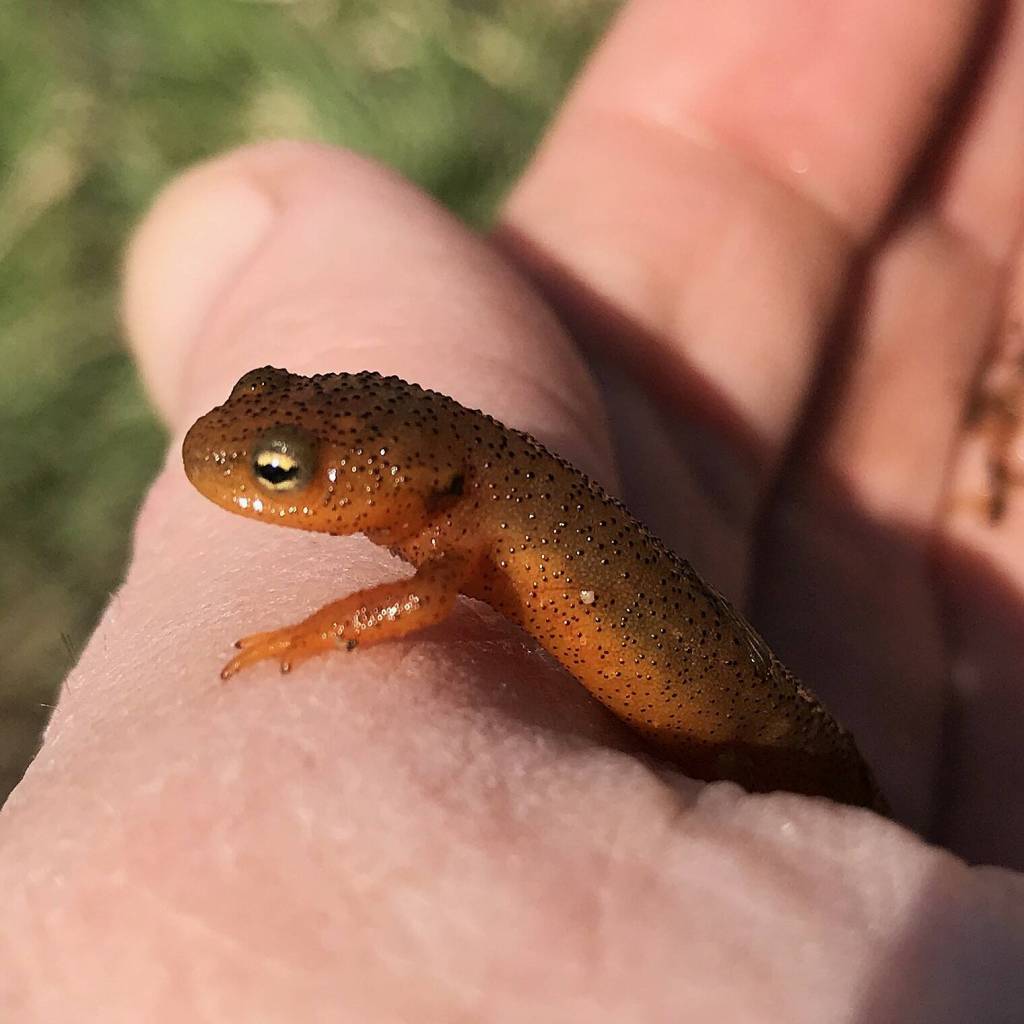
Pyrethroid pesticide residues were detected in four out of five of the specimens tested, and in at least one specimen of each of the 20 species represented in the summer 2025 sample collection. Species with the highest concentrations of pyrethroid pesticides in their livers were (in descending order): rough-skinned newt, three species of mouse-eared (Myotis) bats, Anna’s hummingbirds, alligator lizards, the wandering garter snake, black rats (non-native and invasive), and Townsend’s vole.
Liver concentrations of pyrethroids in these species ranged from 30-268 parts per billion, with an average of 101 parts per billion. The maximum “safe” levels of exposure to pyrethroids vary between species that have been studied, and remain unknown for most species, but are suspected to fall within this range. The maximum amount of pyrethroid residues allowed on most fruits and vegetables in the U.S. food system is 1,000 parts per billion, but the effects of pesticide residues depend on body mass; the same dose will have less effect on an elephant than a mouse. For context, the average American adult weighs about 180 pounds, whereas a mouse-eared bat or Anna’s hummingbird weighs only about one-sixth of an ounce.
Results of this study point to three pathways for local pesticide contamination. Aerosol sprays of pesticides drift for up to several hundred feet, landing on non-target insects, leaves and flowers. Insects touched but not killed by drifting pesticide sprays may be eaten later by bats or other insectivores, such as lizards and snakes. Hummingbirds drink nectar from flowers that may have been touched by aerosol drift. Drifting pesticides may land on ponds or streams inhabited by newts and other amphibians, where they are absorbed directly through amphibians’ skin, and by the aquatic insects that amphibians eat.
Pesticide residues in Orcas Island bats are especially concerning, since Kwiaht’s automated bat detectors have recorded declines in some local bat populations, which may in turn reflect declines in the abundance of their insect prey. Pesticide residues may play a role in these phenomena.
Orcas-based Kwiaht researchers contributing to this study include Christian Oldham, Roan Ontjes-DeGroot and Justin Krisch-Derr. Orcas student participation was organized by Meg Greene. Laboratory analyses were carried out by Lopez High School senior Sophie Citro and Kwiaht lab technician Olivia Vestal. Contact info@kwiaht.org for additional information about the results of Pesticide Footprint.