

by SHONA AITKEN
Wolf Hollow Wildlife Rehabilitation Center
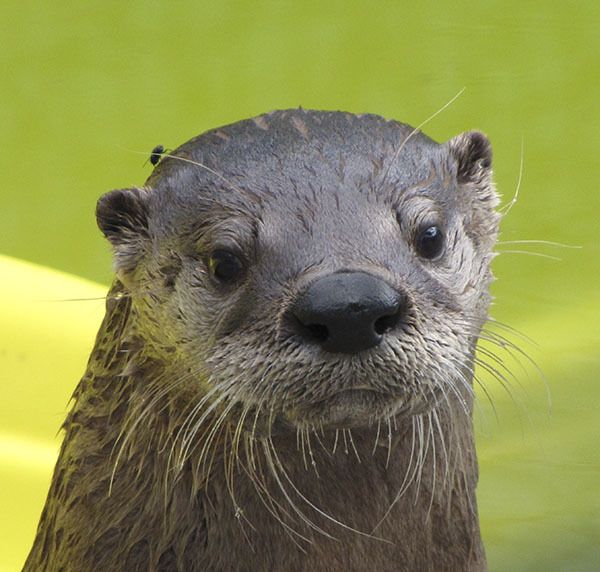
Would you like to have raccoons living in your attic or a river otter under your house?
If you enjoy sharing your home with these wild creatures – great! It can be a wonderful opportunity to observe their behavior.
But cohabitating with some wild critters can be noisy and/or smelly, and larger animals can do a lot of damage to insulation, etc.
If you would rather not have a wild creature as a lodger, right now is the time to take a careful critter’s-eye look at your house and do some preventive maintenance.
“Why now?” I hear you say. “Can’t it wait till spring?”
October through January is the best time to do this kind of work because most wild animals that make their homes in people’s houses are females trying to find good places to raise their young.
Young wild mammals are mostly born in spring, but expectant mother raccoons or otters are searching for good den sites long before you or I are even thinking of spring. By February, they may already have a place picked out and be starting to prepare it for the birth of their kits in March or early April.
So, put on your jacket and go out and take a look around the outside of your house.
Are there:
• Loose or missing screens on vents?
• Small holes that might look inviting to a little bird?
• Gaps, loose boards or places where siding meets loose dirt, which could provide easy access for a raccoon or otter?
Try thinking of it from a wild critter’s point of view. They are just looking for a quiet, dry, dark, safe place to raise their young. This may be a hollow log, a hole behind some big rocks or the space under your shed or house. Vacation homes are particularly inviting because they often stand empty and quiet all through the winter.
So what should you do if you find a couple of loose boards or an uncovered vent hole that would be very inviting for sparrows? Fix it soon!
Wolf Hollow’s website has some suggestions on ways to prevent potential problems: wolfhollowwildlife.org/education/living-with-wildlife/.
As a general guideline, remember that lightweight wood or screen may work to deter small birds, but materials have to be heavy duty to keep out raccoons or otters.
Why put effort into something that may never be a problem? First, a bit of thought and effort now may save you a lot of time and money repairing damage to your house, or trying to get rid of pungent “eau de otter” at a later date.
Second, it is easier and more humane to deter a wild critter when she is looking for a possible site than it is to force her out once she has an established den and newly born young. Even the best-intentioned efforts at that stage can lead to the death of the mother and/or her youngsters.
It just might be worth taking that critter’s-eye look at your house today.