By Darrell Kirk
Sounder contributor
The Eastsound Water District’s Wastewater Treatment Facility is drawing state attention as a potential model for new environmental standards, marking the culmination of decades of infrastructure development that began with a state mandate to address failing septic systems.
The facility, located on airport property smaller than a grocery store, processes 100,000 gallons daily from 1,300 homes using a unique “STEP” system — septic tank effluent pumping — that may set statewide regulations for nitrogen reduction. State officials are closely monitoring the operation as they develop new standards.
“We went ahead of them and now they’re looking to see how we’re doing,” explained Sewer Commissioner Michael Stolmeier during a recent tour of the renovated facility. “This may be the model for the state.”
Unlike traditional sewage systems that funnel waste directly to treatment plants, the community employs a STEP system where each property maintains its septic tank, but instead of septic fields, pumps transport effluent through PVC pipes to the central facility. “We’ve taken over septic fields,” Stolmeier explained, noting that traditional septic fields “don’t do well” and require about 5 acres to function properly.
The system emerged from necessity in 1979 when the state mandated action due to widespread septic system failures. “Literally sewage in the streets,” Stolmeier recalled. The state imposed a development moratorium until the community implemented a centralized solution, creating what was originally called a Utility Limited Improvement District that extends beyond the current Urban Growth Area.
The project represents a dramatic evolution from the community’s humble infrastructure beginnings. Residents still remember when sidewalk installation in 1990-91 made front-page news for weeks. The original “economy version” treatment tanks, built 25-40 years ago, served their purpose but are now being replaced with premium systems designed to last 100 years.
The massive renovation required excavating 40-by-40-foot holes, 20 feet deep, replacing quarter-inch steel with 12 inches of reinforced concrete and stainless steel components. The project has been over a decade in planning, with construction recently completing its first phase.
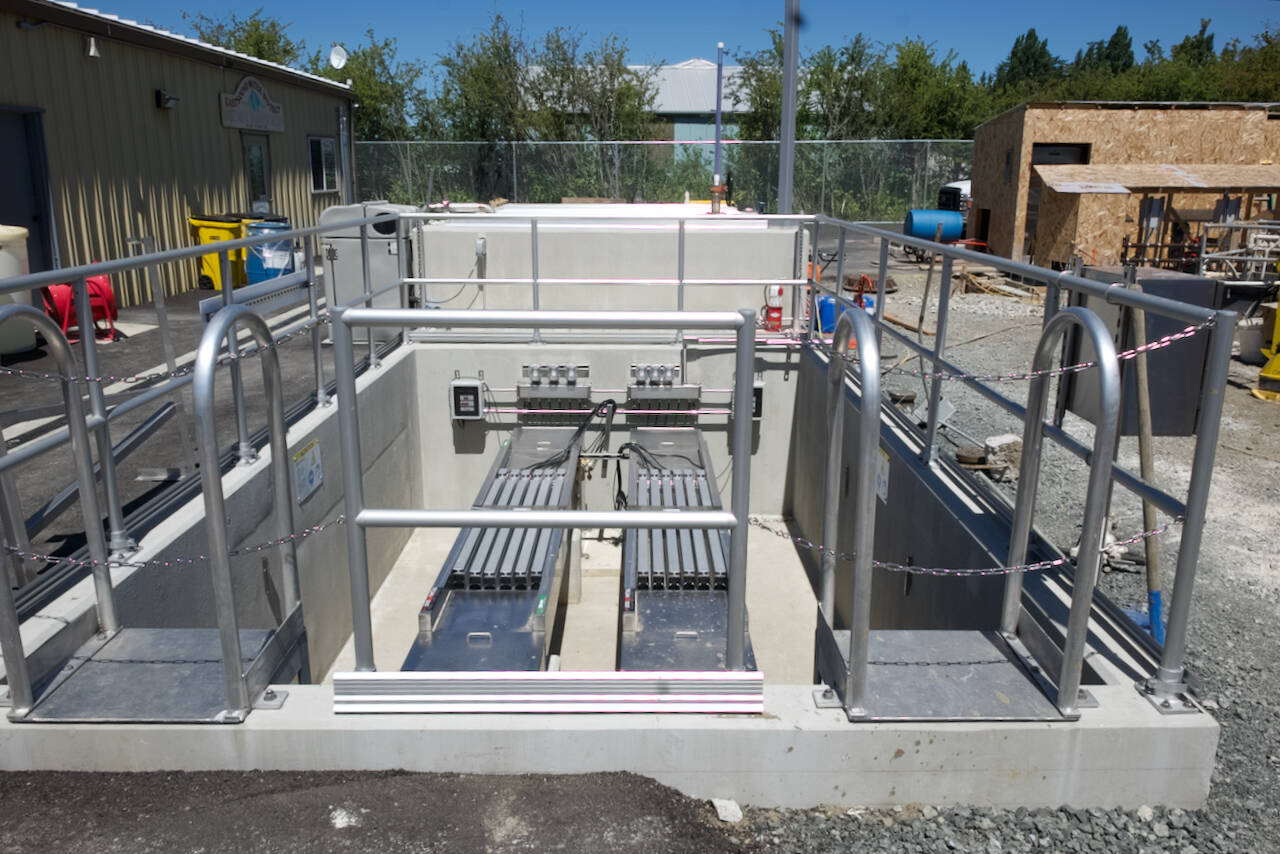
Despite the station’s sophisticated technology — described as “ranching bugs” through microbe cultivation — operations remain remarkably lean. Just five full-time employees manage both the treatment plant and the entire collection system, including maintenance of distributed septic tanks throughout the community. Orcas Island resident Bob Phalan, who accompanied Stolmeier on the tour, is one of the facility’s and Stolmeier’s top advocates and pointed out numerous pumps, generators, UV lights and a separate building that housed sophisticated computers, power regulators, blower controllers and monitoring equipment. Among the flashing green control panel lights and the sound of a well-oiled machine, Phalan commented, “This place is built like a nuclear power plant!”
For most island residents, the system operates on a “flush and forget” principle. “I don’t know that they even know about it,” Stolmeier said of residents outside the service area. “When we’re successful, it’s flush and forget. Nobody pays any attention unless it’s backing up in their yard.” Many properties outside the district still rely on traditional septic systems with drain fields, which can experience visible failures like sewage surfacing in yards.
The facility’s unique location tells its own story. Originally built in isolation, the sewage treatment plant now finds itself surrounded by airport development, creating an unusual but secure setting for critical infrastructure.
The combined sewer and water district operates with five elected commissioners serving six-year terms, overseeing both the treatment plant and maintenance of distributed septic tanks throughout the community. “We’re down to the plant regularly looking around and trying to learn what’s going on,” Stolmeier noted. “It’s just a matter of being responsible.”
The advanced treatment produces water cleaner than what enters the system, safely discharged into surrounding waters — a testament to both environmental stewardship and engineering innovation in small-community infrastructure.
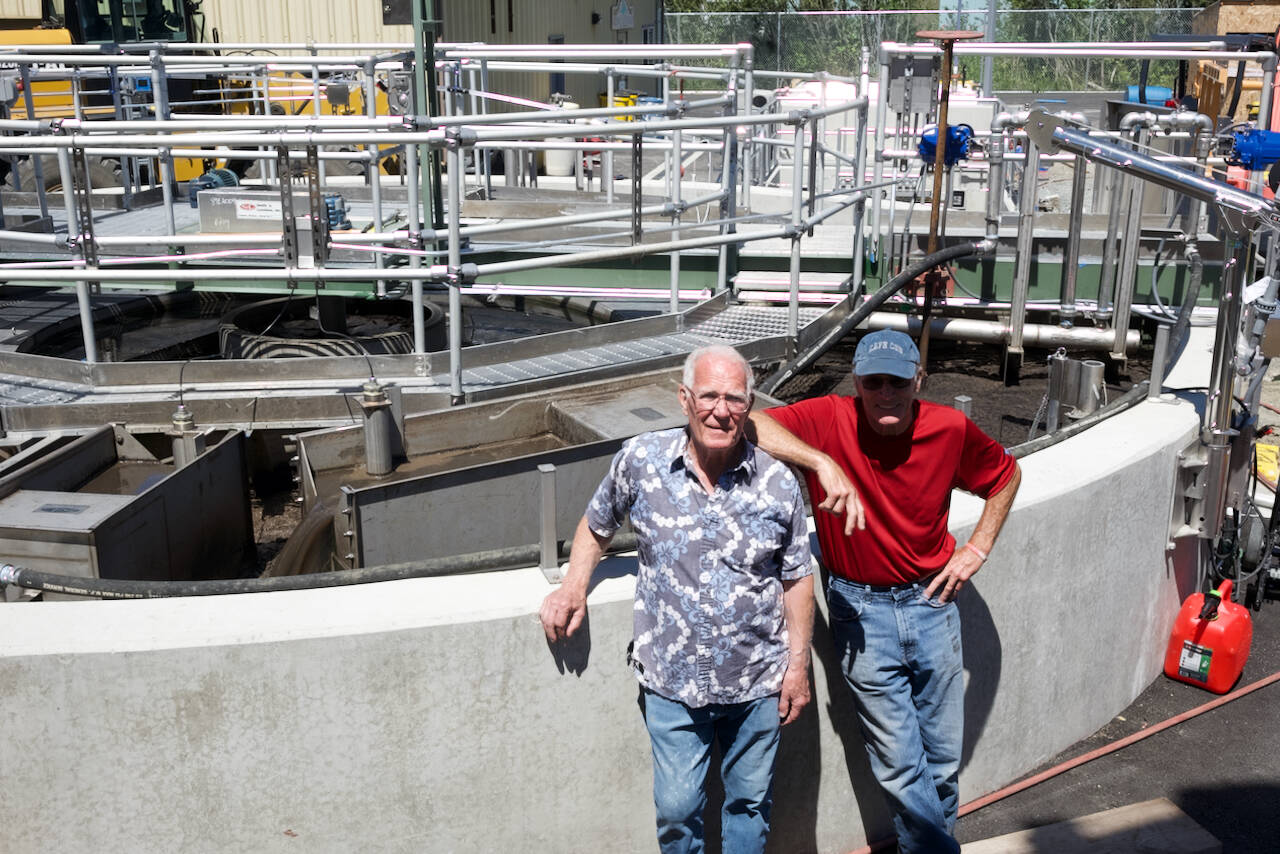
Darrell Kirk photo. Sewer Commissioner Michael Stollmeyer and friend Bob Phalan.