By Darrell Kirk
Sounder contributor
This is the third story in our series on the “Hands Across the Water” flotilla from Orcas Island to Salt Spring Island, Sept. 19-21. The series explores how Coast Salish peoples, who have lived in these waters since time immemorial, continue to experience the effects of colonial borders — and how contemporary island communities might better understand this shared history of displacement that affected both Indigenous Coast Salish communities and Hawaiian Kanakas like Auntie Kate’s family.
Kate Roland, known affectionately as “Auntie Kate,” sits in her Victoria, British Columbia, Canada, home surrounded by faded photographs of ancestors whose stories span two nations and multiple generations. Among them is a portrait of her great-grandfather William Naukana, whose life was forever changed by a line drawn on a map in 1872.
“When they established the border, San Juan Island was going to become a military post,” Roland explains, her voice carrying the weight of family history preserved through oral tradition. “They didn’t want the Hawaiians there. They didn’t want anyone there.”
Naukana was among hundreds of Hawaiian workers, known as Kanakas, who had arrived in the Pacific Northwest with Hudson’s Bay Company fur traders beginning in 1811. For six decades, these men had worked at company posts throughout the region, eventually settling at the Belle Vue Sheep Farm on San Juan Island, where they tended livestock, grew fruit and raised their families.
“By this point, the Hawaiians arrived with the fur traders in 1811, and now we’re talking 1872. So for six decades, they’d been working for the Hudson’s Bay Company,” Roland says. The Hawaiian workers had built lives on the island, taking Indigenous wives and raising children who were “half Indian, half Hawaiian.”
When the international boundary was established, however, these families faced an impossible choice. “If they stayed on San Juan Island, they would have to leave where they were living and move to the reserve or anywhere else, but not remain where they were,” Roland explains. “So basically they just told them to take their little Indian children and go live on a reserve.”
Fortunately for the displaced families, the Hudson’s Bay Company and British colonial government had anticipated the border change. “The governor and the Hudson’s Bay Company had already established their main post at Fort Victoria by this time because they anticipated losing that southern post,” Roland notes. The company had strategically relocated its operations northward, establishing Fort Victoria as its new headquarters.
“So they extended the welcome to the Hawaiians who’d worked for them for decades,” she continues. “And the British wanted feet on the ground here. They wanted homesteaders. They wanted to build communities. And they were taking any and all homesteaders.”
Naukana made the journey across the 7 miles of water separating San Juan Island from Salt Spring Island, bringing his family to start over on Portland Island, just two nautical miles from Salt Spring’s Fulford Harbor. “William Naukana and his good pal, Johnny Palau, homesteaded on Portland Island. William owned lot one and three, and John Palau lot two and four. So between the two of them, they owned that island.”
The transition was arduous. “They arrived on this undeveloped land and had to immediately get to work clearing it to start their new lives,” Roland describes. The families “cleared the land by hand, cut down trees, planted orchards, and built log homes.”
Transportation and supply were challenging on the remote islands. “A boat would come in about once a week, bringing mail and supplies,” Roland explains. The settlers would “load materials onto it and float them to shore by pushing them off the boat.” She even heard stories that “they would load oxen off the boat into the water and swim them ashore.”
Much of what Roland knows about her family’s history comes from her Uncle Paul Roland, who was quadriplegic from age 14 and spent his life as the family’s oral historian. “He was number 12 of 16 children, Matilda’s 16 children,” she explains. “And so he couldn’t go out and do the hunting and the fishing and the gardening and any chores because he was disabled.”
Instead, “He sat in the house with his mother, our grandmother Matilda, and she would tell him endless stories about her father and grandfather to keep him entertained,” Roland explains. Uncle Paul became the repository of family knowledge, able to “recite 350 names from the family tree—who married whom and who raised which children.”
“He would call you over and say, ‘Come here, sit down and listen to me because I have a story to tell you and it’s important that you know this. It’s your story and you need to remember it,’” Roland recalls.
The displaced Hawaiian families maintained their cultural traditions in their new home. “The Hawaiian luau was the most obvious tradition we preserved,” Roland says of the customs maintained on Salt Spring Island. “I don’t think they even called it a luau back then, but that’s exactly what it was—celebrations that would last three or four days at a time.”
These celebrations brought together not just the Hawaiian families but the entire island community. “We invited all the aunties and uncles, and there were 15 of them. Yeah. So they were all invited to come. And then the neighbors and then the community. Oh, god. Everybody came,” Roland remembers of her childhood luaus.
The agricultural legacy of the Hawaiian settlers proved significant for the region. Roland notes that her great-grandfather “planted the orchard where Grandma lived—my brother Dave still lives on that same property.” The fruit industry established by Hawaiian and other early settlers made the San Juan and Gulf Islands “the Okanagan Valley of the day” before interior irrigation developed.
While the Hawaiian families successfully preserved much of their cultural heritage, their Coast Salish connections were largely lost. “The Salish part of it, our First Nations heritage is totally lost to us,” Roland explains. “My great-grandmothers on both sides were indigenous women, but the record keepers of the day often wouldn’t record or didn’t record their names properly.”
The colonial authorities often simplified or changed Indigenous names. “And so often I think they just said, well, we’ll call you Mary, you know?” This practice severed genealogical connections that might have been maintained through proper indigenous names.
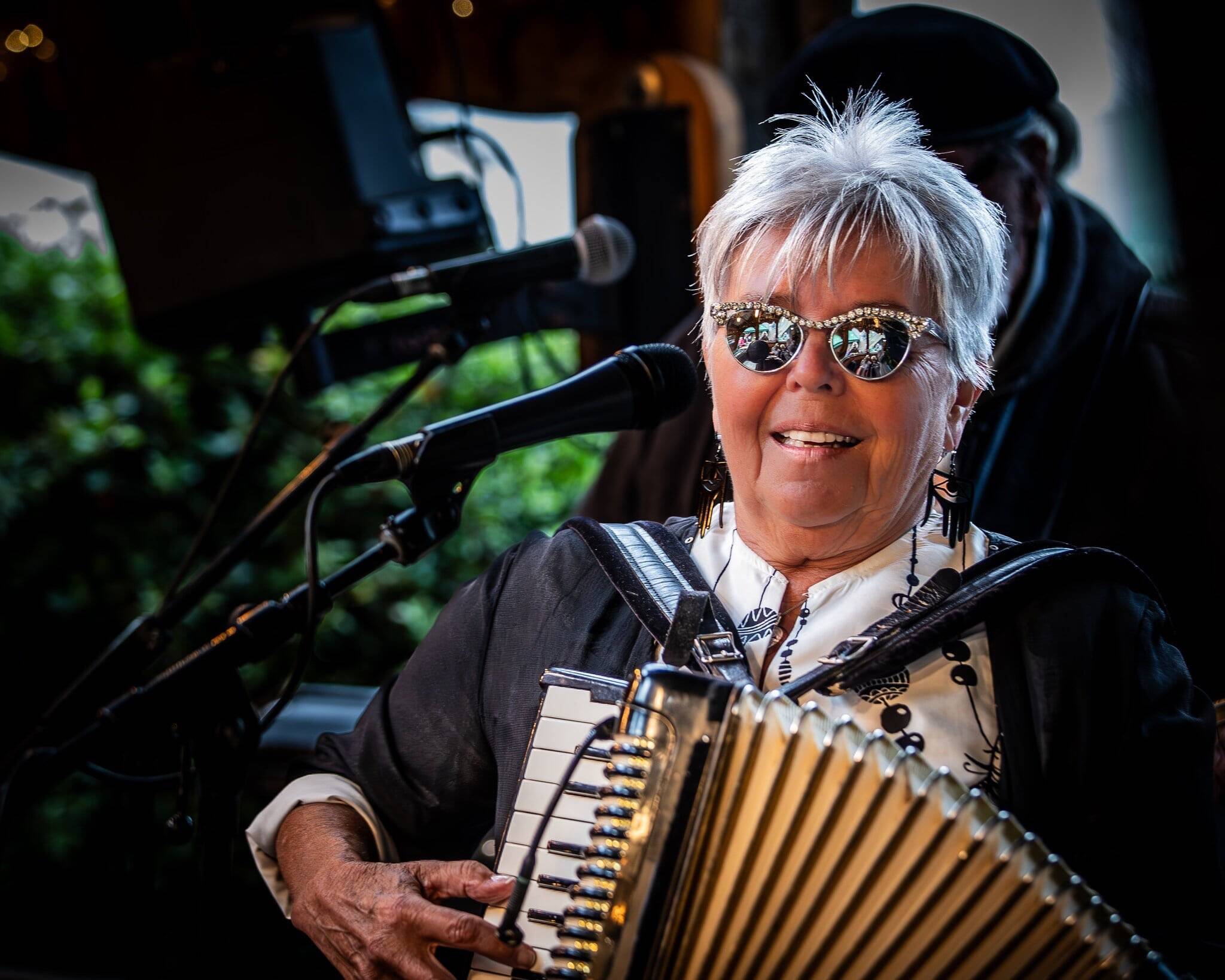
Today, Roland continues sharing her family’s story through musical performances and historical presentations, adapting traditional Hawaiian songs for modern audiences and speaking about the border’s impact on Hawaiian families. “History is history,” she notes about her presentations. “I always try to adapt the story depending on what [part of the history] people want to hear.”
The story of the 1872 border establishment reveals how political decisions made in distant capitals profoundly affected the lives of working families who had built communities in the Pacific Northwest. For the Hawaiian families of San Juan Island, the drawing of an international boundary meant abandoning established homes and starting over across a narrow stretch of water that suddenly became an international border.
“I’d rather people know the history, because as long as I’ve been saying this, people are still saying, ‘Really? We didn’t know the Hawaiians were here,’” Roland observes. “They were here probably before your people were here. They settled the island. They homesteaded the island. There was nothing here except for indigenous people.”
The displacement of 1872 scattered Hawaiian families across the region, but their descendants, like Auntie Kate, continue to preserve and share the stories of resilience, adaptation and community that emerged from this historical moment when borders reshaped lives.
The waters between Orcas Island and Salt Spring Island have witnessed thousands of years of Indigenous travel, trade and ceremony. This Sept. 19-21, those same waters will once again carry canoes and boats in a journey that seeks to honor that ancient connection while addressing the modern realities of borders that both unite and divide communities.