

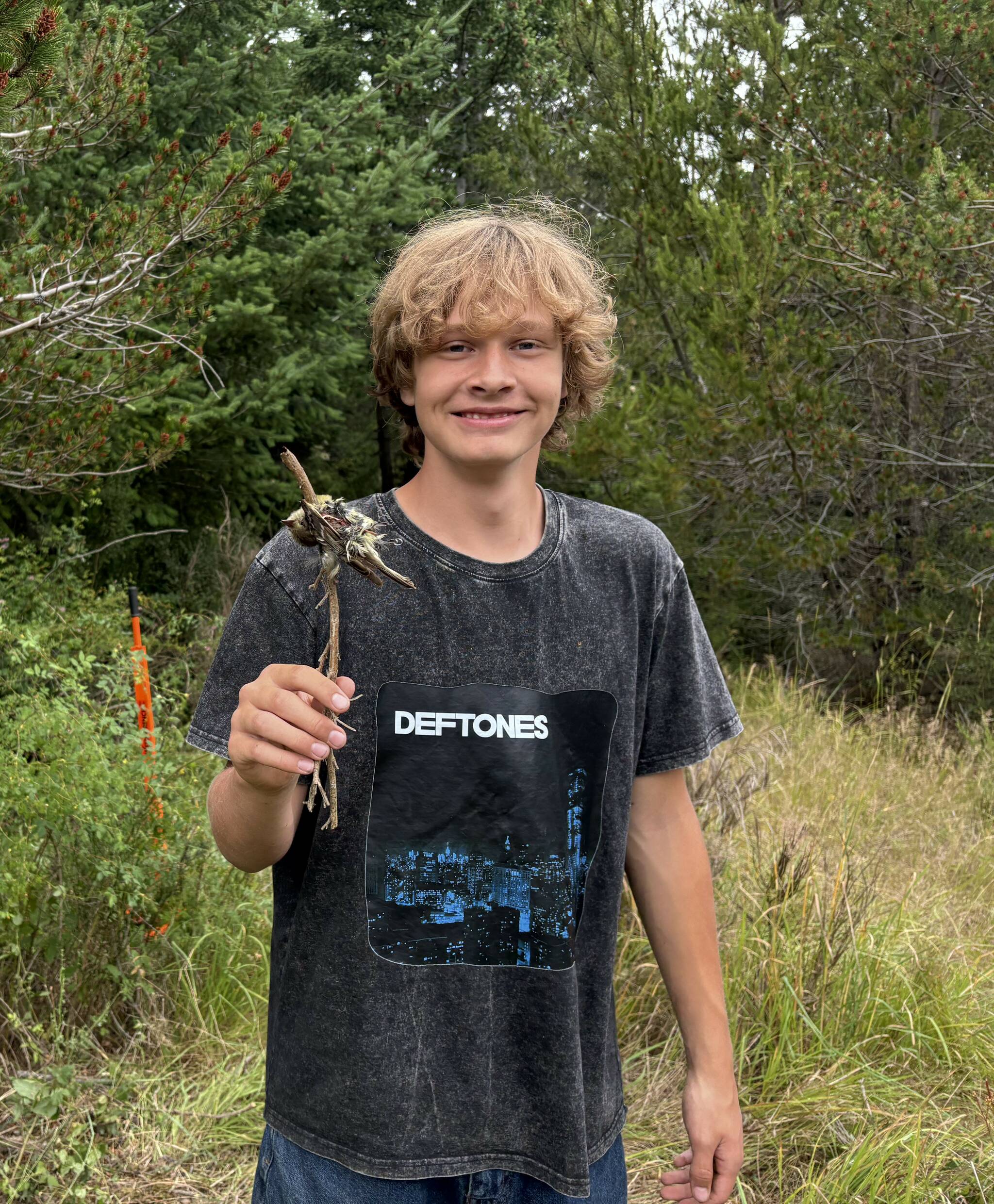
Not many people in the islands know what a northern shrike is, and even fewer know how it hunts or have come across the impaled victims of these merciless predatory songbirds. Lopez Island Youth Conservation Corps crew member Davis Dougherty made this fascinating discovery during the first week of the YCC summer season this year and knew right away what a rare find it was. This week’s Nature Nugget has the whole story!
Davis and the Lopez YCC crew were at the Port Stanley gravel pit when he happened upon this natural phenomenon that is rare to observe in the San Juan Islands. Davis describes the Youth Conservation Corps as doing conservation work that is good for the environment, like removing invasive species. During the first week of the summer program, the Lopez crew focused on removing the invasive plant Scotch broom from the gravel pit along Port Stanley Road.
It was here that Davis discovered a female goldfinch impaled on a branch. Davis informed the group that this was done by a small songbird called the northern shrike, a bird that is seldom seen.
Davis explained, “What it does is hunts other songbirds and insects and will impale its prey on fences, branches, etc. and save it to eat for later. I found it on the edge of a forest next to a large clearing which is exactly the type of habitat that shrikes prefer to hunt.”
Most people think of orcas, salmon, seals and eagles when they think of animals in the San Juan Islands, but it is the smaller details that these YCC crew members experience that really bring out the magic in our special place in the world – magic that these crew members help preserve on a daily basis through their stewardship efforts.
But wait, what happened to all the nasty Scotch broom, you ask? Scotch broom is a plant that is native to Scotland and was brought to the United States as a decorative roadside plant. We have all seen Scotch broom and its beautiful yellow flowers blooming in May and June.
The YCC program works with the San Juan County Noxious Weed Board every season to remove Scotch broom and other non-native plants that can outcompete our native species. Like Scotch broom, other invasive plants from Scotland, such as thistle and gorse, have made their way into our Pacific Northwest habitats due to the similar rainy, temperate climate conditions.
The YCC crew is focused on this specific site this year because gravel from this pit is used all over the island in construction projects. As the Scotch broom flowers wither and turn to seed, the seeds can get blown by the wind into the gravel and transported to various sites on the island, spreading the invasive plant. Twelve YCC crew members worked diligently for two days removing and piling Scotch broom, helping to significantly reduce the transport of this highly prolific invasive plant.
In addition to the impactful work of the YCC crew, they will continue to make amazing discoveries in nature throughout the season. YCC provides these opportunities to over 40 young islanders each summer at no cost. In fact, YCC crew members get paid for their work! These young people are gaining job-related skills while performing valuable stewardship projects that are rooted in conservation practices. It also gives these kids the opportunity to learn valuable lessons in nature and discover the wonders of nature for themselves, like the lethal hunting habits of rare birds and the importance of preserving wildlife habitat in the islands.
To learn more about the Youth Conservation Corps and how you can support this program, visit www.sanjuanislandscd.org/ycc.