All empires must fall.
And according to Dmitry Orlov, the U.S. is next.
“It’s been happening for the past 30 years,” said the engineer and author. “Look at any statistics you like: other countries have left the U.S. in the dust. Wages are stagnant, poverty is at a record, educational levels are slipping. The political system is a joke. The process is now in runaway mode. But the country is in deep denial … Everyone tries to paint the country’s failings as a whole as personal failings or bad luck: somebody didn’t try hard enough. People need to know that they are not responsible for their misery. And people in the U.S. are miserable: overworked, scared, insecure.”
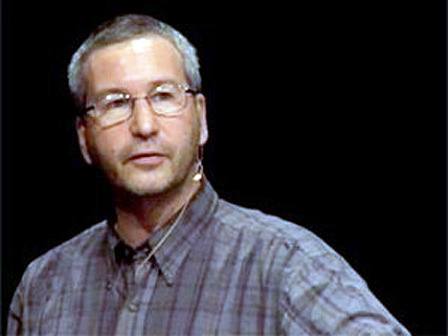
Orlov, who was an eyewitness to the dissolution of the Soviet Union, will present “Fall of the American Empire” at Orcas Center on Sunday, Oct. 9 at 2 p.m. as part of the Crossroads series.
Tickets are $10 and available at the Orcas Island Library, Darvill’s Bookstore, or online at www.orcascrossroads.org. Some tickets may be available at the door; complimentary tickets are at the library and senior center.
Orlov’s recent book, “Reinventing Collapse,” outlines how the U.S. is manifesting five stages of collapse: financial, commercial, political, social, and cultural. He says the decline became inevitable in 1970 when U.S. oil production peaked, Nixon took the dollar off the gold standard, and the “new strategy became one of simply bullying nations around the world into accepting a continuously inflated fiat currency as the global reserve currency.”
“Since then they have exported goods to the U.S. in exchange for broken promises that will never be repaid with anything beyond more of the same,” he said. “The U.S. dollar has since lost most of its value and, now that economic growth has all but stopped, its debt is like a black hole at the center of the global economy … financial collapse is pretty far along already. It started happening in 2008, but instead of insisting that fraudulent loans be written off, governments everywhere plugged the holes in the system with fake money. It is fake because, unlike real money, it was not lent into existence against specific promises of repayment but simply conjured up, without any real expectation that it will ever be repaid. The infusion of fake money into the economy – be it through bankers spending their bonuses on their trophy wives or retirees spending their social security checks – is like a stealthy robbery: everyone ends up poorer, but have no idea why.”
Orlov says he thought commercial collapse would follow financial disaster, but “now it appears that governments here and in Europe have decided to continuously go ‘double or nothing’ on a dwindling jackpot,” indicating that political collapse will come next.
Orlov thinks the Orcas community will be interested in his lecture because of its unique geographical position.
“Orcas is potentially self-sufficient, and its geographical isolation may help insulate it from social and political upheavals that will afflict the mainland,” he said. “At the same time, as it stands, it can’t survive without the umbilical cord that ties it to the mainland. Collapse is likely to come suddenly to each place. Look at what happened to Yarmouth, Nova Scotia, once the ferry from Portland, Maine stopped running: it became a wasteland overnight. Now people there have to drive three hours each way to see a doctor or a dentist. Once they can’t afford to do that, then what? Same with Orcas: once the ferry stops running and the planes don’t fly any more – what’s next?”