

By Russel Barsh
Director of Kwiaht
An inconspicuous moth appears to be a critical factor in the winter survival of island bats.
Bats neither hibernate nor migrate in the San Juan Islands. Instead, they disperse widely in the autumn and remain sporadically active, waking every few nights for a drink of water and a quick meal, until spring. If liquid water and insect prey are available in winter, this behavior avoids the risks of hibernation and migration. It can improve winter survival and result in female bats being in better condition for birthing their pups.
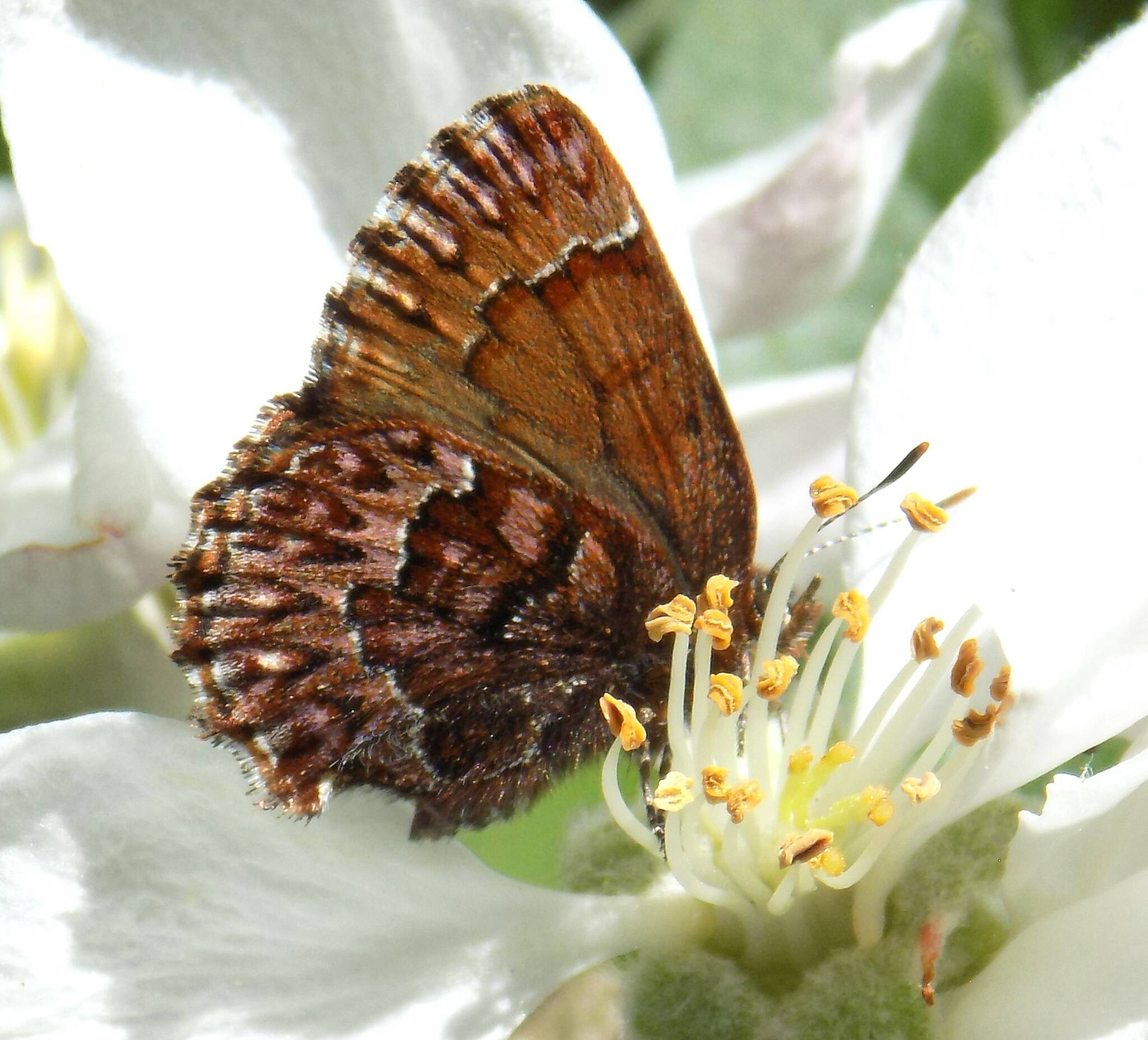
You can learn more about local butterflies and moths at a special Sunday afternoon slideshow by Kwiaht Director Russel Barsh at the Odd Fellows Hall on Feb. 22, at 2 p.m., “Colorful, Rare, and Mysterious Butterflies and Moths of the San Juan Islands.” Kwiaht is simultaneously issuing a spiral-bound, richly illustrated handbook on the islands’ butterflies and moths for purchase at local bookstores.
Ponds and lakes rarely freeze in the islands, but what insects fly in winter? We recently began studying moths attracted to lights in winter. Moths are unusually buttery and calorie-dense because they do most of their feeding as larvae — caterpillars — and as adults, often live for only a few days, burning through stored fat. They are also large, slow and soft targets. Ideal bat food.
We tend to think of moths, like their day-flying cousins the butterflies and skippers, as a summer phenomenon, but in the mild climate of western Washington, some moth species emerge to fly and mate every month of the year. More than 30 moth species have been photographed in the winter months around the Salish Sea, judging from online postings. We set out to determine how many of these species are abundant and widespread in the islands, and to identify the plants that host their larvae: Which island plants host moth larvae that bats could rely upon in winter?
Our observations this winter were dominated by the inchworm (Geometrid) moth, Operophtera. This is a very intriguing insect. To begin with, is it one species or two? Operophtera bruceata or Bruce’s Spanworm is native to southern Canada and the northern tier of the United States from coast to coast. It is almost indistinguishable from Operophtera brumata, the winter moth, an invasive European species that has spread westward across North America for over 50 years. Both moths respond to the same chemical signal (pheromone) for attracting mates, and they spontaneously hybridize. Both species are probably intermixed in the San Juan Islands.
Operophthera is not your everyday inchworm, moreover. Adult females lack wings. They simply sit and wait for males to fly by. Because they are flightless, they may be somewhat less likely to attract the attention of bats; however, some of our bats have been shown to target insects that are standing still on leaves, an amazing level of granular sonar scanning!
Eggs are laid on leaves, and the green larvae, once they have eaten their fill, drop to the ground and build little earthen capsules from which they will eventually emerge as adult moths. In much of their range, Operophtera emerge in spring, while we observe them flying in the islands as early as December. Their local life cycle is driven by early budding and leafing out of many of our native shrubs and trees.
Flightless females cannot wander far from the plants that they ate as caterpillars, so these moths remain concentrated in particular patches of host vegetation. In New England and eastern Canada, Operophtera are regarded as serious pests of Sugar Maples. In our region, however, the most likely hosts are willows, aspens and alders, and brushy deciduous trees that predominate in seasonally saturated soils and the edges of ponds and streams. Another reason to spare these deciduous plant species in hedgerows and wetlands!