Through the Digital Learning Commons (DLC), the Funhouse is partnering with the Orcas Island School District (OISD) to provide advanced education to students.
The DLC is a private, non-profit organization, based at the University of Washington, which acts as a clearing house for quality online programs, offering credits certified by the state Office of the Superintendent of Public Instruction.
The Funhouse is underwriting about $15,000 per year for Orcas Island School District Students to take DLC classes that are usually not available through the school, thanks to significant contributions by private donors to the Funhouse Education Fund. The cost per class is about $300-$400, says Funhouse Director Pete Moe. This semester, about 20 students are enrolled in the DLC.
Orcas School Superintendent/High School Principal Barbara Kline says “Thanks to the Funhouse giving access to so many classes, we have a fabulous selection in languages, science and math.”
OISD pays the annual DLC membership, which allows students to take APEX “core” classes at no cost for the first time this year, says Moe.
But, through its anonymous donor, the Funhouse pays the per-class costs for required courses for college admission not offered at the school (such as foreign language classes), or personal interest classes taken as an elective (such as internet web design) or a “credit retrieval” class, when a student has failed a class and has scheduling conflicts with making the course up.
The Funhouse also offer courses to Orcas students at the private schools, Moe says, but this semester none are signed up.
The DLC was brought to Orcas students through the efforts of Jeannie Beck, former Funhouse Director, who worked with OISD teacher Catherine Laflin to find alternative ways to support the high school and give the kids more opportunity, says Laflin.
When Beck and Laflin invited the DLC educational outreach team to come to the Funhouse to introduce the program, then middle/high school Principal Barbara Kline, and then-school librarian Phyllis Carney were invited. “By the end of that meeting, we all wanted to join,” said Laflin. “The Funhouse spearheaded providing the classes and the School took on the bigger picture that the DLC offers, such as library resources and classroom tools.”
Moe credits “the skilful way” in which Laflin “designed and worked with the program over the last three years, “ crediting her for setting up the most successful online education program in the state.
The online courses provide teachers who are certificated in their field, who are available by email and chat rooms for personal teaching, and some even provide their phone numbers.
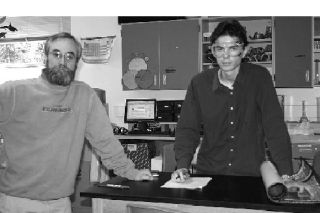
This year, OISD science teacher Gregory Books serves as online teacher/coordinator of the DLC program for Orcas High School students. This year, Books’ class schedule is three science classes and two DLC/study skills classes.
Students who want or need to take online courses come to Books to set them up and guide them in class selection. He is certified to teach all K-12 subjects, and can serve as a mentor to the DLC students. “Even though the online mentors are good, it’s still not as good as a real mentor.”
Community members are sought to mentor Orcas DLS students, particularly in courses such as Spanish, math, digital photography, computer programming, English and mythology. All mentors are coordinated through Jodi Luft at the Funhouse and meet with students an optimum of two or three times a week, and a minimum of once monthly.
Currently, Dave Parish mentors Advanced Placement French, and Sam Windsor mentors a mathematics course.
The students can access the DLC through any online computer – at home, at the Funhouse, or in Books’ classrooms at the high school. In his classroom, Books says that sometimes when he suggests taking a break after an hour of the two-hour class session, the students don’t want to.
Books says that he counsels the students away from the “fun stuff,” for example, a gaming class, and steers them toward a more productive class. “We try to avoid having kids take online classes, if we offer it at the school,” said Books. “Almost everyone agrees a real live teacher is better, including online students.”
The DLC students include Jacq Zier who is taking German, and is “learning remarkably efficiently,” said Books.
Lily Hoffstodt plans to graduate early and is taking advanced math.
Anton Ilkevich is taking second year German. He says, “A mentor definitely helps; they can guide you in the proper use of language.”
“Without the anonymous donor fund, we would be really limited online,” said Kline. “Our success rate is huge with DLC classes.”
Moe says, “Our successful completion rate for the classes is above 95 percent, whereas the national average is about 50 percent. We have a unique program for matching community mentors and volunteers.”
“It’s a great model for rural communities in the state because the state is not funding education adequately. Even in big cities, students can’t study Mandarin Chinese or CAD drawing, unfortunately, because schools are underfunded.”
Moe also notes that the DLC serves both the most academically successful students and those who are less successful and taking the core courses to help them graduate. “It’s socially interesting to have those kids working together,” said Moe.
He applauds the private, nonprofit sector for enabling the Funhouse to provide education through the DLC. “Even with the school’s commitment, we couldn’t afford to do it without the generous donations,” said Moe.
“It’s a blessing that we live in such a generous community.”
Through the Digital Learning Commons (DLC), the Funhouse is partnering with the Orcas Island School District (OISD) to provide advanced education to students.
The DLC is a private, non-profit organization, based at the University of Washington, which acts as a clearing house for quality online programs, offering credits certified by the state Office of the Superintendent of Public Instruction.
The Funhouse is underwriting about $15,000 per year for Orcas Island School District Students to take DLC classes that are usually not available through the school, thanks to significant contributions by private donors to the Funhouse Education Fund. The cost per class is about $300-$400, says Funhouse Director Pete Moe. This semester, about 20 students are enrolled in the DLC.
Orcas School Superintendent/High School Principal Barbara Kline says “Thanks to the Funhouse giving access to so many classes, we have a fabulous selection in languages, science and math.”
OISD pays the annual DLC membership, which allows students to take APEX “core” classes at no cost for the first time this year, says Moe.
But, through its anonymous donor, the Funhouse pays the per-class costs for required courses for college admission not offered at the school (such as foreign language classes), or personal interest classes taken as an elective (such as internet web design) or a “credit retrieval” class, when a student has failed a class and has scheduling conflicts with making the course up.
The Funhouse also offer courses to Orcas students at the private schools, Moe says, but this semester none are signed up.
The DLC was brought to Orcas students through the efforts of Jeannie Beck, former Funhouse Director, who worked with OISD teacher Catherine Laflin to find alternative ways to support the high school and give the kids more opportunity, says Laflin.
When Beck and Laflin invited the DLC educational outreach team to come to the Funhouse to introduce the program, then middle/high school Principal Barbara Kline, and then-school librarian Phyllis Carney were invited. “By the end of that meeting, we all wanted to join,” said Laflin. “The Funhouse spearheaded providing the classes and the School took on the bigger picture that the DLC offers, such as library resources and classroom tools.”
Moe credits “the skilful way” in which Laflin “designed and worked with the program over the last three years, “ crediting her for setting up the most successful online education program in the state.
The online courses provide teachers who are certificated in their field, who are available by email and chat rooms for personal teaching, and some even provide their phone numbers.
This year, OISD science teacher Gregory Books serves as online teacher/coordinator of the DLC program for Orcas High School students. This year, Books’ class schedule is three science classes and two DLC/study skills classes.
Students who want or need to take online courses come to Books to set them up and guide them in class selection. He is certified to teach all K-12 subjects, and can serve as a mentor to the DLC students. “Even though the online mentors are good, it’s still not as good as a real mentor.”
Community members are sought to mentor Orcas DLS students, particularly in courses such as Spanish, math, digital photography, computer programming, English and mythology. All mentors are coordinated through Jodi Luft at the Funhouse and meet with students an optimum of two or three times a week, and a minimum of once monthly.
Currently, Dave Parish mentors Advanced Placement French, and Sam Windsor mentors a mathematics course.
The students can access the DLC through any online computer – at home, at the Funhouse, or in Books’ classrooms at the high school. In his classroom, Books says that sometimes when he suggests taking a break after an hour of the two-hour class session, the students don’t want to.
Books says that he counsels the students away from the “fun stuff,” for example, a gaming class, and steers them toward a more productive class. “We try to avoid having kids take online classes, if we offer it at the school,” said Books. “Almost everyone agrees a real live teacher is better, including online students.”
The DLC students include Jacq Zier who is taking German, and is “learning remarkably efficiently,” said Books.
Lily Hoffstodt plans to graduate early and is taking advanced math.
Anton Ilkevich is taking second year German. He says, “A mentor definitely helps; they can guide you in the proper use of language.”
“Without the anonymous donor fund, we would be really limited online,” said Kline. “Our success rate is huge with DLC classes.”
Moe says, “Our successful completion rate for the classes is above 95 percent, whereas the national average is about 50 percent. We have a unique program for matching community mentors and volunteers.”
“It’s a great model for rural communities in the state because the state is not funding education adequately. Even in big cities, students can’t study Mandarin Chinese or CAD drawing, unfortunately, because schools are underfunded.”
Moe also notes that the DLC serves both the most academically successful students and those who are less successful and taking the core courses to help them graduate. “It’s socially interesting to have those kids working together,” said Moe.
He applauds the private, nonprofit sector for enabling the Funhouse to provide education through the DLC. “Even with the school’s commitment, we couldn’t afford to do it without the generous donations,” said Moe.
“It’s a blessing that we live in such a generous community.”