Orcas Fire revives cadet program, building next generation of community leaders
Published 1:30 am Friday, February 20, 2026
By Asifa Pasin
Sounder contributor
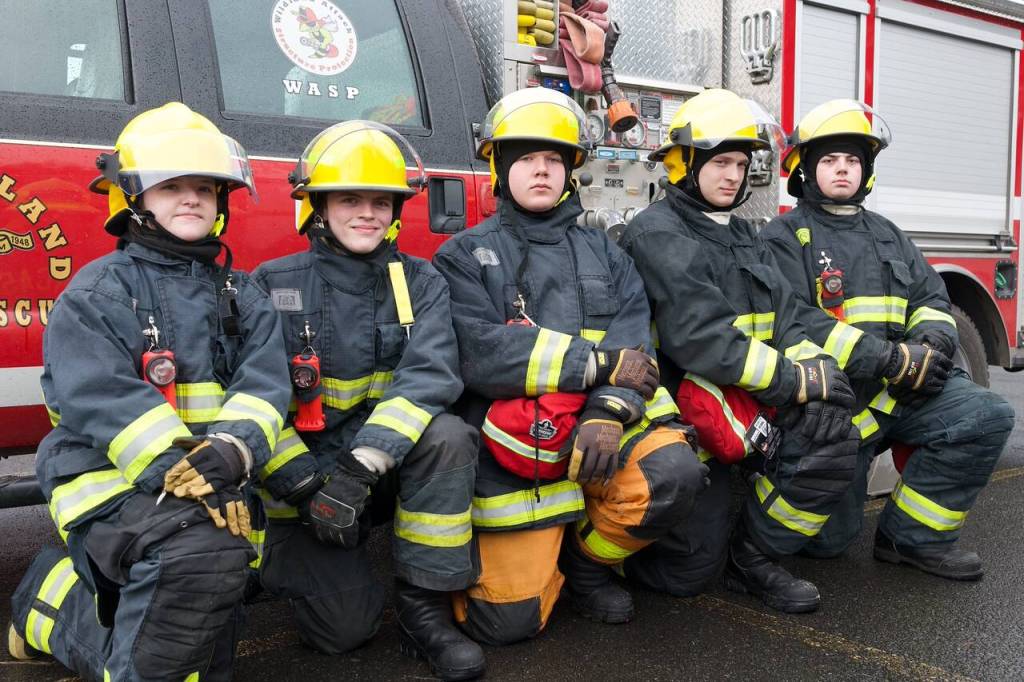
After a 13-year hiatus, Orcas Island Fire & Rescue has proudly reintroduced its Cadet Program. The program represents the third and newest membership branch at OIFR, alongside responder members (firefighters, EMTs, rescue and wildland firefighting) and auxiliary non-emergency support members. Public Information Officer Ben Luna explains that while the Cadet Program is still evolving, it is already playing a vital role in the department’s future. Led by Public Education Specialist and Cadet Program Coordinator Becca McDowell, the revived program reflects both long-term planning and timely community interest. “This program is about leadership,” Luna said. “And it’s about investing in the future of emergency services on Orcas Island.”
Fire Chief Chad Kimple, who has been with OIFR for more than 20 years and stepped into the role of fire chief just last year, was instrumental in bringing the program back. Chief Kimple himself began his fire service journey as a cadet at age 16. With strong interest and the capacity to support a robust academy, he felt the timing was right.
Division Chief Sam Fowler shares a similar path. “I started in the fire service as a volunteer at the age of 16,” Fowler said. “It really is the reason I got into public safety as an adult, and why I am where I am today.”
Adding momentum to the program’s revival was a message from 15-year-old Neila Welch, who emailed Chief Kimple in 2025 expressing interest in a cadet program that didn’t yet exist. Today, she is the youngest and only female cadet in the academy.
Training side by side
The current academy began with 30 recruits, including six cadets, and now stands at 29, making it the largest academy OIFR has ever hosted. This represents nearly a 50 percent increase in fire volunteer membership which is a significant undertaking for the department as a whole.
Cadets train alongside adult recruits and follow the same curriculum, with only two legal limitations under Washington State law: cadets may not operate chainsaws or participate in live fire exercises. Otherwise, they learn the same skills, including hose loading, ladder work, fire attack strategies, SCBA (self-contained breathing apparatus) use, communication protocols, teamwork, and situational awareness.
“In every respect, we consider the cadets equal to the firefighter recruits,” Luna said. “There’s zero difference in the classroom, and honestly, having cadets there elevates the experience.”
OIFR has intentionally worked to avoid ageism and sexism within the program. Volunteers currently range from 15 to 78 years old, all training together in service to the community.
Leadership, grit and growth
While the academy’s skills are technical, both Luna and Fowler emphasize that the deeper lessons center on leadership, discipline, and resilience.
“This work is physical, mental, and emotional,” Luna said. “The textbook alone is intense. The gear is heavy. You bond quickly because you’re preparing to respond to people on the worst days of their lives.”
Fowler notes that cadets are not only learning emergency response skills, but also leadership through responsibility. During the academy, each student, including cadets, spends several weeks serving as a company officer. In that role, they are responsible for managing a group of four to five recruits in the classroom, on the drill ground, and during station duties.
“These skill sets are transferable to any other job and into many aspects of everyday life,” Fowler said. “Communication, teamwork, composure under pressure, and leadership are often overlooked outcomes of this training, but they stay with participants forever.”
Luna describes the cadets as a “legacy group” whose influence will ripple outward, encouraging peers, inspiring future recruits, and strengthening emergency preparedness across the island’s far-reaching geography.
“Young people have an incredible capacity to learn quickly and handle stress,” Luna added. “Every kid deserves access to this knowledge.”
Hearing from the cadets
Following the interview with Luna, I spoke with the five cadets currently enrolled in the program.
Kairam Bailey (18) said he joined because it felt like a strong career path. “At this point,” he shared, “I really can’t imagine doing anything else.”
Jacob Wright (17), son of academy instructor and former fire chief Buddy Wright, was surprised by the people. “I didn’t expect such a diverse and wonderful group,” he said. “Everyone really works as a team.”
CJ Nuñez (16) said ladder setup has been the most challenging skill to master. “But the most exciting thing,” he added, “has been learning to go ‘on air’ with the SCBA.”
Isaiah Kimple (16), son of Fire Chief Chad Kimple, described training alongside adults and parents as natural. “The diversity helps us take it seriously,” he said. “I also can’t imagine doing anything else with my life.”
Neila Welch (15) offered simple advice to other young people who may be curious or hesitant. “Just do it,” she said. “Even if you’re not sure it’s what you want to do long-term, you might discover it’s something you really enjoy. You’ll never know unless you challenge yourself.”
Neila’s father, Ian Welch, is also a firefighter recruit in the same academy. He described the experience as deeply meaningful.
“We’re forging a lasting father-daughter connection and building memories we’ll cherish for a lifetime,” he said. “Our conversations at home have changed. Now we talk about serving this community, about facing scary or sad situations, and about learning how to show up professionally for people in need.”
He added that he has seen Neila grow in confidence, teamwork, and leadership. “I’m grateful we made this choice and thankful for the instructors who guide us.”
Looking ahead
Cadet Program Coordinator Becca McDowell envisions the program becoming a well-worn path for island youth interested in public service.
“My hope is that this program opens doors,” she said. “This group will eventually serve as leaders for the next cadre, helping shape the program’s future.”
Fowler agrees, noting that while not every cadet will pursue firefighting long-term, many will and many already have. “A number of our full-time members at OIFR entered the firefighting world as volunteers,” he said. “There is no better example than Fire Chief Chad Kimple, who started in the field many years ago as a cadet himself.”
McDowell believes that while the future roles of today’s cadets are unknown, their sense of purpose is already clear.
“Emergency response skills are only part of what they gain,” she said. “They’re learning leadership, teamwork, communication, and logistics which are skills that will serve them no matter where life takes them.”
For Orcas Island, the return of the Cadet Program is more than a training opportunity; it is an investment in resilience, service, and the next generation of community leaders.
To learn more about the Orcas Island Fire & Rescue Cadet Program, contact Becca McDowell at bmcdowell@orcasfire.org.