Historic Fire Academy brings new generation eager to give back and serve Orcas Island | Thirty recruits — including six high school cadets — represent largest training class in department history
Published 1:30 am Thursday, February 19, 2026
By Darrell Kirk
Staff reporter
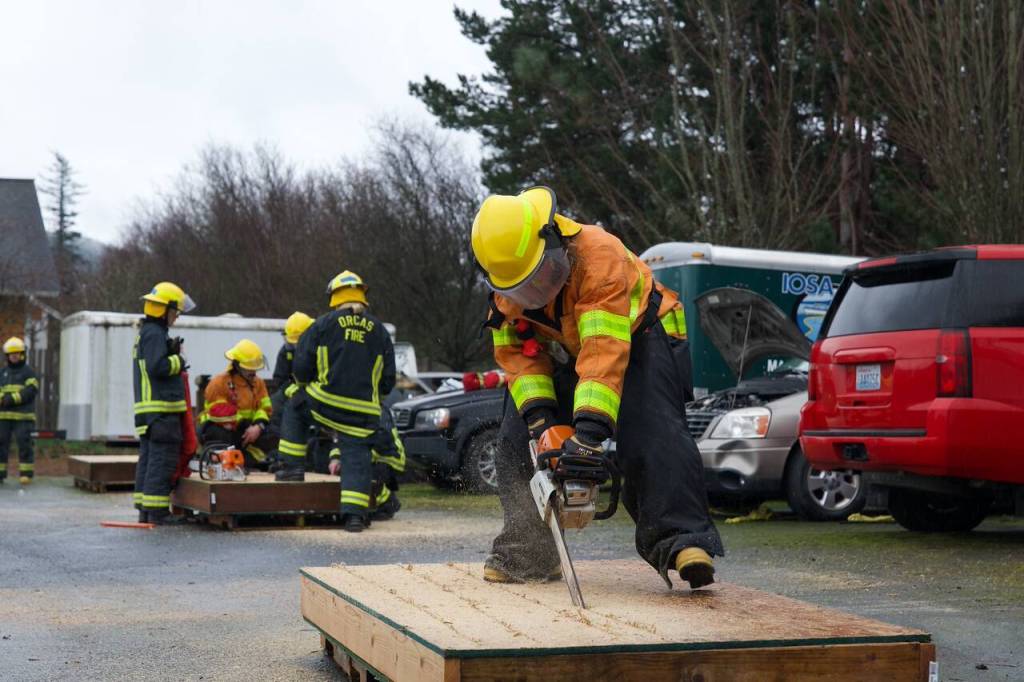
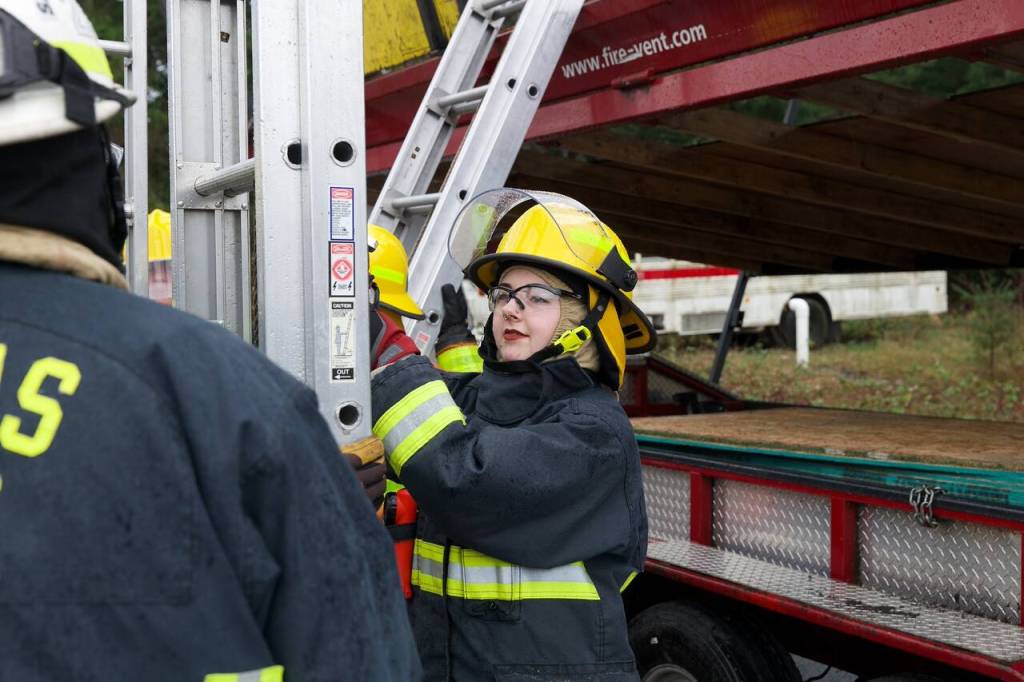
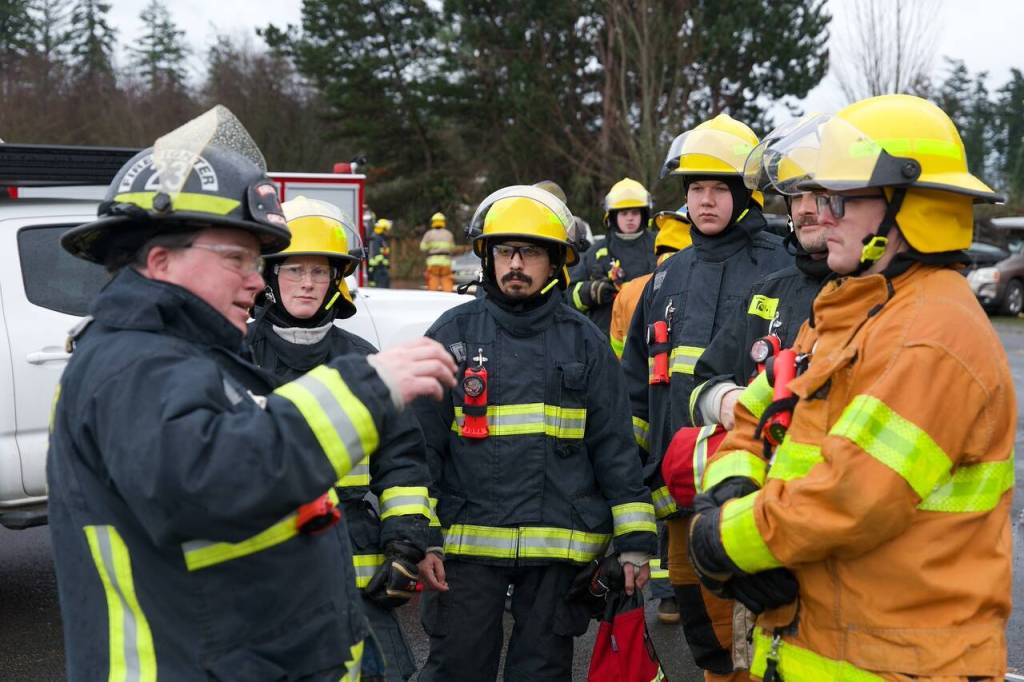
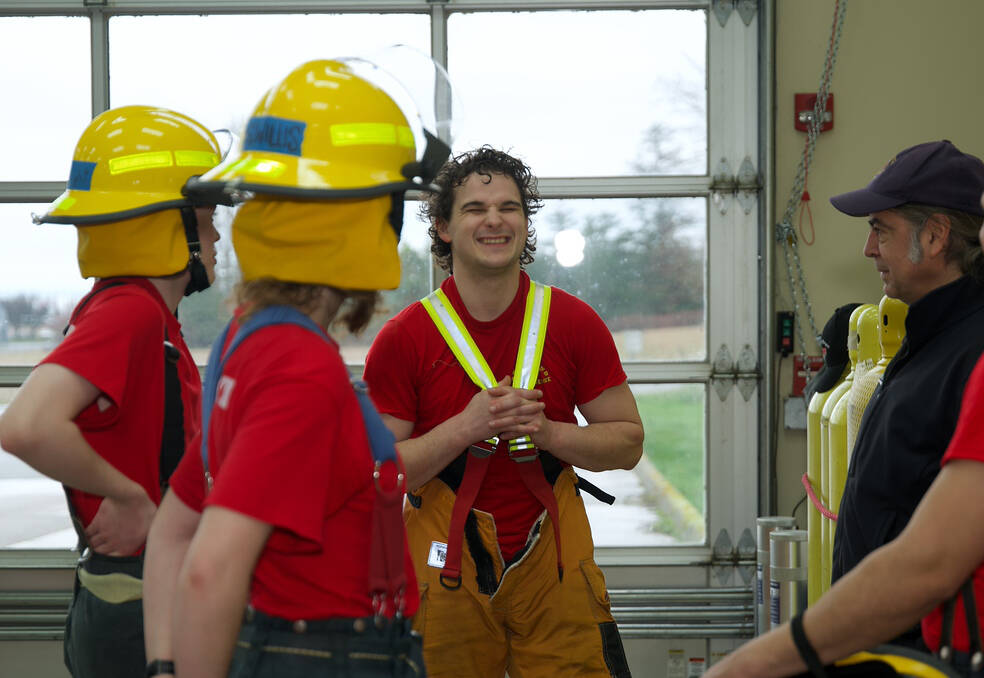
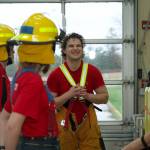
On a cold, wet February weekend, 30 recruits climb ladders, haul heavy hoses and practice ventilation cuts on a training roof prop — all while wearing 50-60 pounds of bunker gear. Despite the demanding conditions, the atmosphere at Station 21 is electric with purpose and camaraderie as Orcas Island Fire & Rescue conducts the 2026 Fire Academy — the largest in department history and the first in 13 years to include cadets.
The Orcas academy stands in stark contrast to national trends. According to Firefighter Nation, the volunteer fire service across the country is experiencing a troubling decline marked by dwindling membership, internal dysfunction, low morale and toxic culture. The Oct. 28, 2025, article noted that while fire departments once had waiting lists of eager volunteers who viewed service as “an honor, a rite of passage, and a badge of service,” today’s departments struggle to attract and retain members.
Thirty recruits began training Jan. 3, representing every fire station across Orcas Island’s 57 square miles. The academy runs through April, with weekend sessions and two Thursday evenings each month. For the first time in over a decade, six young islanders ages 15-18 are training alongside adults in the department’s cadet program, signaling a generational shift for the volunteer-dependent department.
“This is a diverse group representing the best of Orcas Island,” said Fire Chief Chad Kimple. “Their dedication is impressive. When you see them, please thank them for their commitment to our community.”
A second family
Sam Fowler, division chief-training officer, attributes the unprecedented turnout to community need meeting island enthusiasm.
“It came together real last minute,” Fowler said. “We literally had people coming in and applying the day of orientation. We had an individual come in that morning who had seen the signs out there. I think there was just a lot of excitement within the community for it.”
The department borrowed bunker gear from San Juan Island, Lopez Island and even Shaw Island. Guest instructors ferry over from neighboring islands to help manage the class size.
“I think the department is just filled with really good people and really positive energy,” Fowler said. “It really is a second family here.”
That family atmosphere keeps recruits smiling through eight-and-a-half-hour days in miserable conditions.
“The biggest thing for me is these people are working hard,” Fowler said. “It’s cold, it’s wet. And at the end of the day, we meet back up in the classroom and people are smiling and laughing. It would be very easy for a person to be miserable. And these folks, they’re smiling and they’re laughing. They’re having a good time.”
The weight of service
The physical demands are substantial. Recruits work in 50-60 pounds of bunker gear plus air packs, learning to operate in conditions that would overwhelm most people.
“It’s about 50 to 60 pounds when you have all the bunker gear and the air pack and all that stuff on,” said Will Rubey, who went through the academy two years ago and now helps instruct. “And it’s uncomfortable when you’re first wearing all that stuff and you’ve got a mask on. The mask can fog up and make it difficult to see. It’s all these uncomfortable factors that get thrown in and you have to sort of deal with that, learn how to become comfortable in that environment.”
Rubey, 48, volunteers with Station 22 in Deer Harbor. He emphasized that the work requires more than physical strength.
“You have to have a certain level of physical fitness and you have to have a certain level of grit,” he said.
Instructor Ted McKey explained the significance of the bunker gear.
“When you think of a firefighter, you think of the helmet and the gloves and the mask and the air pack and the bunker gear,” McKey said. “That is our uniform. You might even call it our office. When you’re in full bunks and all the gear and the air pack and you’re on air and the full face mask, you don’t have a bit of skin showing and you can go into a burning building—that’s your office. That’s how you do your job.”
An army of instructors
The academy’s size required unprecedented support. A team of instructors from across Orcas Island Fire & Rescue — and beyond — has dedicated countless hours to ensure quality training.
From Orcas Island Fire & Rescue, the instructor team includes, among others, Fire Chief Chad Kimple; Sam Fowler, division chief-training officer; Greg Sawyer, battalion chief; Ben Luna, public information officer, instructor; Ted McKey, instructor; Tony Simpson, instructor, LT27; Buddy Wright, instructor; Thomas Palmer, instructor; Will Rubey, instructor; Seth Ybarra, captain, instructor; George Schermerhorn, captain, instructor; Dimitri Stankevich, director of administration and finance; and Tom Ahearn, EMT. Guest instructors include Michael Sendrowicz, instructor, from Lopez Island Fire.
“The collaborative effort has been incredible,” said Luna. “When you have 30 recruits, you need all hands on deck. Our instructors have given up weekends, evenings, and family time to make sure these recruits get the best possible training.”
Diverse motivations, common purpose
The recruits come from different backgrounds but share a desire to serve.
Sami Dean, originally from Colorado, moved to Orcas for whale watching work after time in Juneau, Alaska. She had explored firefighting in high school but faced discouragement.
“Other people were like, ‘oh you’re too small’ or ‘oh you’re a girl,’” Dean said. “And I kind of listened to that. But this past time I was like, you know what, I’m just going to go for it. I love this community. So any way to give back to the community is a really special thing.”
David Clough moved to Orcas from Seattle last August with his wife and children. The West Sound wildfire and LA’s fires prompted his decision to volunteer.
“After everything that happened in LA, it’s amazing to see a pretty small group doing really big things,” Clough said. “The training is solid, methodical and safe.”
August Groeninger was born and raised on Orcas, graduating from Gonzaga University before returning home.
“I really just wanted to pursue something where I felt like I was giving back to my community again,” Groeninger said. “I’m just really excited to be able to give back to this Orcas community.”
Oscar Schragel-Rietz came to Orcas five years ago from Bellingham during the pandemic. He’s found camaraderie in Engine Company 23.
“I really enjoy being helpful and useful and doing something for other people,” he said. “This community has been very supportive of me in a lot of ways.”
Miles Cottingham, originally from San Antonio, Texas, moved to Orcas full-time last October.
“What I love about the group here is it’s all backgrounds, all ages, all economic situations,” Cottingham said. “It’s just a good blend of folks, equal representation of the community.”
Grace Willis came from Chicago’s southeast side five years ago, planning to stay one month.
“I was impressed by the way people talked about the community and the skills and the training,” said Willis, who works for Eastsound Water and Sewer. “It seems like a natural extension of what I already do. I want to be an asset, not a liability.”
Schragel-Rietz’s biggest fear in the field was also mentioned by other recruits — his biggest concern isn’t personal injury but the possibility of not being able to help someone in need. “Failure in this line of work comes with a heavy cost,” Schragel-Rietz said. “There’s inevitably going to be times where the weight of what you weren’t able to do is going to be really heavy.”
Perhaps no one embodies the academy’s generational shift more than cadet recruit Jacob Wright, who just turned 17 and is in 11th grade at Orcas Island High School.
“I really feel like I’m a part of the community,” Wright said. “The work that I’m doing and the effort that I’m putting in is contributing to the health and safety and well-being of my community. The people who I’m working with are just fantastic—some of the best that this island has to offer.”
He works alongside his Engine Company 23 teammates — Schragel-Rietz, Cottingham and Willis — balancing high school with the demanding training schedule.
“It’s a very large commitment,” Wright said. “Everyone’s trying to bring their best energy. But growing up here, I’ve been surrounded by so many wonderful people who have given their time and effort and money into providing programs for adolescents. I wanted to figure out some way that I could give back to that same community, which has given me so much.”
Luna sees the broader significance of this academy’s youth component.
“People are calling this a legacy academy,” Luna said. “This group will have members who stay with the department for many years and remember their time here as a pivotal moment for shaping the next 20 years. We all know there will be people coming out of this academy who will be leading the department years from now.”
The recruits will complete Firefighter 1 and 2 certifications through the Washington State Fire Marshal’s Office, plus HAZMAT certification. In March, they’ll travel to the Fire Training Academy in North Bend for live fire training. Graduation is expected in May, when Orcas Island Fire & Rescue will welcome its largest class of new firefighters in history, ready to serve their neighbors.