Nature’s architecture: How driftwood forts at Crescent Beach reveal a deeper story of marine conservation
Published 1:30 am Saturday, July 26, 2025



By Darrell Kirk
Sounder contributor
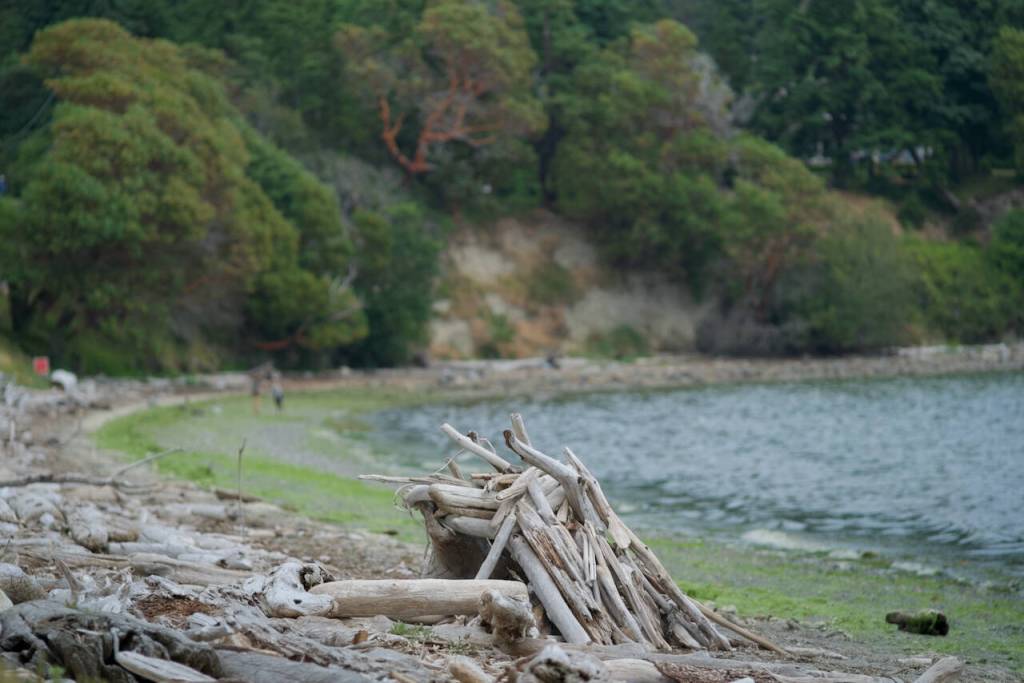
Walk along Crescent Beach on any given day, and you’ll witness nature’s collaboration with human creativity. Children and adults alike transform the abundant driftwood into elaborate forts, whimsical sculptures and cozy shelters that dot the shoreline like temporary monuments to imagination. Most recently, beachgoers have constructed an impressive driftwood wall at the west end of Crescent Beach, carefully arranged to protect a small, shallow cave entrance from the elements.
These playful structures, built from salt-weathered logs and bleached branches, tell a story that extends far beyond childhood wonder. The same driftwood that sparks creativity in beach visitors serves as a cornerstone of marine ecosystem health, particularly for the Pacific Northwest’s iconic salmon populations.
The science behind the scenery
Research conducted by scientists at the University of Washington’s Friday Harbor research center, as mentioned in an article in the July 2016 issue of The Seattle Weekly, “How Driftwood Can Save The Salmon,” has revealed the profound ecological importance of driftwood accumulation on natural beaches. In recent years, researchers led by Megan Dethier have documented how these seemingly simple collections of woody debris support complex food webs essential to salmon survival.
The article noted, “Their research found that natural beaches accumulated 18 times as much driftwood as armored beaches. This driftwood, along with other woody debris, proved to be the foundation on which a largely unseen web of life is built. Within its shelter and shade, tiny invertebrate species — bugs and worms and flies — were vastly more abundant than along the armored shores placed by humans who built their homes too close to the beach; in some cases, invertebrate species were eight times more numerous along the drift-strewn beaches. Salmon took notice. Using snorkel gear, researchers went underwater to observe how salmon behaved around beaches strewn with woody debris, and found that they lingered much longer than they did at armored beaches, presumably appreciating the bounty of food provided by all that teeming wrack washed up from the sea.”
More than meets the eye
The driftwood wall protecting the cave entrance at Crescent Beach inadvertently mirrors nature’s own protective strategies. Just as that human-built barrier shields the cave from wind and waves, naturally occurring driftwood creates crucial microhabitats along the shoreline. These woody accumulations trap sediment, create pools of varying depths and provide shelter for countless small organisms that form the base of the marine food chain.