Historic meeting between Lummi and Haida Nations on Orcas | Ancestral leaders collaborate to heal historical wounds and reclaim traditional identity
Published 1:30 am Sunday, June 22, 2025



By Darrell Kirk
Sounder contributor
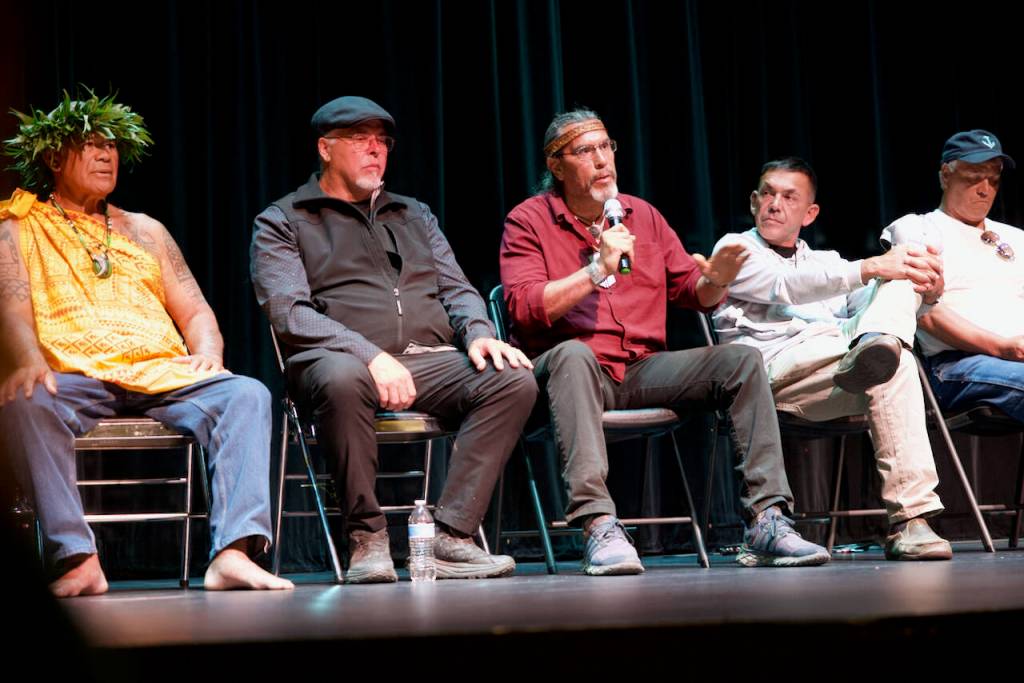
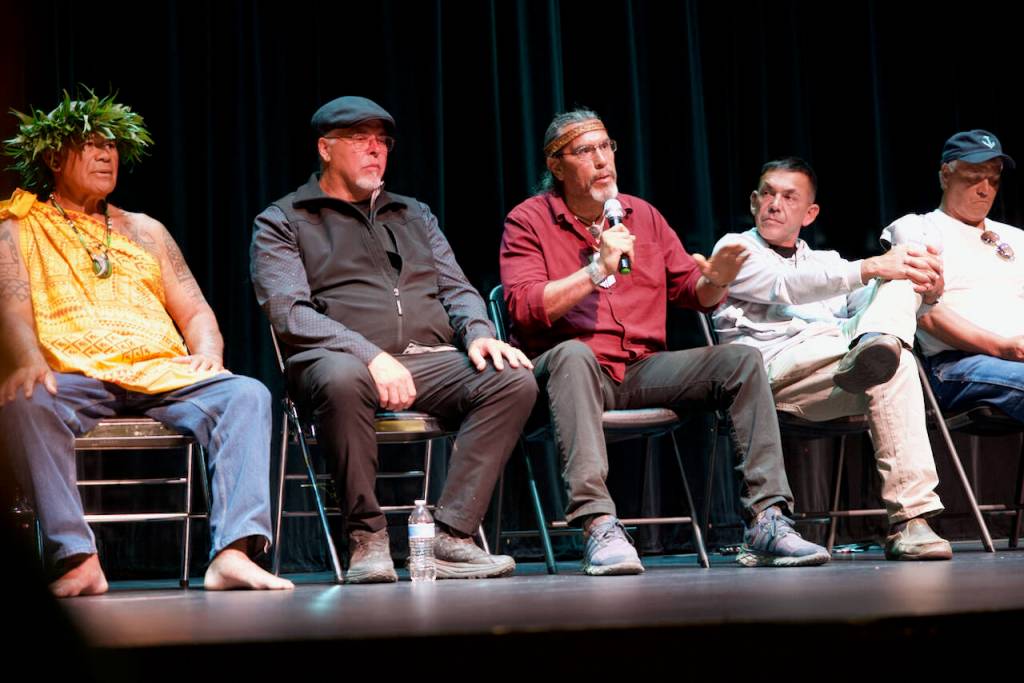
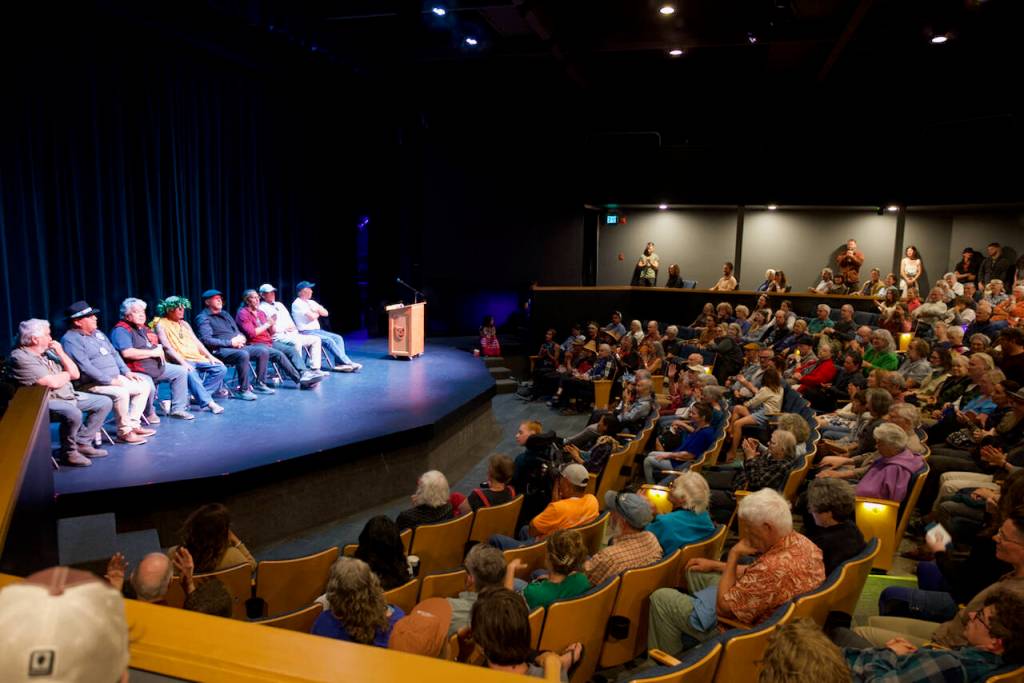
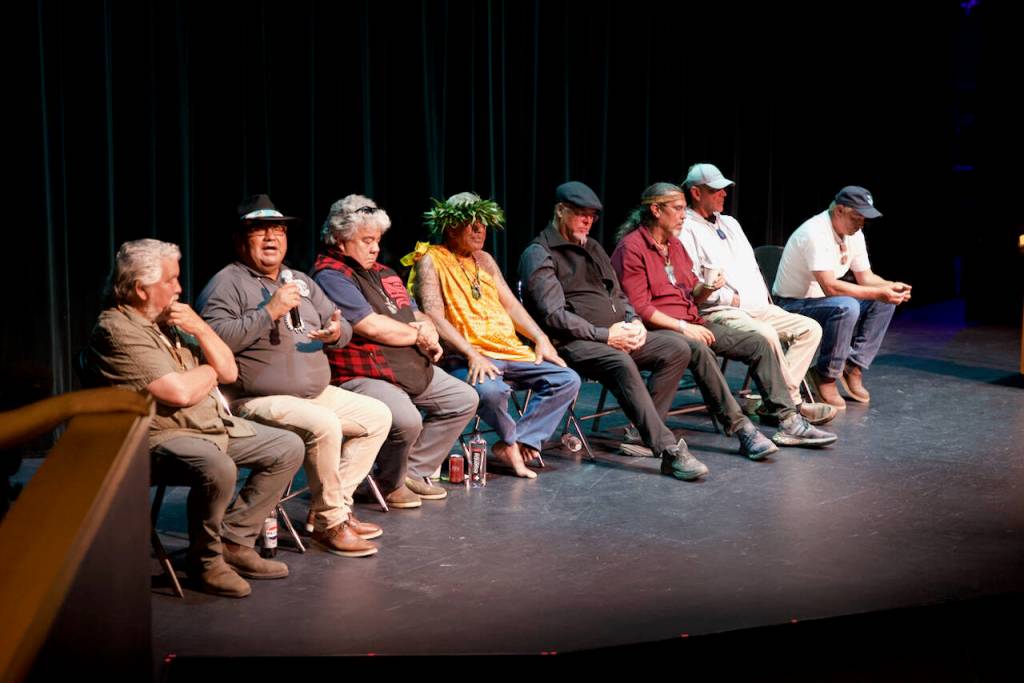
In a powerful ceremony of reconciliation and cultural restoration, ancestral leaders of the Lummi and Haida nations gathered on Orcas Island to formally restore traditional place names to sacred sites that have long carried the painful legacy of colonial violence.
The emotional gathering on June 16 at Orcas Center focused on three significant locations: Haida Point, Massacre Bay and Skull Island — names that reflect a dark chapter in Pacific Northwest history when Indigenous peoples faced displacement and violence in the 1850s.
“I’m here to acknowledge Sx’wálex’, known to us as Orcas Island, but this island needs no acknowledgment from us,” said island resident and gathering moderator John Vechey during the ceremony. “It needs no introduction to the Lummi who inhabited this land since time immemorial and whose ancestors’ spirits are still here.” Vechey went on to say that over the past two days, the Lummi Nation, led by Councilman Dana Wilson and Jay Julius, hosted four Haida chiefs in a collaborative gathering focused on reconciliation and cultural understanding. Rather than dwelling on past conflicts between the two tribes, they came together peacefully through conversations, ceremonies and gift exchanges to address the deeper meaning behind place names like Haida Point.
The central focus was recognizing that what we now call Haida Point wasn’t always known by that name – it has Indigenous origins that deserve acknowledgment. The Lummi Nation conducted ceremonies to honor the Haida people for sharing their traditional name and allowing them to preserve that cultural memory. The gathering was described as deeply meaningful, featuring the sharing of songs, cultural practices and ceremonial traditions between the two groups.
The emphasis was on moving forward together in a spirit of peace and mutual respect, while properly honoring the true historical and cultural significance of these sacred place names.
Lummi leader Jay Julius spoke of the great significance of the island and gathering. “We just had an incredible day today. I want to acknowledge the Haida. The Haida are here today, and they showed up Friday, Saturday, Sunday, and it’s been great. It’s been great to connect. It’s been great to share story, culture, history, and this time together, this monumental moment that took place. So, what happened today, and what led to this moment? Many of you are familiar with Madrona Point. It’s sacred to you, special to you, and to us, it’s a very, very sacred place. And for myself, my family, East Sound, Shwella people, it is my everything on my mother’s side, father’s side, everything. It’s where we emerge from. Lummi, and the Shwella people, and the Lhaq’temish people, and the Reef Bend people are saltwater people. You look at the other tribute tribes, and they’re river people. Lummi is really unique, distinct. We’re saltwater people, and we live next to freshwater streams, and creeks, and lakes. So, this place where we’re at right now, East Sound, is really important to me.”
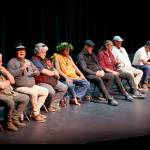
Lummi leader Dana Wilson gave an overview of the day to a standing-room-only audience of tribal leaders from all over the country, as well as leaders from Canada and Hawaii, and Orcas Island residents. “You know, we started early this morning. We condensed the potlatches in one day. You know, using potlatches, probably 150 years ago, and they went on for a week, 10 days. And we put that into a day today, and I think everybody got a good feeling that even that we condensed it into one day, it went pretty well.”
Wilson went on to say, “The feelings at the point were amazing. The feeling of peace, compassion for one another, listening to the old songs of Haida, new songs that were heard there and sung by our own men were pretty amazing. Hopefully we can bring our children back there and start a culture camp … where they can just spend time, spend some weeks, spend days learning not who they are, but who they were. Because the past is very important in our tradition and our culture, in our songs, in our way of life. I’m so grateful that the Haidas and Haida Nation, Haidas from Alaska, were able to make it here.”
Haida leader Miles Richardson addressed the gathering and gave sobering testimony to the importance of the celebration for the Lummi and Haida nations, as well as a message to all humanity. “When you look at nations such as the Haida, who’ve been in our homelands for hundreds of generations, for thousands of years, as have the Lummi in this part of the world, and you see our living generation standing before you proclaiming who we are, that we’ve survived, that we’ve come here to this day, is that, in your eyes, is that a coincidence? Or do our people, in our ways, know something? I want you to think about that. Because that’s what we’re celebrating today with Lummi is two people with those types of experiences from the longevity of history recognizing each other and committing to live with love, with respect for each other going forward. Because in today’s world, that’s our only real option. And I’d say with all of us as a human species, we’ve got something to learn from that. That in our common ceremonies, the Lummi people lead with ceremony, the Haida people lead with ceremony. You remember that? What ceremony’s purpose is, is simply to remind us that we’re all in this together, that we’re all connected, humans amongst humans, and humans to the rest of the natural world.”
Historical context
The collaboration represents a significant step toward healing historical trauma. By the Treaty of Point Elliott in 1855, the Lummi were forcibly removed from the islands and placed on what was then called the Lummi Reservation. The land witnessed the destruction of forests, salmon runs and the displacement of its people and their children and culture.
Broader movement
The ceremony represents part of a broader movement across the Pacific Northwest to restore Indigenous place names and acknowledge the ongoing presence of Native nations. The collaboration between Lummi and Haida peoples demonstrates how tribes are working together to heal from historical trauma while asserting their continuing cultural and spiritual connections to ancestral lands.
Community Impact
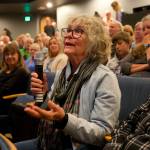
Many in the audience were deeply affected by the gathering, especially with the emphasis of knowing your sense of place which was discussed by many of the ancestral leaders. I talked with Orcas Island resident Fletcher Dae, and the themes of place and knowing your place resonated with him: “I’m from southern Appalachia, which is one of the oldest mountain ranges, if not the oldest mountain range on Earth, and so my bones and my blood are from the oldest place, the oldest mountain range on Earth. This is a very potent thing that I feel in my body.”
San Juan County Councilman Justin Paulsen reflected on the day’s events saying: “I was invited into the canoe today, and was allowed to paddle alongside members of the Lummi Nation, and participate in the ceremony to be a witness to what was happening. And so that, you know, that’s an honor. But I don’t know if I deserved it, I don’t know if I earned it, but I was given that opportunity. One of the members of the Lummi tribe said we are all in the place we are in for a reason. And so, for some reason, I was there and I was in that place and that is why I was there.”
Paulsen went on to say, “I was gifted a box from the Lummi council that carries with it a lot of meaning for them and will be the basis of future discussions between our council and their council. And so, in my opinion, the Lummi tribe has opened a door and it is now up to us to work, to take whatever that path forward is through that door.”
This restoration effort reflects a growing recognition that healing requires not just acknowledgment of past wrongs, but active steps to restore Indigenous relationships to place, culture and each other. The ceremony on Orcas Island stands as a powerful example of how Native nations are reclaiming their rightful place in the landscape and history of the region. This was a historical event of great significance on Orcas Island and all Orcas Island citizens can be proud of the example and leadership of these two great nations, especially during these challenging times.