
Lynn Roberts | Passages
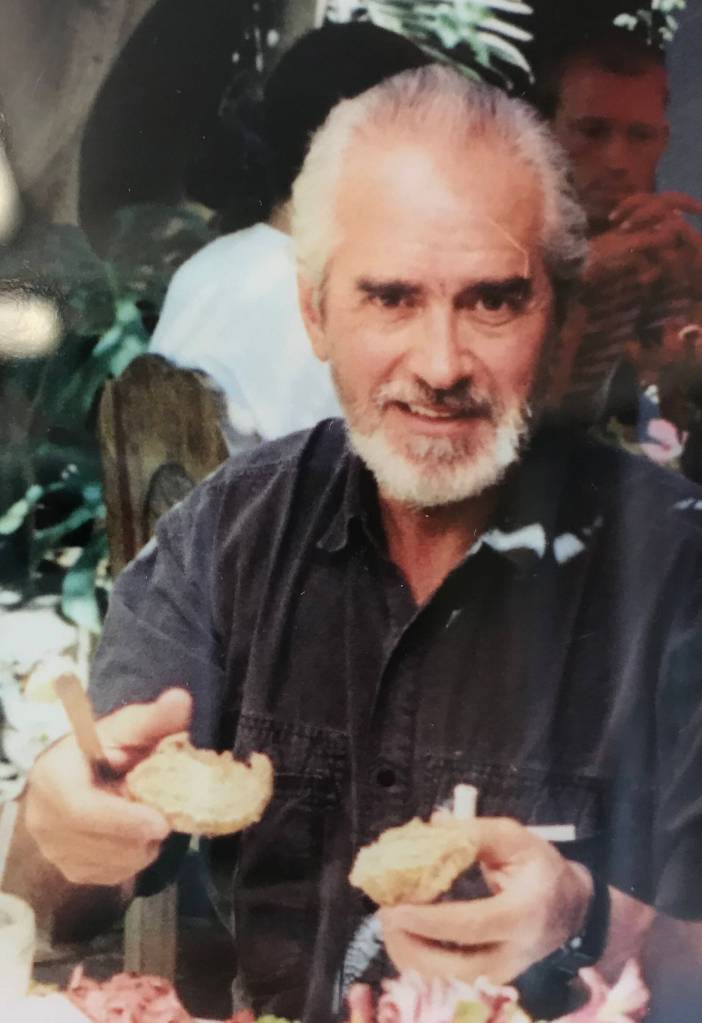
Published April 19, 2026
September 25, 1941 – March 16, 2026
Lynn Allen Roberts died on March 16, 2026, at the age of 84, after a long life spent in the service of others.
Lynn was born September 25, 1941, in Jordan, Montana, son of Orrest “Robert” Roberts and Hilda “Susan” Roberts. Lynn spent his youth in Wenatchee, WA, graduating from Wenatchee High School in 1959.
Lynn studied education at Wenatchee Jr. College, Eastern Washington State College, and the University of Washington, receiving his undergraduate degree in Biology in 1964. He earned a teaching certificate that same year and taught in the Garfield, Einstein, and Shoreline public schools for the next several years. He had many fond memories of working at the 1962 Seattle World’s Fair.
Lynn enlisted in the Washington Army National Guard in 1965 and completed medical and basic training with distinction. In 1967 he was commissioned as a Second Lieutenant in the Medical Service Corps and transferred to the Army Reserve, serving with the 50th General Hospital at Fort Lawton. He rose to the rank of Captain and received consistently high evaluations, leaving in 1976, after eleven years of service, with the rank of Captain.
It was in a continuing education class for his teaching certification that he met Mary Susan “Molly,” when they were seated together because he was a “Roberts” and her married name was “Rimm.” They were married in 1967. Molly had two young sons from a prior marriage, Paul and Mathew, and in 1968 Lynn and Molly had a daughter, Ann. By this time the family was living in Richmond Beach, a northern suburb of Seattle, and both Lynn and Molly were teachers in the Shoreline School District (Molly taught 5th grade; Lynn taught junior high school mathematics and shop).
By 1969 the family had begun to vacation on Orcas Island in the summers. Lynn and Molly fell in love with the island, purchasing land at Buckhorn and building what was ostensibly a summer house. Unlike most transplants who “build houses” on Orcas, Lynn actually built the house himself, learning as he went along—a pattern he would repeat for a wide range of skills over the next 40 years. When a job teaching 5th grade opened up for Molly at Orcas Elementary School in 1972, the family took the leap and made Orcas their permanent home, joining the significant number of American families who forsook cities for a rural life in what was called the Back to the Land movement.
The country was in a deep recession, and Lynn and Molly had one paying job between them. With characteristic resolve, Lynn created his own employment, launching Orcas Service Company, an island-based heating and appliance repair business. By the early 1980s Orcas Service Company had multiple employees and consisted of an HVAC and appliance repair business, sheet metal shop, ice company, laundromat, UPS office, and a home-security business.
Lynn also took a keen interest in the island’s history and penned many letters to the Islands’ Sounder about local issues. He served as the chairman of the Eastsound Sewer and Water District from 1975–79, helping shape the sewer infrastructure in Eastsound, and served on the Library Board for many years. He wrote a book about local history, including chapters on smuggling, early exploration, lime kilns, and other aspects of early island life.
He became increasingly interested in protecting the environment, both on Orcas and globally, and was involved in many local causes. Most notable among these was his work on the Madrona Point committee in the late 1980s. Madrona Point, a peninsula near the village of Eastsound, was slated to be developed into a large condominium project, despite its long use as a burial site for both the Lummi and early white settlers. Through his research, Lynn uncovered accounts from early explorers who observed platform burials—consistent with Lummi funerary practices—on the Point. This evidence, along with contributions from many other concerned individuals, helped advance an alternative to the project: the land was returned to Lummi ownership through a combination of public and private funding and agreements. Work on these issues led to Lynn’s growing impatience with the commercial and consumerist ethos of the United States, helping set up the next chapter in his life.
Lynn and Molly had started traveling to Central America, as tourists and then volunteers. They became involved with the Shawcross Foundation, a weaving cooperative founded for women to support their families after many of the men in rural Guatemala had been killed in the civil war from 1960 to 1996.
When Lynn and Molly decided to pursue separate lives (divorcing but remaining lifelong friends), a series of dreams led Lynn to retire from Orcas Service Company, sell off the various divisions of the business, and move permanently to Guatemala to expand his service to communities in the Ixil Triangle, a war‑torn part of the remote northern highlands. Lynn first founded COMENSA, which provided emergency water systems for returning refugees. He was then recruited to become the country coordinator for Water For People, the Denver-based NGO. From 1996–2006, Lynn worked closely with local and global partners to create, fund, and execute much‑needed water and sanitation projects in rural villages. During this time he recruited and trained hundreds of people in water system design, health and sanitation, and constructed hundreds of successful water systems and school sanitation projects.
After leaving Water For People, he transitioned to the role of Appropriate Technology trainer for the Peace Corps in Guatemala, served as president of Agua Para Salud, and represented Guatemala for Global Water, the International Rural Water Association, and several chapters of Engineers Without Borders from the U.S. Lynn worked closely with Rotary International, both with clubs in Guatemala and the U.S., and in 2010 he was appointed a Paul Harris Fellow by the Rotary Foundation in recognition of his efforts. Wisconsin Water was another important partner in these projects.
By 2017 Lynn was traveling back and forth between Orcas and Guatemala more frequently, and in 2020 the onset of COVID prompted him to catch an emergency State Department flight out of the country, as the Guatemalan airport shut down. This turned out to be his last time in Guatemala, as by the time COVID became less of a threat, his health had sadly reached a point that made it difficult to travel.
From 2020 to 2024, Lynn lived on his daughter’s farm in Doe Bay, gardening, working on things, and generally enjoying an industrious “retirement.” An illness in the fall of 2024 led to a permanent move to Anacortes, where he lived out his last months peacefully at Chandlers Square. His final years in the States allowed him to deepen his relationships with his family after so many years abroad.
Lynn is survived by his former wife and friend Molly; his children Paul, Mathew, and Ann; five grandchildren, Hannah, Isaac, Rowan, Ewan, and Flora; nieces Kelly and Jennifer and nephews Mike and Bob. He leaves behind an extensive and international community of friends and associates who continue to be inspired by him. The final message he wanted to share with his family, friends, and colleagues was this: “Follow your dreams. They will always lead you on the truest path.”
Plans for a public celebration of Lynn’s life and work, to be held on Orcas, are underway; more details are forthcoming. Donations in Lynn’s name can be made to Water For People: https://give.waterforpeople.org/page/13607/donate/1. Paper checks may be sent to: Water For People, PO Box 5185, Boone, IA 50950‑4185; be sure to specify it’s a donation in memory of Lynn.