Facing the ultimate foe
Published 9:09 am Tuesday, October 16, 2012
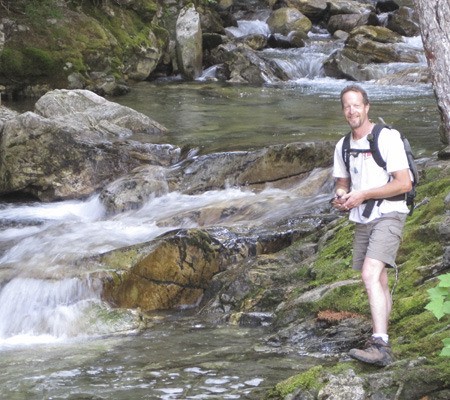
His life is one of extremes.
Scaling mountain peaks, skiing beside the clouds, helping the disabled achieve their outdoor adventure dreams.
And when Mark O’Neill was diagnosed with a devastating cancer, he met it with the same fortitude.
“In my development as a mountaineer, you learn that getting stressed doesn’t help any situation,” he said. “One of my favorite authors, Corrie Ten Boom, said, ‘Worry does not empty tomorrow of its sorrow, it empties today of its strength.’”
O’Neill was left with significant physical challenges after the treatment for his cancer. But he has learned that life is what you make of it.
“A big part of cancer survivorship is the quality of life,” he said. “You don’t get over cancer. It’s always with you. You’ve still got that blood flowing in your veins … but every day is a successful day if that’s how you chose to look at it. You choose how you see it.”
O’Neill’s affection for the outdoors began as a kid in the Boy Scouts in 1969. It led to a life of loving – and teaching – mountaineering, skiing and rock climbing.
One of his first climbs was Mount McKinley – or Denali – the highest mountain peak in North America. Located in Alaska, it’s a brutal climb. O’Neill was only 200 feet away from the peak but had to turn around due to weather conditions.
He has rock climbed throughout Southeast Asia, Mexico, and the western United States, including scaling the famed El Capitan in Yosemite.
Like many who are diagnosed with cancer, O’Neill thought his symptoms were from a minor ailment like an obstructed bowel. After an ultrasound in early 2000, it became clear that he was dealing with something much more serious.
Just seven months after his father passed away from cancer, O’Neill discovered he had an enormous tumor nestled deep in his intestines. It was both a carcinoma and a malignant fibroid cyst, a form of cancer that originates in the breasts. Measuring 14 inches long and weighing 7 pounds, 8 ounces, it was the size of an infant. It was dubbed “Bertha the tumor” by the kids who O’Neill volunteered with on the island.
Because the cancer was very slow growing, chemotherapy and radiation were not an option. The only solution was removing the tumor during a 13-hour surgery. And there was a 25 percent chance O’Neill wouldn’t make it off the table.
“I had to sit down with my wife and kids and have a real heart to heart,” he said. “I told my kids: ‘I believe in you. I trust you to make the right decisions if something happens.’ It was the most difficult discussion I have ever had.”
While the surgery was successful in removing “Bertha,” it also took out portions of O’Neill’s intestines. His body cannot assimilate vitamins or digest food the way it used to. He takes weekly vitamin shots and medication to control his digestive process. He eats a highly restricted diet, as he can only consume 18 to 20 grams of fat per meal.
Also, any kind of scarring (skin, bone, tendon) creates cells in O’Neill’s body that could develop into cancer. If that occurs, he has to undergo CT scans to make sure he is cancer-free. O’Neill says he must be mindful and careful to avoid any injuries.
“It took me five years to adapt to my new body,” he said. “Now on my expeditions, I plan my meals very carefully … I am never going to get over this, but I get to choose my quality of life.”
O’Neill hasn’t slowed down as a result of his physical changes. He is employed at Orcas Sewage Design and is a volunteer firefighter. He also works with Lance Armstrong’s Live Strong Foundation and is a ski and snowboard instructor and a mountaineer guide. He continues to teach summer and winter sports to children and adults with a range of disabilities from brain damage to spinal injuries to amputations from war.
Prior to his cancer diagnosis, O’Neill had an understanding of what it meant to live with physical challenges from his work with disabled athletes. One of his favorite skiing partners is blind and his grandfather Jack Barfoot lost an arm as a teen in a motorcycle accident.
“I learned that if I wanted to do something, I can,” O’Neill said. “It just might be a little different. I have a very different life than I had before. But it feels great because I am alive. I am here.”