Life on the frozen continent
Published 8:58 am Tuesday, September 4, 2012
Jennifer Teague could smell the sea water before she saw it. And it was heavenly.
After months of living in Antarctica, Teague experienced her first real scent while drilling dive holes in the ice. She describes the region as cold, indifferent, beautiful and without pity.
“Antarctica will always be great and formidable and empty,” Teague said. “The wind will always find a way into a seam and unravel that seam a little more.”
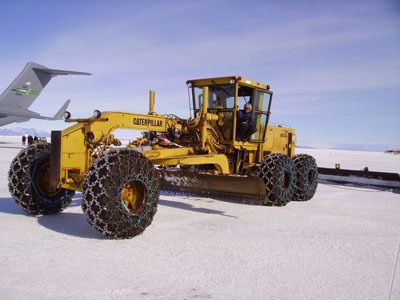
The Orcas resident has been spending six months of every year in what she calls “the ice age of the 21st century.” Teague worked as a heavy equipment operator for Raytheon Polar Services, a U.S. Company that provides science support to researchers in the South Pole. She did such projects as maintaining runways, clearing out buildings, towing trailers and fuel tanks and drilling holes in the ice.
Teague got her start in equipment operating while in the Marine Corps in the early 1980s. She then worked for the military and the Union in California. In 1990, she moved to Orcas, where her parents Clyde and Barbara live. She worked for Sea Island Sand and Gravel, but when a friend told her about an opening with Raytheon in Antarctica in 2000, Teague was excited about a change of pace.
Antarctica is nearly twice the size of Australia and 98 percent is covered in ice. A number of governments have permanent research centers on the continent. Teague feels strongly about the importance of scientific work in that part of the world.
“I love the broad scope of science, the passion of the researchers and the hope for humanity that research represents,” she said.
This year marks the first winter that Teague hasn’t gone. She would leave in mid-August and return in February, when she would then go to work as a house-painter. In her free time, she goes mountain biking.
Until recently, Teague owned a cottage in New Zealand, where she traveled once a year. It’s a common place for workers in Antarctica to visit, as the flight to that part of the world includes a stop in Auckland, New Zealand.
Every February, after leaving the ice and touching down on land, she was most thrilled about seeing the sky.
“I think if I could reach up into the night, the sky would feel like velvet on my fingers,” Teague said. “This is after six months of astral summer, no night, no closure to the days, which it turns out I miss.”

Only 27 percent of the workers in Antarctica are women, but there is a wide range of ages, Teague says. She worked alongside anyone from 21 to 60. She was stationed in McMurdo, where the U.S. runs a huge research facility. It can house more than 1,000 scientists, support staff and visitors. Living quarters are a 12×12-foot room with a sink. First-timers to Antarctica often sleep five to a room.
Raytheon’s crew would work nine hours a day, six days a week. During their off time, there was yoga, pilates, book groups, movie nights and philosophical discussion. One of Teague’s favorite past times was going to the gym and climbing its rock wall.
Naturally, romance can develop. Some relationships become successful marriages; others crash and burn once the “real world” comes into play, Teague says.
“But what happens on the ice, stays on the ice,” she said.
There are flights in and out of Antarctica all the time, but injuries and death are a serious aspect of ice living. A friend of Teague’s lost both legs and his arm after taking a snowmobile out and getting stuck in a snowstorm for 50 hours.
Contrary to popular belief, there aren’t any polar bears in Antarctica. But there are seals, killer and minke whales and penguins that are so tame you can walk right up to them.
One of Teague’s biggest adventures was the “South Pole Traverse,” a 3,000-mile journey that took her and 10 male crew members 50 days to accomplish. They towed nearly 100,000 gallons of fuel from one end of the region to the other. They also hauled a double-wide for the crew. Their water source was snow, which was melted and then used for showers, running water and a washing machine.
“We were all very mindful of being in tight quarters,” Teague said. “We knew who the snorers were and they were put all on one side.”
To see a video of the South Pole journey, go to http://www.youtube.com/watch?v=Ak07Gul64rM.